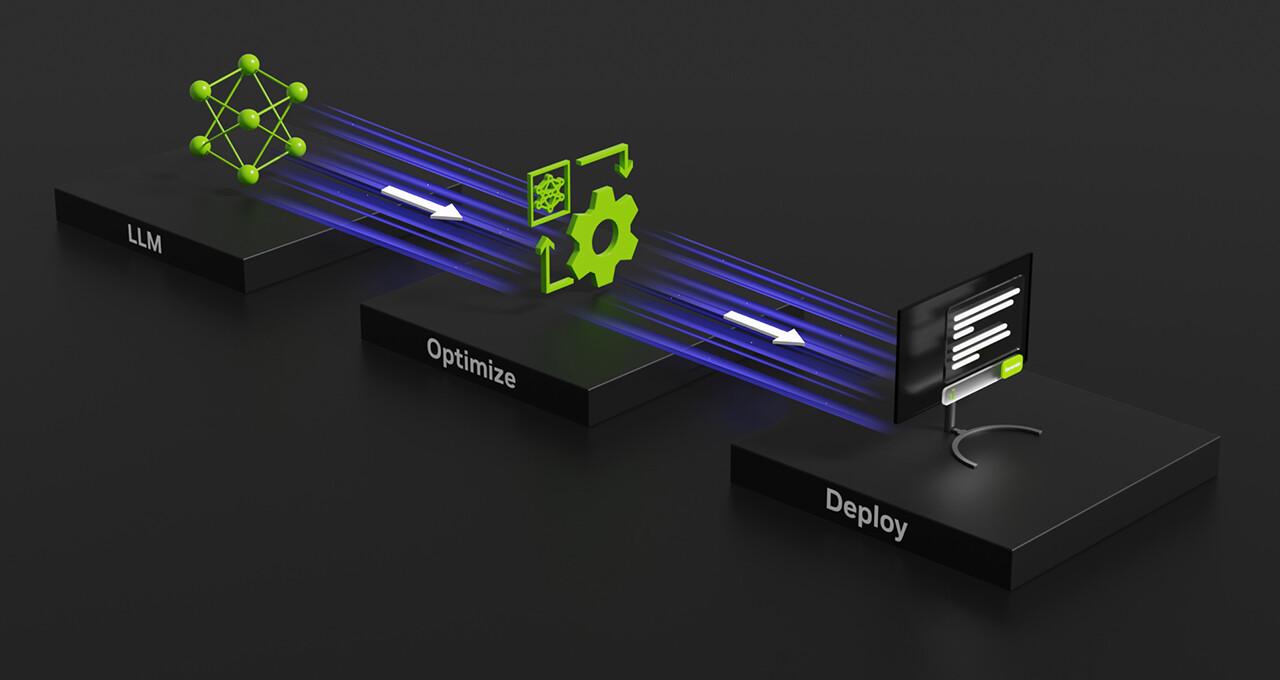
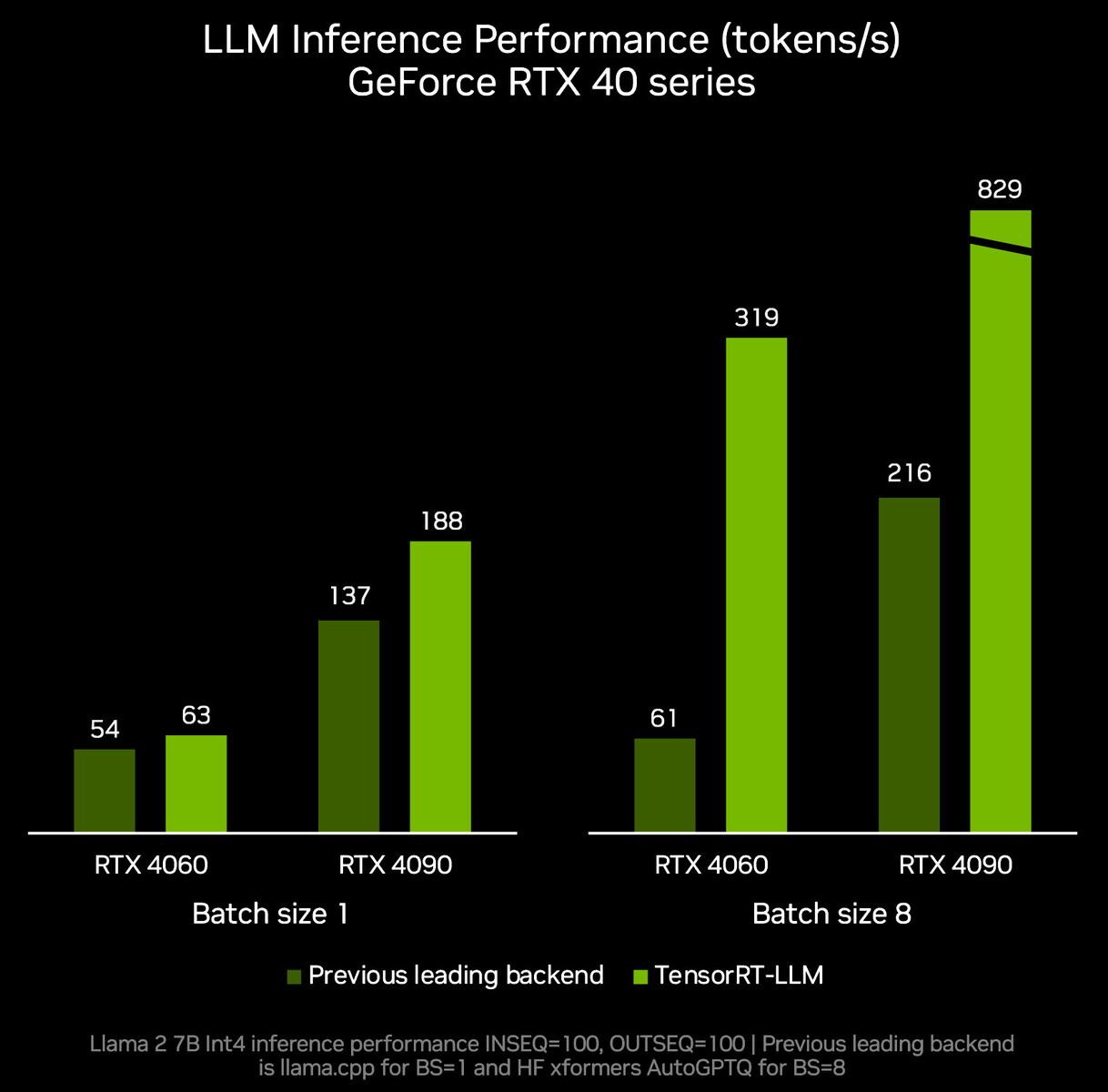
NVIDIA at the Microsoft Ignite event announced new optimizations, models, and resources to bring accelerated AI to everyone with an NVIDIA GPU that meets the hardware requirements. To begin with, the company introduced an update to TensorRT-LLM for Windows, a library that leverages NVIDIA RTX architecture for accelerating large language models (LLMs). The new TensorRT-LLM version 0.6.0 will release later this month, and improve LLM inference performance by up to 5 times in terms of tokens per second, when compared to the initial release of TensorRT-LLM from October 2023. In addition, TensorRT-LLM 0.6.0 will introduce support for popular LLMs, including Mistral 7B and Nemtron-3 8B. Accelerating these two will require a GeForce RTX 30-series "Ampere" or 40-series "Ada" GPU with at least 8 GB of main memory.