AMD Ryzen Z1 Zen4/RDNA3 custom APUs coming to Mini-PCs
The Ryzen Z1 series is no longer limited to handheld gaming systems. The company called Edge is preparing a new Mini-PC powered by AMD Z1 chip. The very first review of such a system comes from ETA Prime .
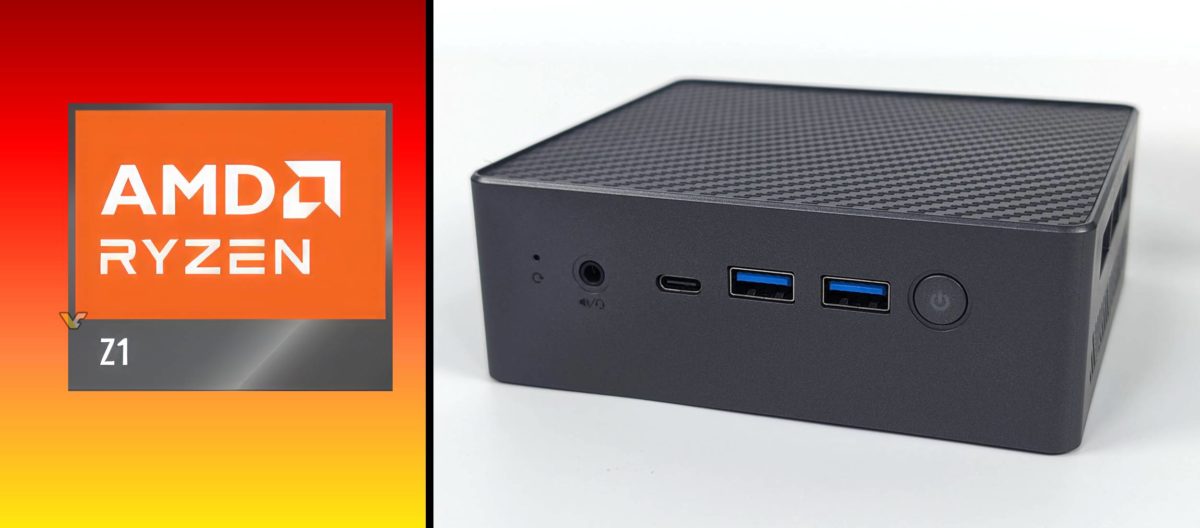
As far as we know, there is no physical difference between AMD Ryzen 7040U and Ryzen Z1 Series. They both use AMD “Phoenix” silicon with Zen4 and RDNA4 architectures. However, there are some changes to the TDP settings (a voltage/frequency curve) that allow the Z1 series to go lower. This means that handheld systems that prioritize power efficiency can provide longer battery life.
AMD launched two Z1 chips: The Z1 Extreme and Z1. The important fact is that the former is a 6-core variant with limited GPU performance. This version is now available with ASUS ROG Ally console that costs around $100 less than the Extreme version. The consensus among reviewers is that it that Extreme version is simply better, and it makes no sense to settle for the cut-down variant. However, should this chip be available for a lower price, then who knows, maybe Z1 still has a big role to play in a different market.
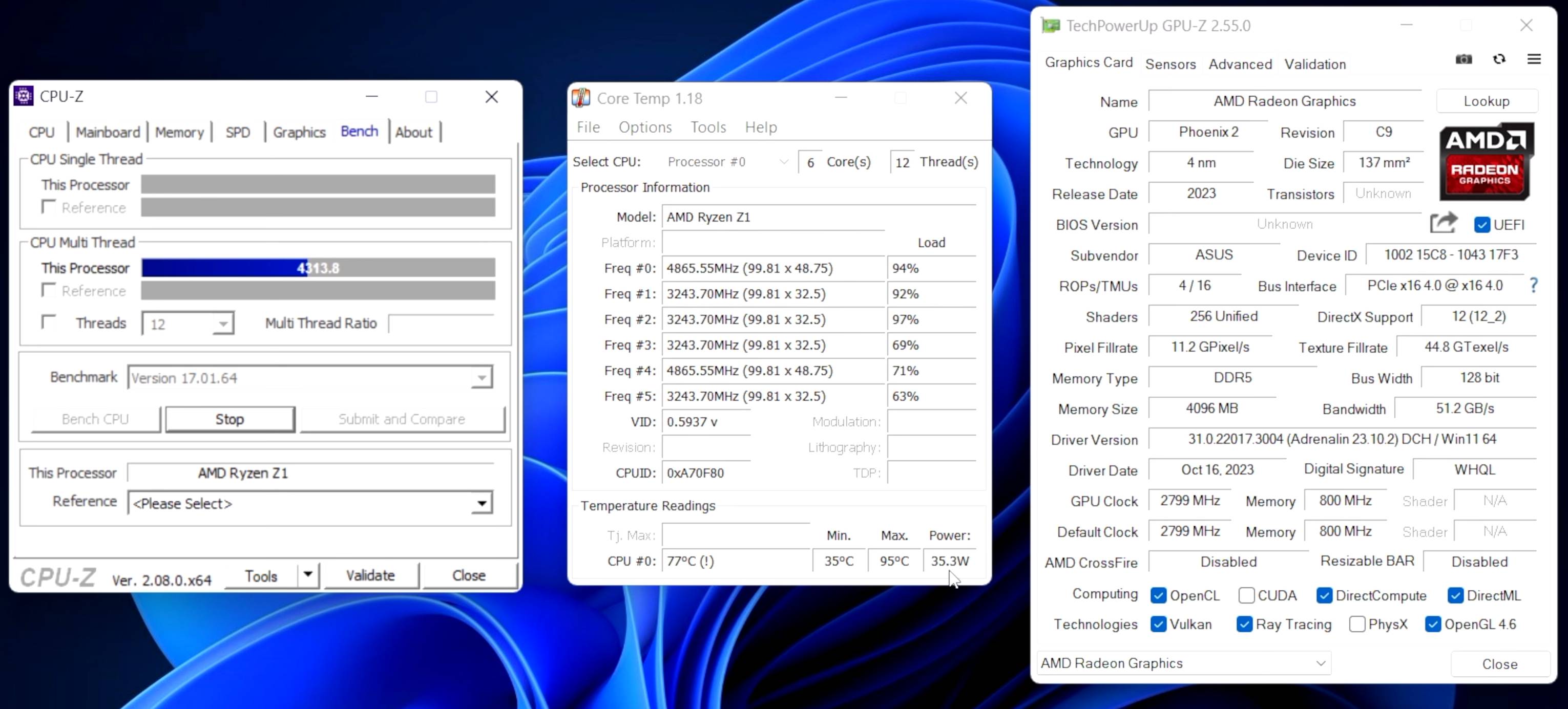
AMD Ryzen Z1 in CPU-Z test, Source: ETA Prime
The system tested by ETA Prime is not a final release unit, it’s a prototype that lacks certain features, such as RGB cover. This won’t affect performance though (although some may believe it does /s). The important fact is that ETA’s review is the very first to feature MiniPC form factor and this custom APU together. It is possible that there are more such systems on their way.
As a reminder, the Ryzen Z1 features 2 Zen4 cores and 4 Zen4c. It’s AMD heterogeneous architecture on a monolithic design, which is not the same as Intel’s big/small hybrid core architecture. Both the Zen4 and Zen4 have the same instruction set and should offer similar performance, however the Zen4c cores are optimized for power efficiency and have smaller cache. For a gaming system, those differences will be difficult to notice.
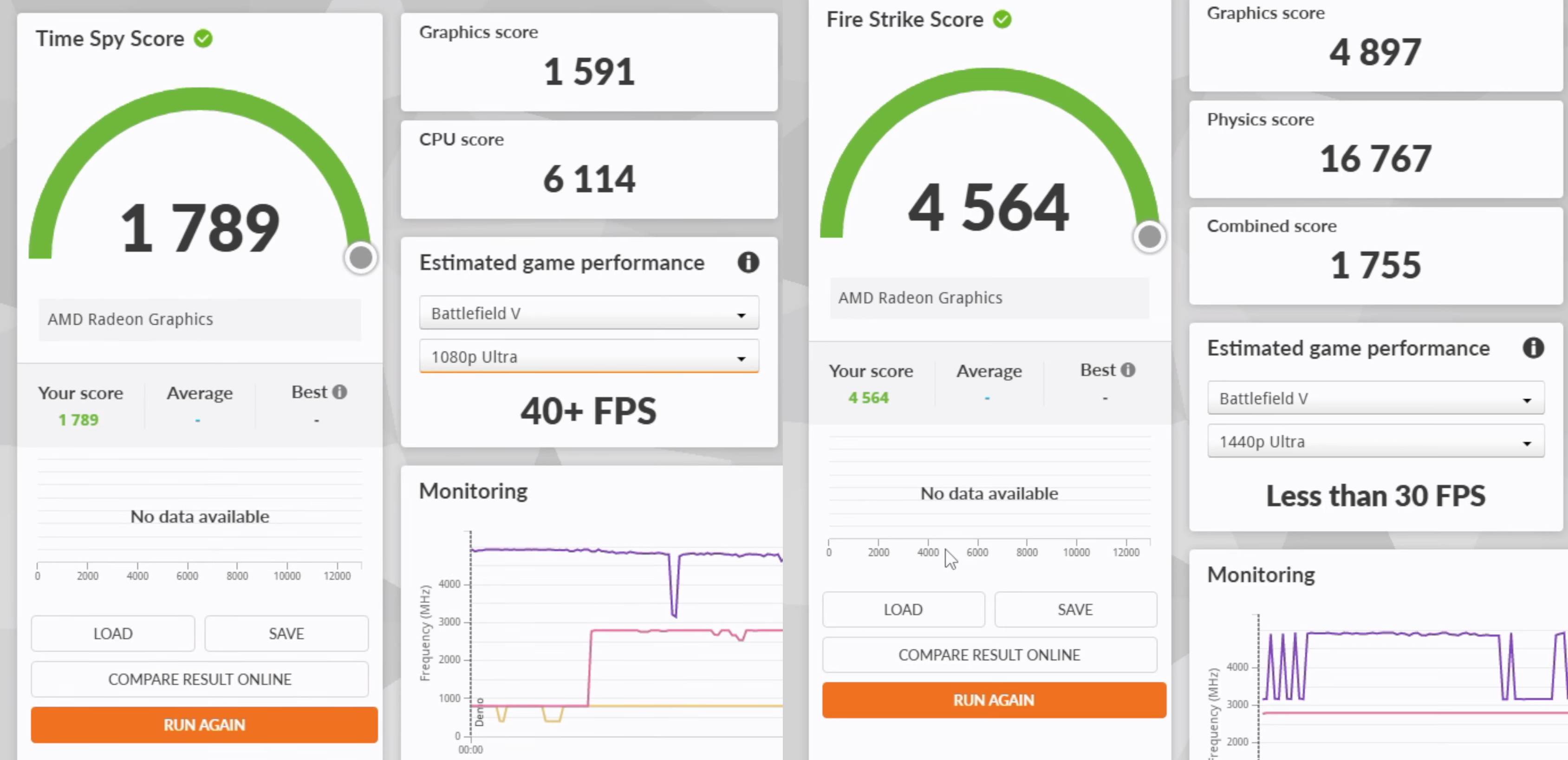
AMD Ryzen Z1 in 3DMark TimeSpy & Fire Strike,Source: ETA Prime
However, the bigger downgrade compared to Z1 Extreme is limited GPU performance. Instead of 12 Compute Units, this APU has only four. This means that it can handle only basic and older titles. Modern titles will be restricted to lower resolutions and settings. It is visibly slower than Z1 Extreme, as shown above. The Radeon 780M in Z1 Extreme can score 8000 graphics points in FS and around 2750 points in TS.
The APU is configured to 54W TDP by defualt, but there is no way to enable this power through software. The system is limited to 35W during CPU stress tests, which drops below 30W when the CPU and GPUs are tested together. In games, the package power may reach higher, up to 44W. It is possible that the TDP limit will be removed and adjusted through the BIOS settings later on. Once implemented, this feature could be this form factor’s biggest advantage.
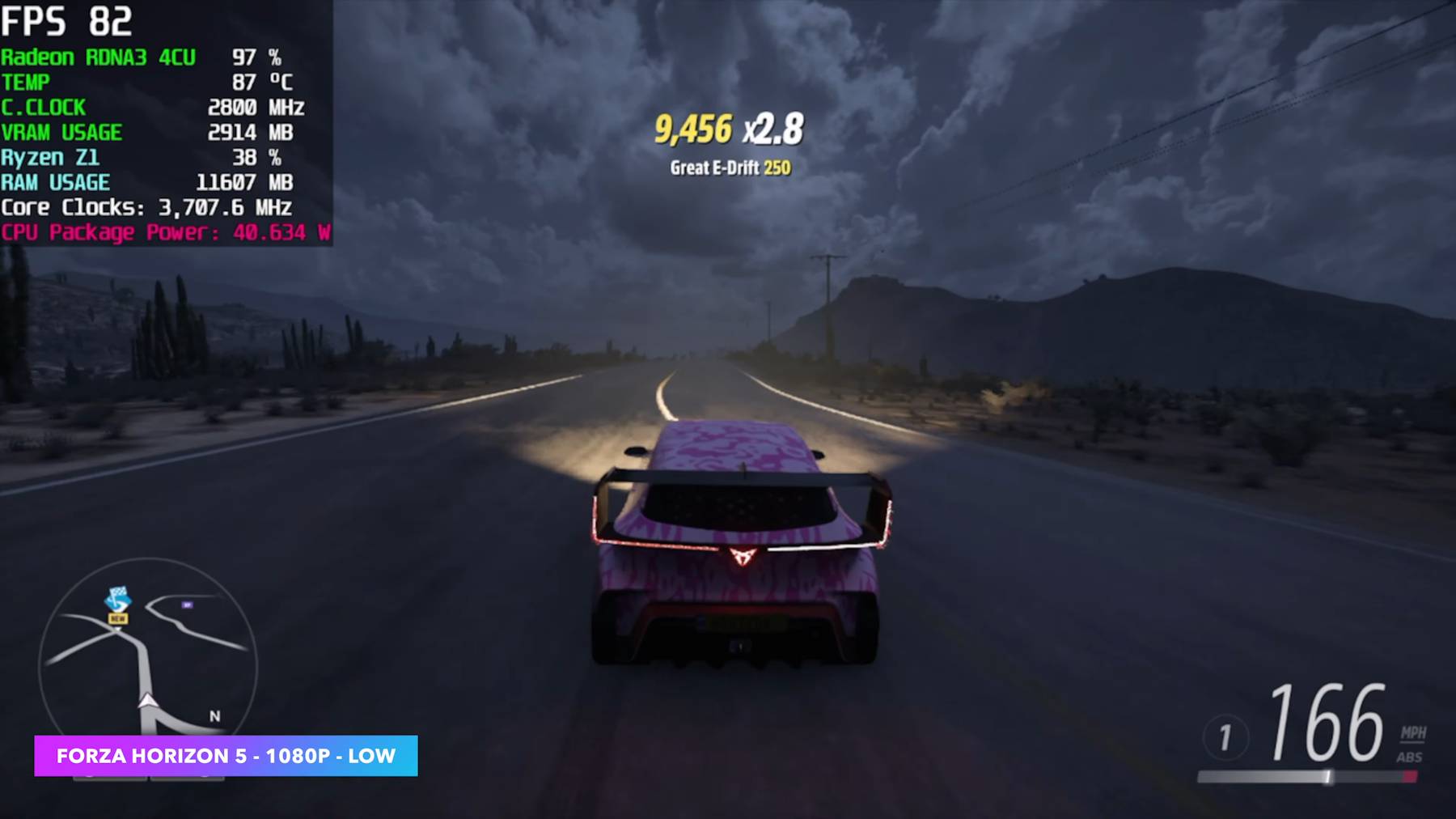

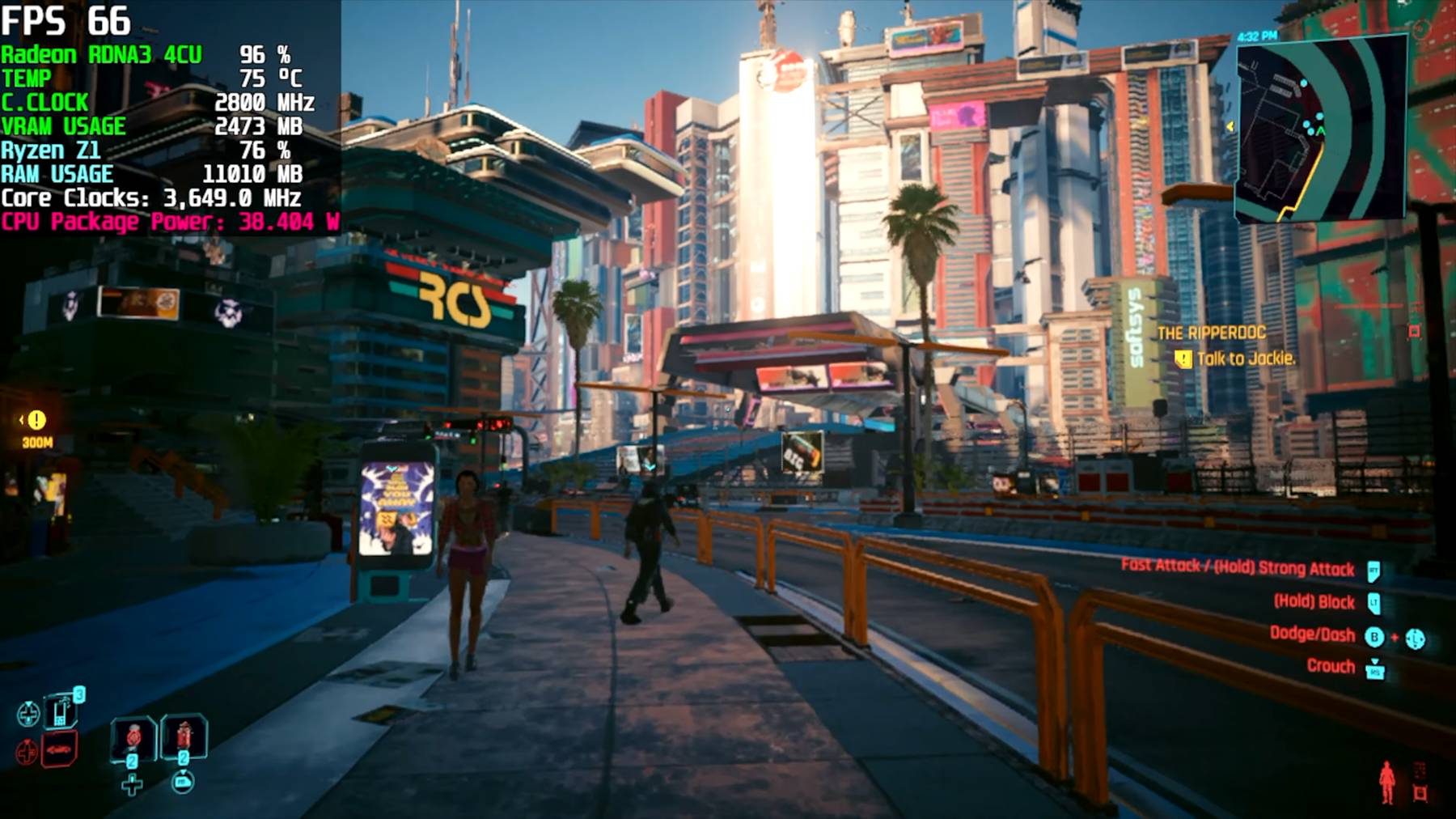
AMD Ryzen Z1 in gaming tests, Source: ETA Prime
The Mini-PC implementation of Ryzen Z1 series has its advantages and disadvantages. Users have more freedom when choosing power profiles and less thermal constraints compared to battery-powered systems. On the other hand, such MiniPCs come with SO-DIMM slots for memory, which means that it will run slower memory (compared to LPDDR5) which will affect gaming performance. On the other hand, this means that gamers can replace memory depending on their need. This particular system was only able to run at 5600 MT/s.
The company has informed the reviewer that there is a Z1 Extreme version already in development. The timing for release and pricing are yet to be determined. The plan is to launch the Mini-PC through a crowdfunding platform, which may be an easy way to find customers, but not something we would recommend taking part in.
Source: