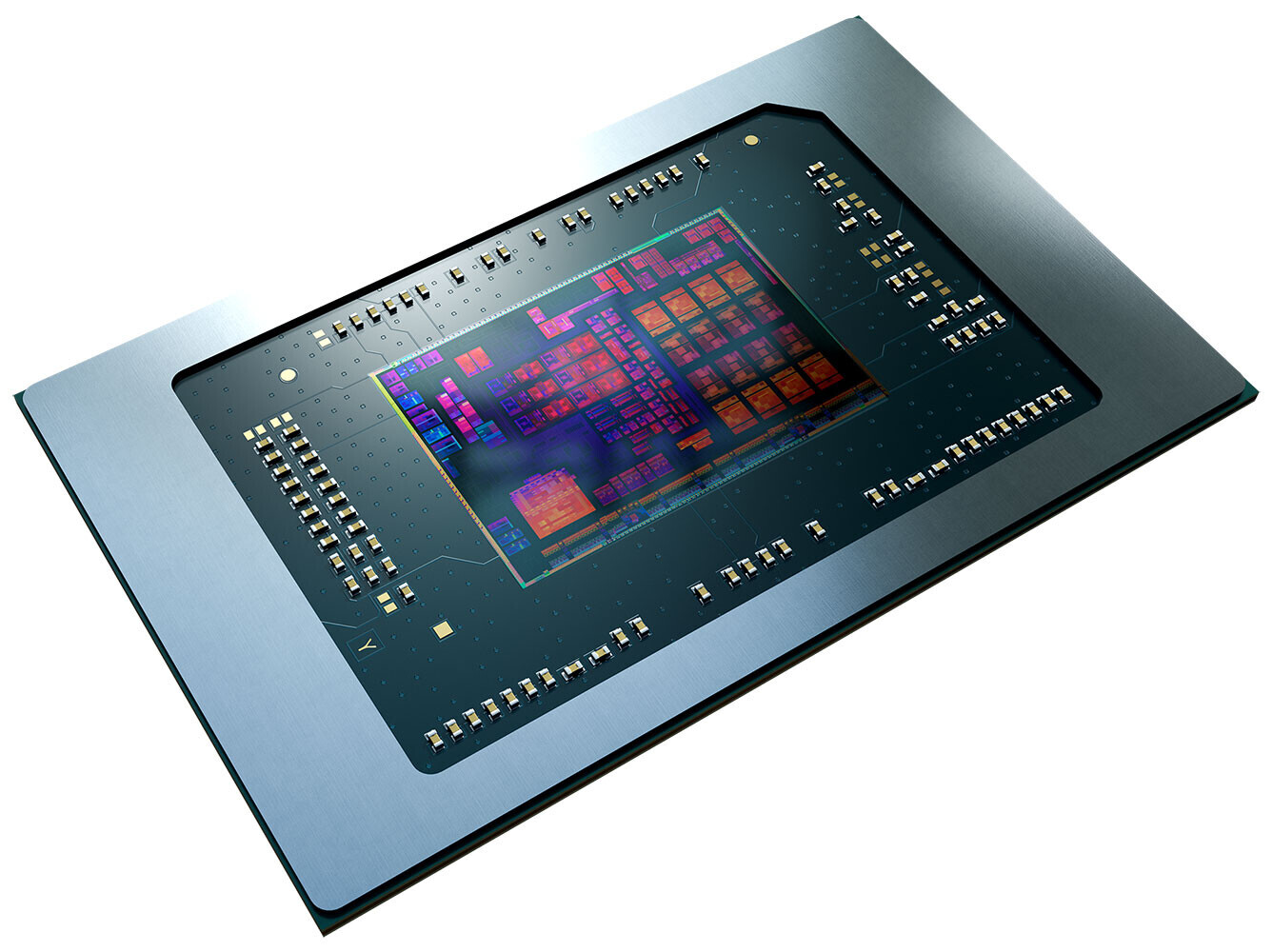
Here is our first look at the higher end of AMD's Ryzen 8000G series Socket AM5 desktop APU lineup. The company is planning to bring its 4 nm "Phoenix" and "Phoenix 2" monolithic silicon to the socketed desktop platform, to cover two distinct markets. Models based on the larger "Phoenix" silicon cater to the market that wants a sufficiently powerful CPU, but with a powerful iGPU that's fit for entry-level gaming, or graphics-intensive productivity tasks; whereas the smaller "Phoenix 2" silicon ties up the lower end of AMD's AM5 desktop processor stack, as it probably has a lower bill of materials than a "Raphael" multi-chip module.
The lineup is led by the Ryzen 7 8700G, a direct successor to the Ryzen 7 5700G "Cezanne." This chip gets the full 8-core/16-thread "Zen 4" CPU, along with its 16 MB shared L3 cache; and the full featured Radeon 780M iGPU with its 12 compute units worth 768 stream processors. The CPU features a maximum boost frequency of 4.20 GHz. This is followed by the Ryzen 5 8600G, which is based on the same "Phoenix" silicon as the 8700G, but with 6 out of 8 "Zen 4" cores enabled, and a maximum CPU boost frequency of 4.35 GHz, and the 16 MB L3 cache left untouched. It's likely that the Radeon 780M is unchanged from the 8700G.