U.S. Commerce Secretary Gina Raimondo emphasized the necessity for ongoing investments in the American semiconductor industry to regain global leadership and fulfill demand for artificial intelligence (AI) processors. She highlighted the significance of the U.S. government's effort to fund the chip industry amid global challenges during a virtual appearance at yesterday's Intel Foundry event , reports Bloomberg.
"I suspect there will have to be — whether you call it CHIPS 2 or something else — continued investment if we want to lead the world," said Raimondo.
Raimondo's remarks underscored the importance of the semiconductor sector, particularly in light of the increasing computational demands of AI technologies. She cited her discussions with Sam Altman, CEO of OpenAI, who is seeking U.S. government support for his chip venture. According to Raimondo, the sheer volume of chips required for AI applications, as projected by industry leaders, is astonishing. Meanwhile, a surplus of AI processors will enable more companies to adopt artificial intelligence, which will be a competitive advantage for the U.S.
The U.S. government's commitment to revitalizing the semiconductor industry is evident in the 2022 CHIPS and Science Act , which allocated $39 billion in direct grants and an additional $75 billion in loans and loan guarantees. The Commerce Department is actively distributing these funds among numerous applicants, with three awards already announced to key players in the industry, including the American subsidiary of BAE Systems, GlobalFoundries, and Microchip Technology.
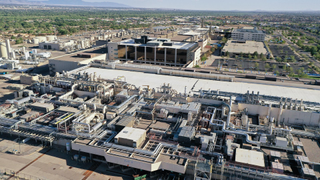
Meanwhile, Intel is reportedly negotiating for over $10 billion in grants and loans to support its expansion plans, including a20 billion on initial two fabs in Ohio and a $20 billion expansion in Arizona. Pat Gelsinger, chief executive of Intel, expects an announcement about the award soon, but Raimondo remains tightlipped about the plan.
While the U.S. Department of Commerce is yet to distribute the CHIPS Act money that it has, the very assurance of the U.S. government to revitalize the domestic semiconductor industry has attracted massive investments in the sector. Various semiconductor companies have either invested or committed to invest over $230 billion into the U.S. chip industry. These companies include Intel, GlobalFoundries, Micron, Samsung, Texas Instruments, and TSMC.