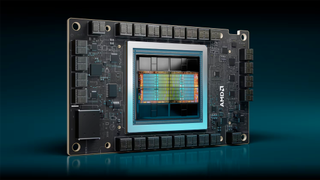
In a bid not to miss out on China's growing AI and HPC market, AMD has quietly developed its Instinct MI309 processor. A lower performance processor specifically tailored to meet the latest U.S. export rules that require an export license to sell powerful processors to China-based entities. But apparently AMD's new product is still too powerful to get unconditional green light from the U.S. Department of Commerce and AMD still needs an export license, reports Bloomberg .
In general, AMD is pursuing the AI processor market. The Chinese market in particular is being pursued more aggressively with the launch of its Instinct MI300-series , aiming to compete with Nvidia's processors. The China-specific product, known as the Instinct MI309, is part of this strategy. However, the specification of the Instinct MI309 remain unclear.
The U.S. export rules imposed last fall strictly prohibit selling Chinese entities datacenter processors with Total Processing Performance (TPP, listed processing power multiplied by the length of operation) score of 4800, which means that maximum AI performance of the processor should not exceed 600 FP8 TFLOPS. Meanwhile, it is possible to sell processors with a performance of slightly lower than 600 FP8 TFLOPS provided that their Performance Density (PD, which is TPP divided by the die area measured in square millimeters) is low enough.
AMD's Instinct MI300A has FP8 performance of 1.96 FP8 PFLOPS, so AMD cannot sell it to China-based entities. Slowing it down — either by lowering clocks or by disabling some of the stream processors or by removing chiplets from the package — is something that AMD done to comply with the U.S. latest export rules. But apparently it was not enough to meet U.S. export limitations.
As a result, the fate of AMD's China-specific Instinct MI309 product remains uncertain, as it is unclear if the company will seek the necessary license for sale and if so, how it plans to limit performance of its processor for customers in the People's Republic.
It should be noted that pursuing Chinese AI market will not be an easy ride for AMD as China's Big Tech companies have stockpiled enough Nvidia processors and may not be inclined to buy AMD's offerings right now. Furthermore, China-based companies like Huawei are developing their own Ascend 900-series processors for AI applications and given that those products are not subject to the U.S. export control, many Chinese entities will prefer them over AMD's products.