MSI Claw 135H and 155H variants offer nearly the same gaming experience
Retro Tech Dad has an interesting video comparing not one but 4 different configurations of popular handhelds.

One of the major highlights from the CES 2024 event was the unveiling of the MSI Claw, a new gaming handheld featuring the Intel Core Ultra “Meteor Lake” processor. This marks MSI’s debut in the handheld gaming market, presenting an opportunity to introduce some healthy competition. With more options available, gamers can expect increased choice and competition among vendors, likely leading to adjustments in pricing strategies based on performance comparisons.
Despite the anticipation surrounding the MSI Claw, its launch was surprisingly low-key, with minimal coverage from tech reviewers. Samples were distributed in an uncoordinated manner, suggesting that MSI may have aimed to swiftly conclude the launch process.
Early reviews prior to the launch revealed that the Core Ultra CPUs struggle to compete with the Ryzen Z1 series. While the GPU performance may be comparable in certain games, overall performance falls short, making it challenging to justify the high price tag of the MSI Claw ($699+).


MSI CLAW with 135H CPU, Source: Retro Tech Dad
Recently, Retro Tech Dad provided a comprehensive overview by acquiring not just one, but four devices: the MSI Claw with both the 155H and 135H CPU variants, and the ASUS ROG Ally equipped with both the Ryzen Z1 Extreme and Z1 non-Extreme CPUs.
The reviewer conducted tests with all devices in their optimal performance modes – “Turbo” for the ASUS ROG Ally and “Performance” for the MSI Claw. Synthetic tests were conducted with devices plugged into power, while gaming tests were performed on battery. It’s worth noting that the latest Intel drivers available as of last week were utilized for the tests.


MSI CLAW vs ROG ALLY series, Source: Retro Tech Dad
The initial finding suggests that the Core Ultra 5 135H performs better than the Core Ultra 7 155H in low-TDP settings. However, overall, both APUs provide nearly identical performance. This slight variance can be attributed to the GPU specifications of each variant. Unlike the Ryzen Z1 series, which feature either 12 CUs (Extreme) or 4 CUs (non-Extreme), the 155H comes with 8 Xe-Cores, while the 135H has just 1 Xe-Core less.


MSI CLAW vs ROG ALLY series, Source: Retro Tech Dad
It seems that a difference of 1 Xe-Core doesn’t necessarily translate to lower performance; instead, it indicates more power headroom and often results in a higher framerate. Neither the 135H nor the 155H is able to compete with the Ryzen Z1 Extreme in most tests. These devices are more comparable to the standard Z1 model, but the performance ultimately depends on individual games.
We captured some screenshots from the video that display a side-by-side comparison between the Core Ultra 5 135H, Core Ultra 7 155H, Ryzen Z1, and Ryzen Z1 Extreme (from left to right):


MSI CLAW vs ROG ALLY series, Source: Retro Tech Dad
Certainly, screenshots may not capture all the details and real-world experience accurately. Please refer to the video below for a comprehensive overview.
| Handheld Gaming Consoles Specs | ||||
|---|---|---|---|---|
| VideoCardz | MSI Claw | ASUS ROG Ally | Lenovo Legion Go | Valve Steam Deck OLED |
| Picture | 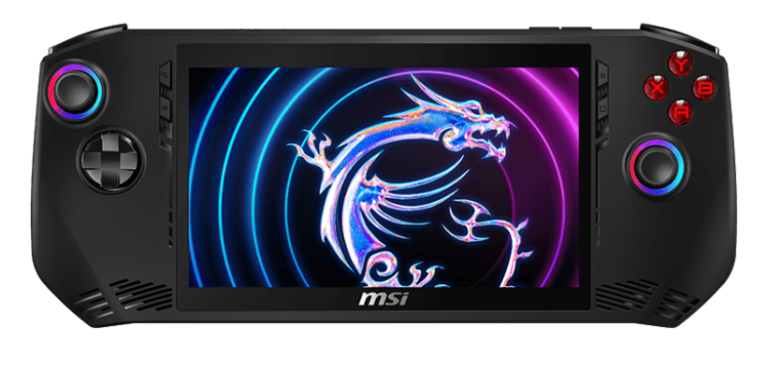 | 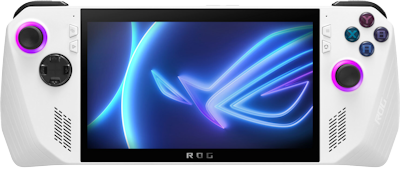 | 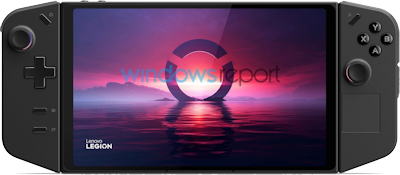 | 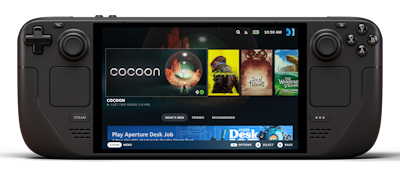 |
| Architecture | Intel Redwood Cove, Crestmont & Xe-LPG | AMD Zen4 & RDNA3 | AMD Zen4 & RDNA3 | AMD Zen2 & RDNA2 |
| APU | Core 7 Ultra 155H 16C/22T up to 4.8 GHz or Core 5 Ultra 135H 14C/18T up to 4.6 GHz | Ryzen Z1 Extreme 8C/16T up to 5.1 GHz or Ryzen Z1 6C/12T up to 4.9 GHz | Ryzen Z1 Extreme 8C/16T up to 5.1 GHz or Ryzen Z1 6C/12T up to 4.9 GHz | AMD Sephiroth (6nm) 4C/8T up to 3.5 GHz |
| SoC GPU | Arc Graphics 8 Xe-C @ 2.25 GHz [155H] 7 Xe-C @ 2.20 GHz [135H] | AMD iGPU 12CU @ 2.7 GHz [Z1E] 4CU @ 2.5 GHz [Z1] | AMD iGPU 12CU @ 2.7 GHz [Z1E] 4CU @ 2.5 GHz [Z1] | AMD iGPU 8CU @ 1.6 GHz |
| SoC TDP | 28W | 1-30W | 9-30W | 4-15W |
| External GPU | Thunderbolt 4 | ROG XG Mobile (up to RTX 4090) | USB4 | Not officially |
| Memory Capacity | 16GB LPDDR5-6400 | 16GB LPDDR5-6400 | 16GB LPDDR5X-7500 | 16GB LPDDR5-6400 |
| Storage Capacity | 1TB/512GB | 512GB | 1TB/512GB | 512GB/1TB SSD |
| Storage Type | M.2 NVMe 2230 SSD PCIe 4×4 | M.2 NVMe 2230 SSD PCIe 4×4 | M.2 NVMe 2242 SSD PCIe 4×4 | M.2 NVMe 2230 SSD PCIe 3×4 |
| Display | 7″ 1920×1080, 120Hz, 500 nits, VRR | 7″ 1920×1080, 120Hz, 500 nits, 7ms, VRR | 8.8″ 2560×1600 IPS, 144Hz, 500 nits | 7.4″ 1200×800, 90 Hz |
| Connectivity | Wi-Fi 7 + Bluetooth 5.4 | Wi-Fi 6E, BT 5.2 | Wi-Fi 6E, BT 5.2 | Wi-Fi 6E, BT 5.3 |
| Battery | 53 Wh, 6-Cell | 40 Wh, 4S1P, 4-cell Li-ion | 49.2 Wh, 900 mAh (controllers) | 50 Wh |
| Weight | 675 g | 608g / 1.34 lbs | 854g / 1.87 lbs | 640 g / 1.41 lbs |
| Dimensions (L×W×H) | 29.4 × 11.7 × 2.1 cm 11.6 × 4.6 × 0.8 in | 28.0 × 11.3 × 3.9 cm 11.0 × 4.5 × 1.5 in | 29.9 × 13.1 × 4.1 cm 11.8 × 5.2 × 1.6 in | 29.8 × 11.7 × 4.9 cm 11.7 × 4.6 × 1.9 in |
| Default OS | Windows 11 | Windows 11 | Windows 11 | Steam OS/Win 11 |
| Retail Price | $799/€949 [155HU+1TB] $749/€849 [155H+512GB] $699 [135H+512GB] | $699/€799 [Z1E] $599/€699 [Z1] | $749 [Z1E+1TB] $699/€799 [1E+512GB] | $649/€679 [1TB] $549/€569 [512GB] |
| Release Date | March 2024 | June 2023 [Z1E] September 2023 [Z1] | October 31, 2023 | November 2023 |
Source: