Gigabyte promises “Superior Stability” with its Intel Baseline motherboard profile for Core i9 CPUs
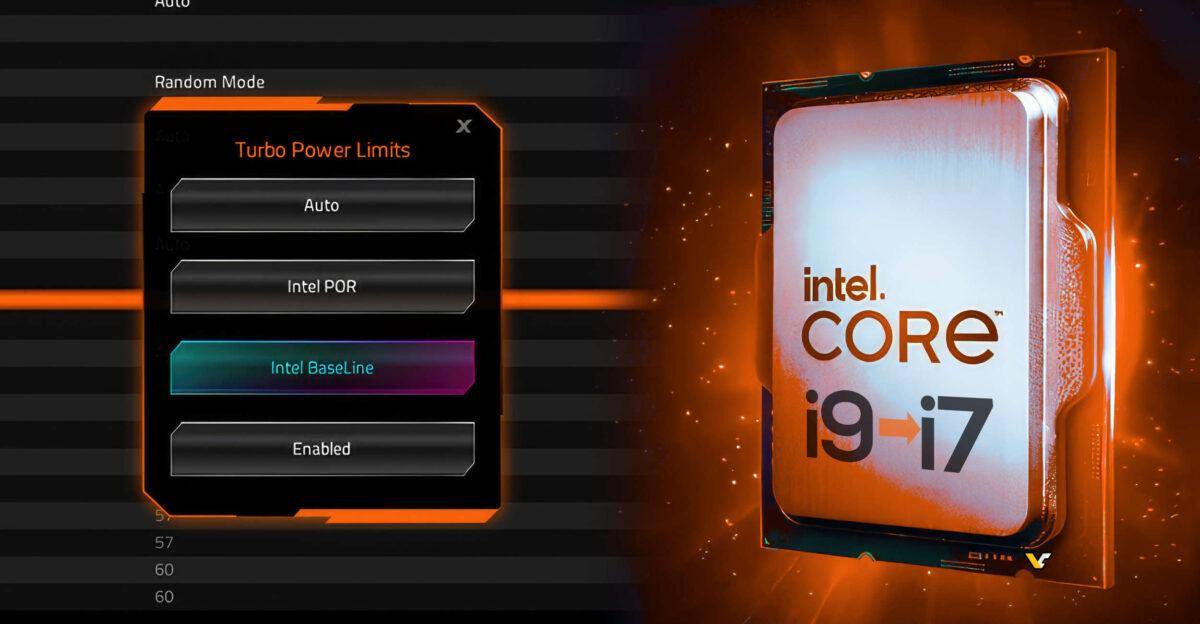
Similarly to ASUS , Gigabyte has released the Intel Baseline Profile setting within its BIOS for 13th and 14th Gen Core CPUs, all in an effort to offer more stability to these CPUs. As we reported, various motherboard makers were offering generous power settings within their BIOS, typically diverging from Intel’s recommendations, and typically this was done automatically. As a result, many users on Intel 13th and 14th Gen Core CPUs, especially those using the 13900K and 14900K models, were experiencing stability issues, crashes, and out-of-video-memory messages when playing or starting games.
At this point, it is clear that Intel has obliged these companies to comply with the specifications and at least offer the default option for such users, or those who simply want their CPU within the specs. Naturally, this means that those enjoying greater performance from their “K-Series Unlocked” processors are basically forced to remain within Intel’s specifications, sacrificing potential performance gains for increased stability.
GIGABYTE always prioritizes user experience, focusing on both performance and stability. Additionally, as a close ally of Intel, we promptly introduced the Intel Baseline feature with the latest beta BIOS. When using 13th and 14th generation K-SKU CPUs, the Intel Baseline setting will appear in the “Turbo Power Limits” option under “Advanced CPU Settings”. After enabling Intel Baseline, the performance will be expected to be limited due to the power setting adjustments.
— Gigabyte PR
The new profile is now available in select motherboards that have already received the BIOS update. Users can adjust the Turbo Power Limits to adhere to the Baseline specification, as shown above.
This setting has already been tested by media outlets like Uniko’s Hardware, which reported that once enabled, the CPU performs noticeably worse. In fact, it matches the Core i7 SKU in their testing. The CPU in question is the Core i9-13900KF used on the overclocking Z790 AORUS Tachyon motherboard.


Core i9-13900KF with Intel BaseLine profile, Source: Uniko’s Hardware
In Cinebench, the multi-score dropped from 40K to 28.8K points without affecting the single-core performance. In games, the drop varies depending on the title. Cyberpunk 2077 reports a 10% loss in average FPS, Red Dead Redemption 2 shows a 5% drop, while in Shadow of The Tomb Raider, there is a 3% to 8% decrease in average FPS, as reported by the media.
One thing to note is that the sample used by the company is a QS sample, which has a short power limit set to 188W, while it should be expected to be at 253W. Definitely check the full review for more details.
Source: Uniko’s Hardware , Gigabyte