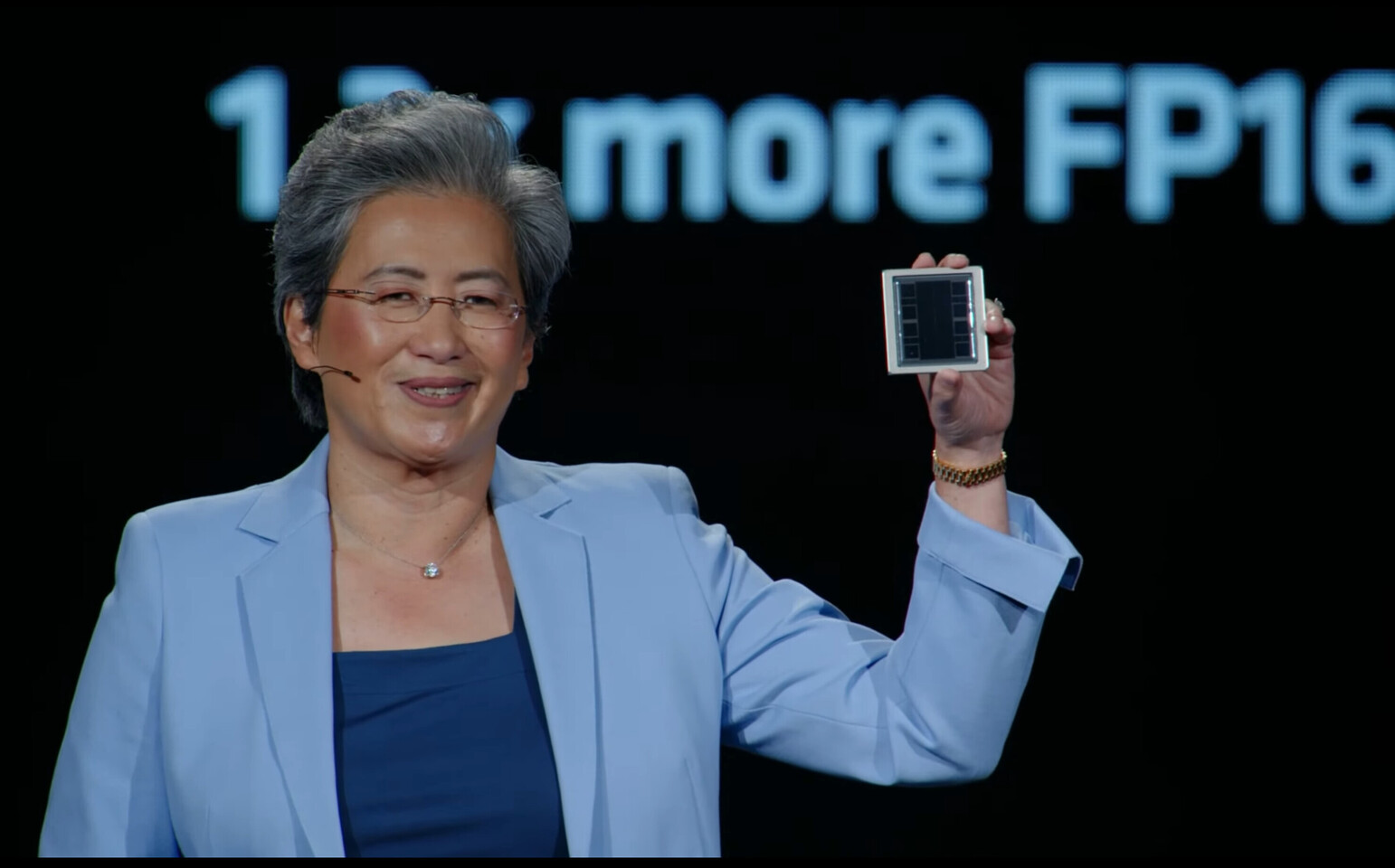
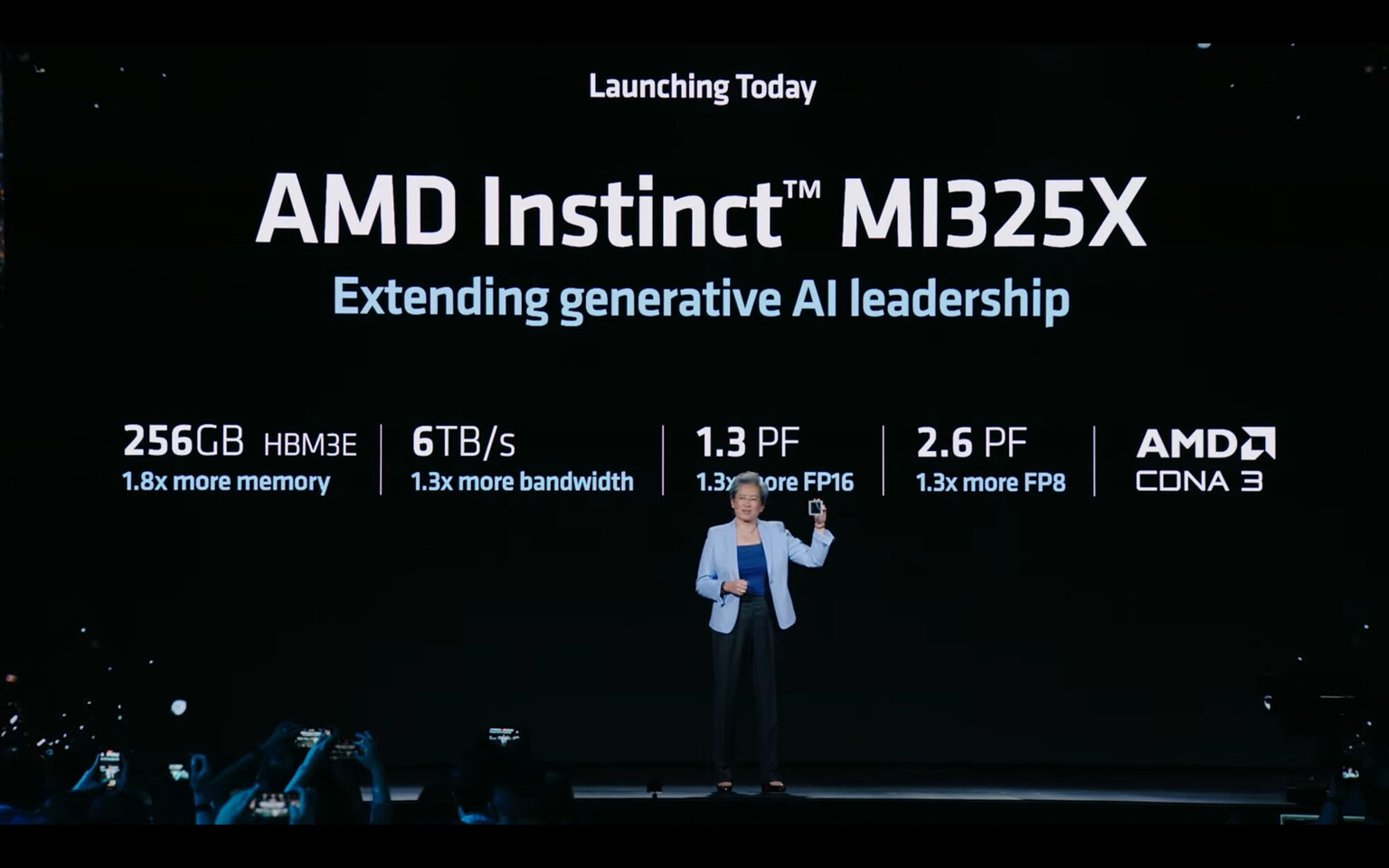
During its "Advancing AI" conference today, AMD has updated its AI accelerator portfolio with the Instinct MI325X accelerator, designed to succeed its MI300X predecessor. Built on the CDNA 3 architecture, Instinct MI325X brings a suite of improvements over the old SKU. Now, the MI325X features 256 GB of HBM3E memory running at 6 TB/s bandwidth. The capacity memory alone is a 1.8x improvement over the old MI300 SKU, which features 192 GB of regular HBM3 memory. Providing more memory capacity is crucial as upcoming AI workloads are training models with parameter counts measured in trillions, as opposed to billions with current models we have today. When it comes to compute resources, the Instinct MI325X provides 1.3 PetaFLOPS at FP16 and 2.6 PetaFLOPS at FP8 training and inference. This represents a 1.3x improvement over the Instinct MI300.
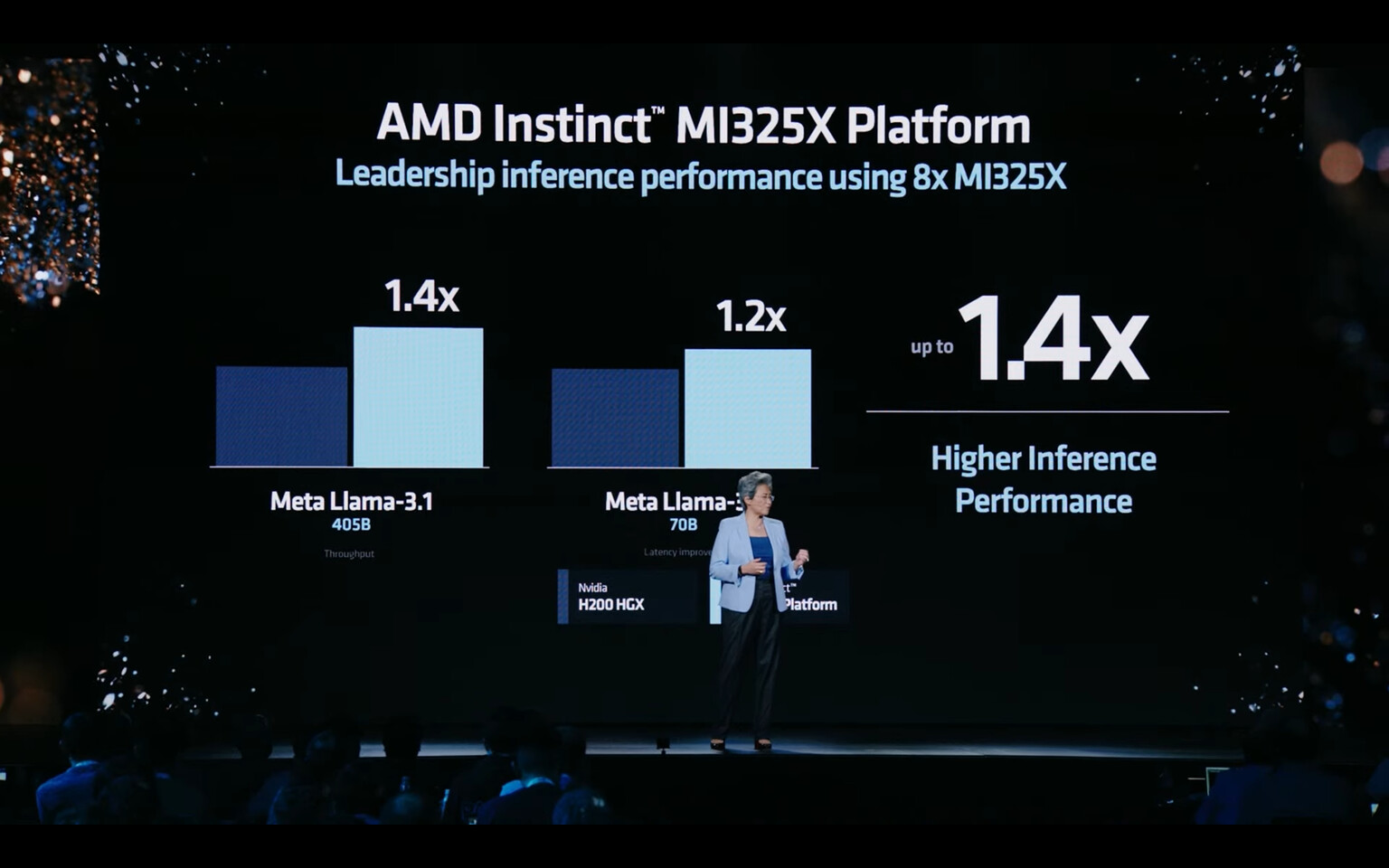
A chip alone is worthless without a good platform, and AMD decided to make the Instinct MI325X OAM modules a drop-in replacement for the current platform designed for MI300X, as they are both pin-compatible. In systems packing eight MI325X accelerators, there are 20 TB of HBM3E memory running at 48 TB/s memory bandwidth. Such a system achieves 10.4 PetaFLOPS of FP16 and 20.8 PetaFLOPS of FP8 compute performance. The company uses NVIDIA's H200 HGX as reference claims for its performance competitiveness, where the company claims that the Instinct MI325X outperforms NVIDIA H200 HGX system by 1.3x across the board in memory bandwidth, FP16 / FP8 compute performance and 1.8x in memory capacity.