The Intel Arc B570 picks up where the Arc B580 left off, namely with an even lower price point of $219. On paper, that's 12% cheaper, but it also comes with a 10% reduction in core counts, 3.5% lower clocks, and most importantly a 17% reduction in VRAM capacity and bandwidth. If you're trying to save money it might be worth considering, but the value proposition isn't as strong as the B580. It will compete with the best graphics cards of the rising generation, but only by virtue of very likely being the least expensive new GPU that we'll see in the coming year.
We've covered the Intel Battlemage architecture and the Arc B-series GPUs already. Now it's time to see how the B570 stacks up in real-world testing. Shaving $30 off the price while also cutting the memory by 2GB may not be the best solution for gaming or AI usage going forward. But let's start with the specifications.
| Graphics Card | Arc B570 | Arc B580 | Arc A770 16GB | Arc A750 | Arc A580 |
|---|---|---|---|---|---|
| Architecture | BMG-G21 | BMG-G21 | ACM-G10 | ACM-G10 | ACM-G10 |
| Process Technology | TSMC N5 | TSMC N5 | TSMC N6 | TSMC N6 | TSMC N6 |
| Transistors (Billion) | 19.6 | 19.6 | 21.7 | 21.7 | 21.7 |
| Die size (mm^2) | 272 | 272 | 406 | 406 | 406 |
| Xe-Cores | 18 | 20 | 32 | 28 | 24 |
| GPU Shaders (ALUs) | 2304 | 2560 | 4096 | 3584 | 3072 |
| XMX Cores | 144 | 160 | 512 | 448 | 384 |
| Ray Tracing Cores | 18 | 20 | 32 | 28 | 24 |
| Boost Clock (MHz) | 2750 | 2850 | 2400 | 2400 | 1700 |
| VRAM Speed (Gbps) | 19 | 19 | 17.5 | 16 | 16 |
| VRAM (GB) | 10 | 12 | 16 | 8 | 8 |
| VRAM Bus Width | 160 | 192 | 256 | 256 | 256 |
| L2 Cache | 13.5 | 18 | 16 | 16 | 16 |
| Render Output Units | 80 | 80 | 128 | 128 | 128 |
| Texture Mapping Units | 144 | 160 | 256 | 224 | 192 |
| TFLOPS FP32 (Boost) | 12.7 | 14.6 | 19.7 | 17.2 | 10.4 |
| TFLOPS FP16 (INT8 TOPS) | 101 (203) | 117 (233) | 157 (315) | 138 (275) | 84 (167) |
| Bandwidth (GB/s) | 380 | 456 | 560 | 512 | 512 |
| TBP (watts) | 150 | 190 | 225 | 225 | 185 |
| Launch Date | Jan 2025 | Dec 2024 | Oct 2022 | Oct 2022 | Oct 2023 |
| Launch Price | $219 | $249 | $349 | $289 | $179 |
| Online Price | $220 | $341 | $300 | $190 | $170 |
As noted already, the Arc B5780 takes the same BMG-G21 core and trims a few functional units, with a lower core clock as well. The resulting card ends up with 13% less theoretical compute and 17% less memory bandwidth — and also 17% less memory capacity.
We haven't seen very many 10GB graphics cards over the year. There was the original RTX 3080 , and more recently AMD's RX 6700 (non-XT), and that's basically it. We know there are quite a few modern games that can exceed 8GB of VRAM use, so the B570 may have a bit more wiggle room. However, lossless memory compression techniques in GPUs can also have an impact, so raw capacity isn't the final word.
Considering the Arc B580 ended up outperforming the prior generation Arc A770 by around 20%, we expect the new B570 to be slightly faster than the A770 as well. Except, higher resolutions where the extra VRAM capacity and bandwidth come into play will likely still favor the older GPU. Not that you'd really want to pick up an A770 16GB, considering they're now selling at $300 or more again.
Intel gives the Arc B570 a Graphics Clock of 2500 MHz, with a maximum boost clock of 2750 MHz. We noticed with the B580 that all the cards, including factory overclocked models, seemed to keep the maximum boost clock, and that appears to be the case with the B570 as well. Without manual overclocking, you'll get 2750 MHz peak performance, and in practice nearly every game and application we tested hit that clock speed.
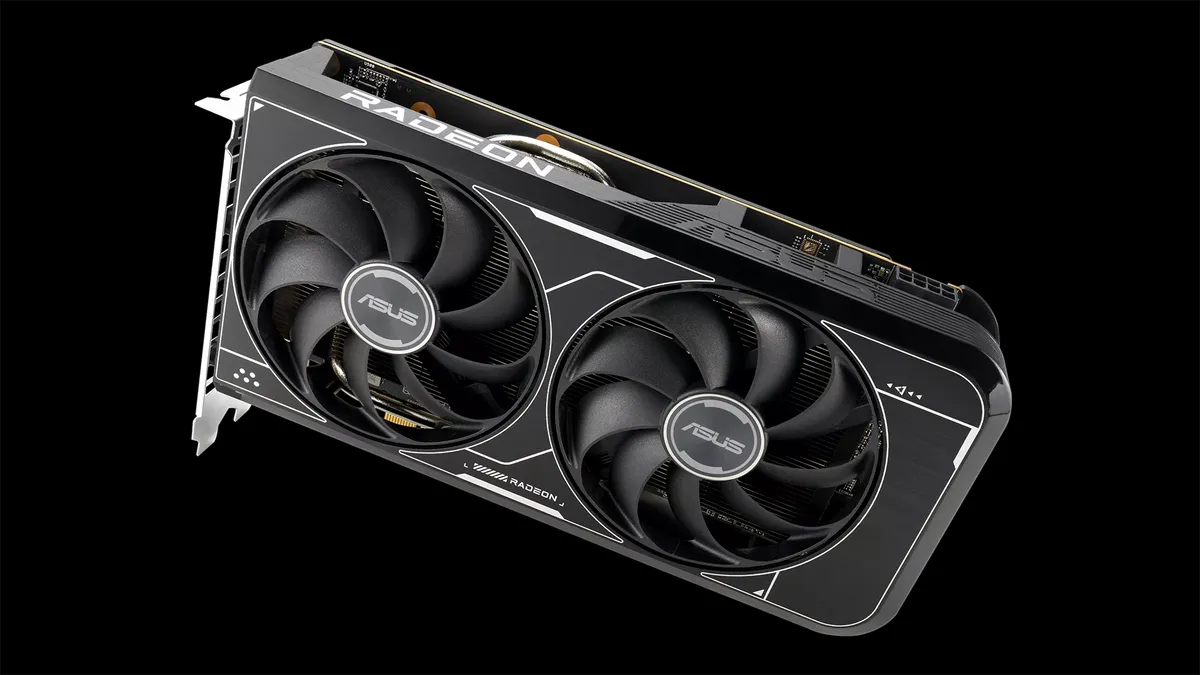
Given the $219 MSRP, the Arc B570 will primarily face off against existing GPUs from AMD and Nvidia. Nvidia hasn't made a sub-$249 graphics card since the RTX 3050 8GB debuted in early 2022, three years ago. It now goes for $200, while supplies remain. There's also a more recent RTX 3050 6GB card as well, which we haven't tested, that sells for $170.
But we never particularly cared for the RTX 3050 cards. They were too slow for ray tracing to be a selling point, and in rasterization performance AMD's RX 6600 was clearly superior — it even competes with the higher spec RTX 3060 12GB. Our RX 6600 vs RTX 3050 GPU faceoff ended up being a clear victory for the RX 6600, mostly based on its superior performance. Despite being over three years old, the RX 6600 remains readily available, with prices starting at $190.
Time constraints (with holiday breaks and CES travels) meant we couldn't test every GPU we'd like to include for this review. We'll have the same cards as the Arc B580, plus a couple of additions (RTX 3060 and RX 6600). But before we get to the benchmarks , let's take a closer look at the ASRock Arc B570 Challenger OC we received for review.
- MORE: Best Graphics Cards
- MORE: GPU Benchmarks and Hierarchy
- MORE: All Graphics Content
