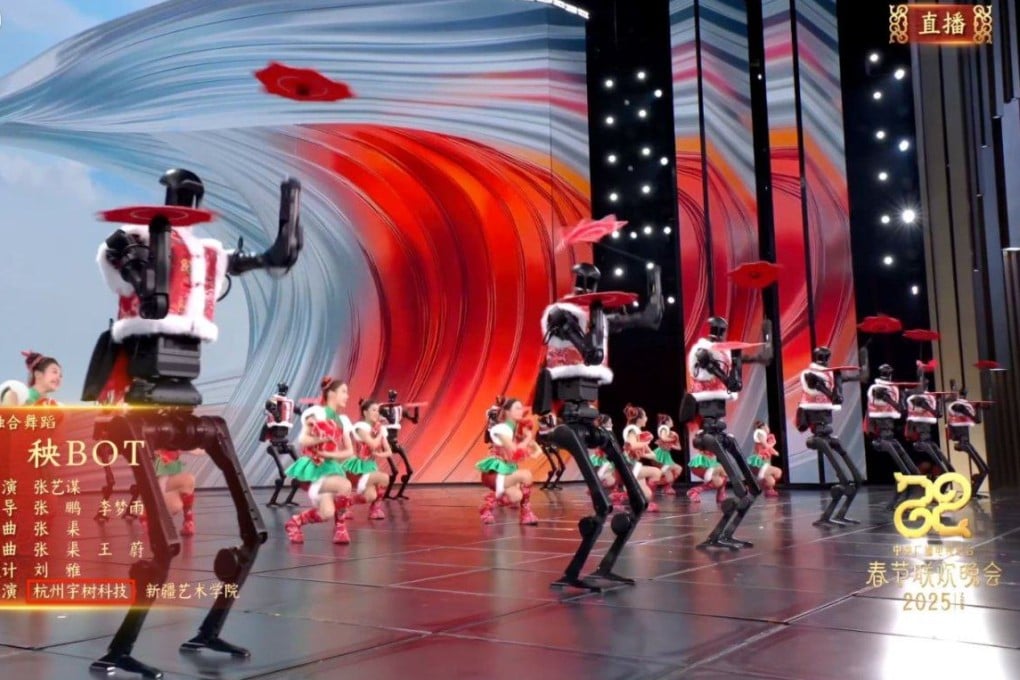
Chinese robotics company Unitree , backed by Alibaba Cloud technology, showed off the dancing skills of its general-purpose H1 humanoid robots at this year’s Spring Festival Gala , China’s most-watched television show, to the delight and awe of more than 1 billion viewers.
The Lunar New Year eve broadcast saw 16 H1 robots, all decked in floral red-and-white cheongsam vests, join a troupe of human dancers in a tightly choreographed performance of Chinese folk dance Yangge , kicking off a hi-tech celebration of the .

01:01
Dancing robots take the stage at China’s Spring Festival Gala performance
Dancing robots take the stage at China’s Spring Festival Gala performance
Unitree’s AI algorithm empowered the robots to “understand” the music they were dancing to and execute humanlike terpsichorean movements, according to the Hangzhou -based company, formally known as Yushu Technology.
The humanoid robots displayed their abilities to walk, run and jump on stage, delighting the show’s vast audience. The performance was directed by one of China’s most esteemed filmmakers, Zhang Yimou , who also directed the opening ceremony of the 2008 Beijing Olympics .
The performance marked the world’s “first large-scale, fully AI-driven and fully automated cluster humanoid robot performance in history – a perfect collision of technology and traditional culture”, Unitree said in a statement on Wednesday.

The H1 automatons’ milestone performance at the Spring Festival Gala reflects the progress being made by China’s robotics industry, which gives the country an edge in its tech rivalry with the US and potentially meet the domestic demand for humanoid robots amid the country’s ageing population .