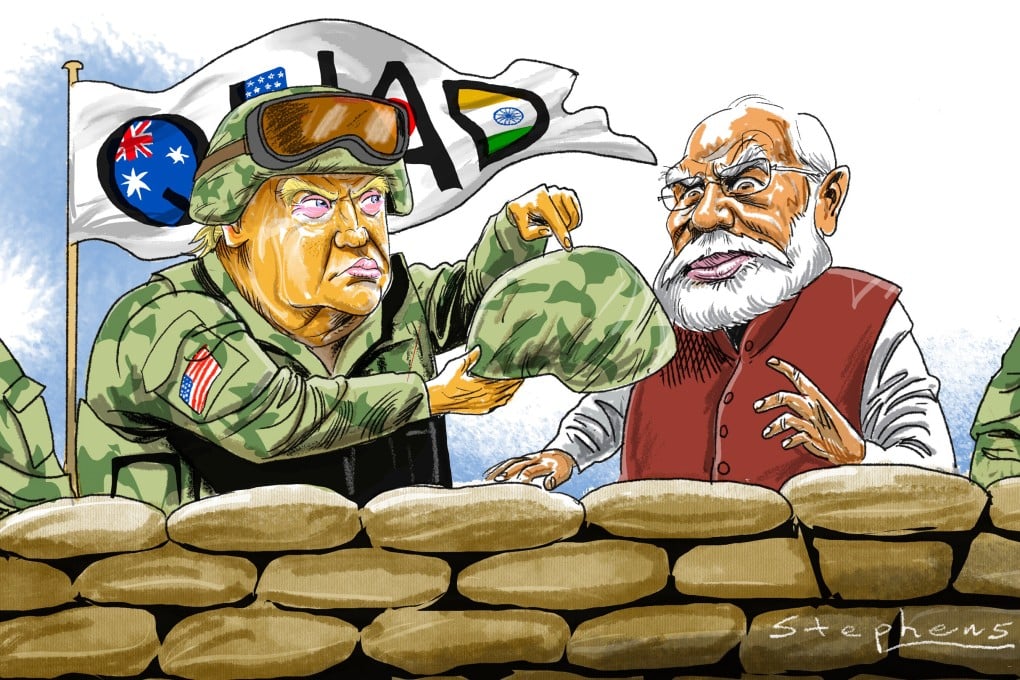
Soon after Trump assumed office, the two leaders had a telephone conversation which was described as “productive”. Trump sought a move towards a “fair bilateral trading relationship” and emphasised the importance of India increasing its purchases of US-made security equipment .
The read-out also added that “both leaders emphasised their commitment to advance the US-India strategic partnership and the Indo-Pacific Quad partnership, with India hosting Quad leaders for the first time later this year”.
The US is India’s largest trading partner. Two-way trade in 2023-24 was worth US$118 billion, with India having a surplus of US$32 billion. Trump had earlier described China, India and Brazil as “tremendous tariff-makers”, and in his first term he urged Modi to lift tariffs on the US-made Harley-Davidson motorcycle.
In a signal to Washington, the annual budget presented in New Delhi on February 1 announced major cuts to import tariffs including for high-end motorcycles. Senior officials in the Ministry of Finance claimed that India wants to shed the image of being a protectionist nation and that it is not a “tariff king”.
While the new and disruptive Trump-triggered trade tariffs and related protocols are an issue with which every major trading partner of the US – including China – is grappling, the more complex dilemma for Delhi is in the security-strategic domain.