and in Shanghai
The China Securities Regulatory Commission (CSRC) approved CATL’s plan to sell up to 220.17 million shares in the city, the company said in a filing to the Shenzhen stock exchange late on Tuesday.
CATL planned to raise at least US$5 billion in what could be the largest initial public offering in Hong Kong in four years, according to media reports. It would be the city’s largest share sale in the city since Kuaishou Technology raised US$6.2 billion in January 2021. The company would use the funds to build factories overseas, according a February 13 announcement.
Chinese companies domiciled on the mainland must get the approval from the CSRC to raise capital offshore, including in Hong Kong and the United States. The procedure has been simplified in recent years into a registration process, as the authorities in Beijing reopened the avenue for fundraising after a 20-month obstruction to enable businesses to recapitalise for growth in the post-Covid period.
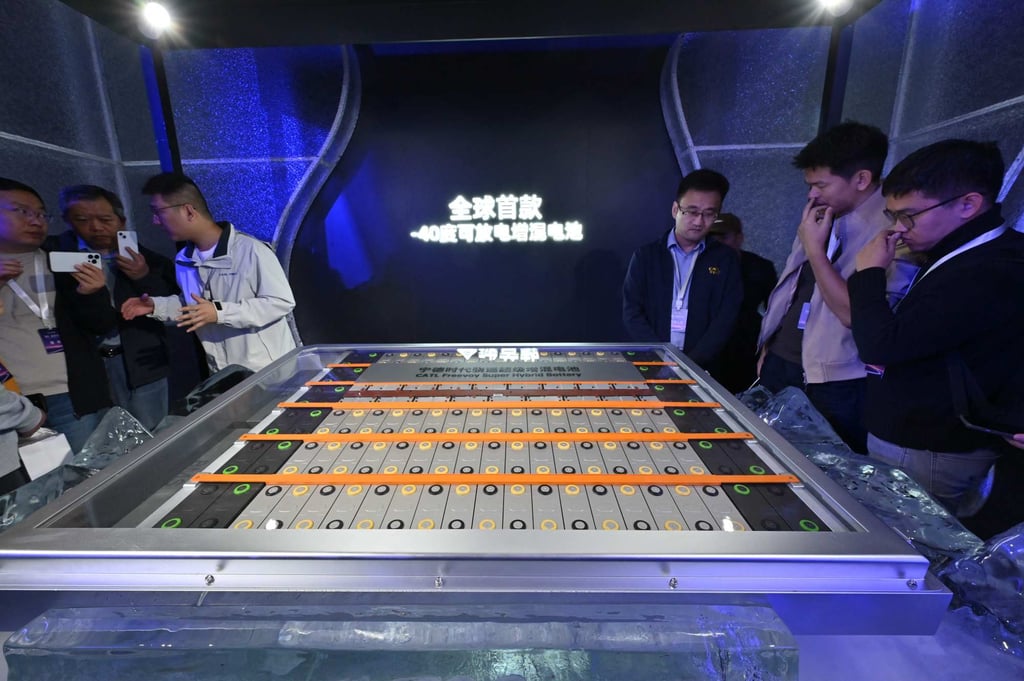
Based in Ningde in eastern Fujian province, CATL raked in 110 billion yuan (US$15.1 billion) in 2024 sales from outside China, or 30 per cent of total revenue, according to its exchange filing. In 2023, overseas businesses accounted for 32.7 per cent of the total. CATL’s 2024 revenue fell 9.7 per cent to 362 billion yuan.
CATL held a 37.9 per cent share of the global market in 2024, compared with 36.6 per cent a year earlier, according to Seoul-based SNE Research. Excluding the mainland, that ratio fell to 26.8 per cent, as capacity constraints undermined supplies to major clients like BMW and Volkswagen .