
Despite the Donald Trump administration’s unconventional foreign policy in his second term, Sun Yun – the director of the Stimson Centre’s China programme – recently argued that it is unlikely to have any ramifications for the United States’ military presence in the Indo-Pacific.
Given that Trump is eager to boost US power projection capabilities with the desired acquisition of Greenland , it is unfathomable that it would seek to change its current position in the Indo-Pacific. However, the Trump presidency might, somewhat unwittingly, have major ramifications for the overall geopolitical dynamics of the Indo-Pacific.
The important thing to understand about the Indo-Pacific is that it is not a natural regional geopolitical setting. At its maximalist definition – stretching from the east coast of Africa to the west coast of the Americas – the Indo-Pacific covers more than half the globe.
The Indo-Pacific, even in its more minimalist interpretations, is simply too large a geopolitical space to be conceived of as an interconnected region. Rather it should be thought of as a constellation of many regions, all of which have unique regional geopolitical dynamics .
Consequently, what has been pushing the changing geopolitics of the Indo-Pacific is not so much natural regional geopolitical dynamics but the increasing perception of China as a security threat by several like-minded powers – chiefly the US, Japan and Australia. In other words, the Indo-Pacific is a construct built on the supposed growing existential threat posed by China to the “ rules-based order ”.
10:37
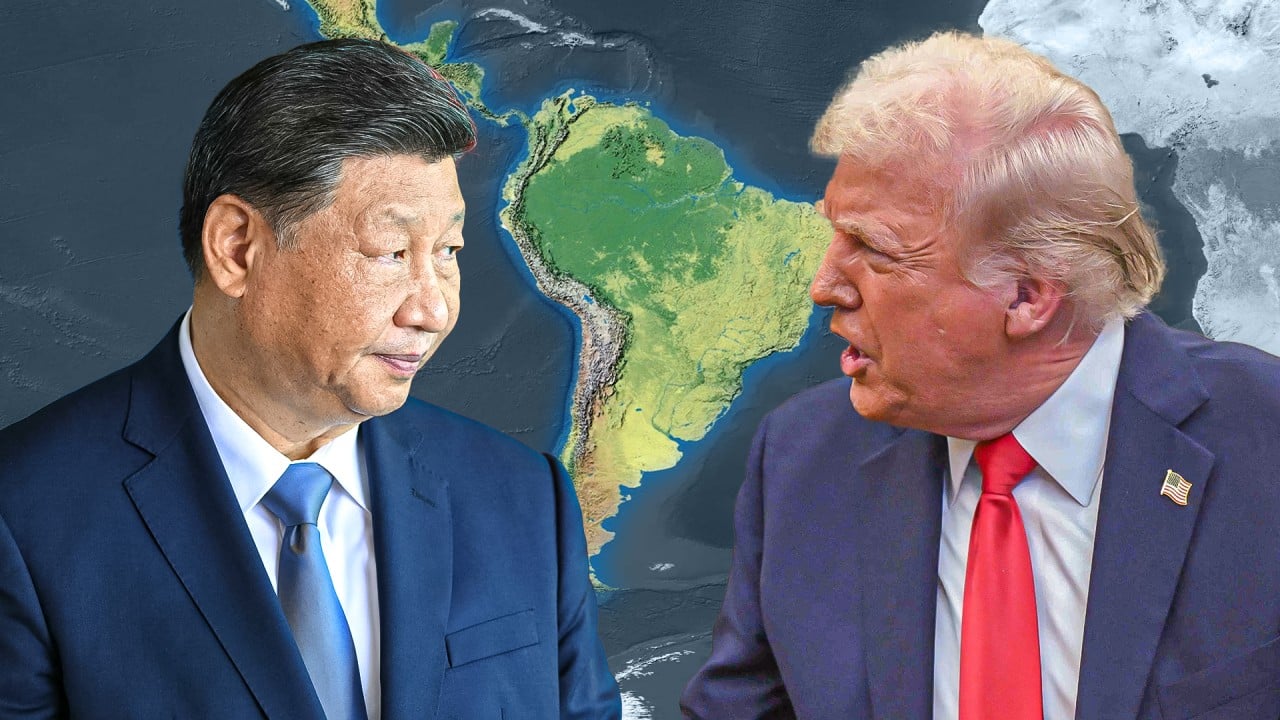
Why the US is worried about China’s growing influence in South America
Why the US is worried about China’s growing influence in South America
Importantly, the Indo-Pacific construct differs significantly from the previously popular Asia-Pacific one because it stems from a pessimistic view of the future. The Asia-Pacific construct is based on a far more optimistic view of the future, at a time when the West was hopeful that China could be co-opted into the status quo system by becoming not only a trustworthy partner but a source of economic prosperity.