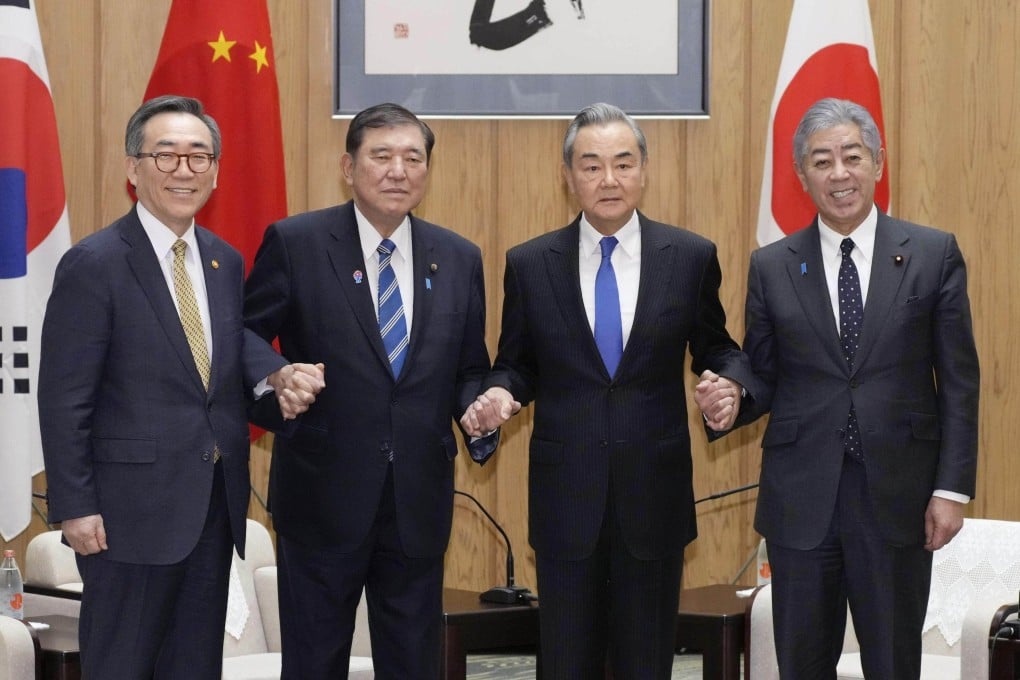
Just days earlier, speaking at the 20th Roundtable Japan in Tokyo, I witnessed the palpable momentum for cooperation in East Asia. Our three nations are bound by geography – neighbours who cannot escape one another. This proximity demands that we prioritise our geopolitical relationships, harnessing our collective strengths for mutual benefit.
Our economic interdependence is a cornerstone of regional stability. Last year, China-Japan trade hit US$293 billion – Japan is China’s second-largest trading partner, while China is Japan’s top trading partner and import source, though the second-largest export market after the US. South Korea’s exports to China, its biggest market, rose by 6.6 per cent last year. Investment flows thrive too: Japanese companies bolster China’s manufacturing , while Chinese companies tap South Korea’s tech sectors.
Yet, global trade faces headwinds. The return of US President Donald Trump signals renewed protectionism , with tariff threats and a US-led North American bloc looming.
Wang has stressed that talks on a China-Japan-South Korea free trade agreement should be resumed soon. Building on the Regional Comprehensive Economic Partnership ( RCEP ), which has boosted intraregional exports, such an agreement could leverage Japan’s precision manufacturing, South Korea’s semiconductor prowess and China’s logistical might.