Steam Deck "Engineering Sample No. 34" Sold on Ebay for $2000 - Reportedly an AMD "Picasso" APU-powered Prototype

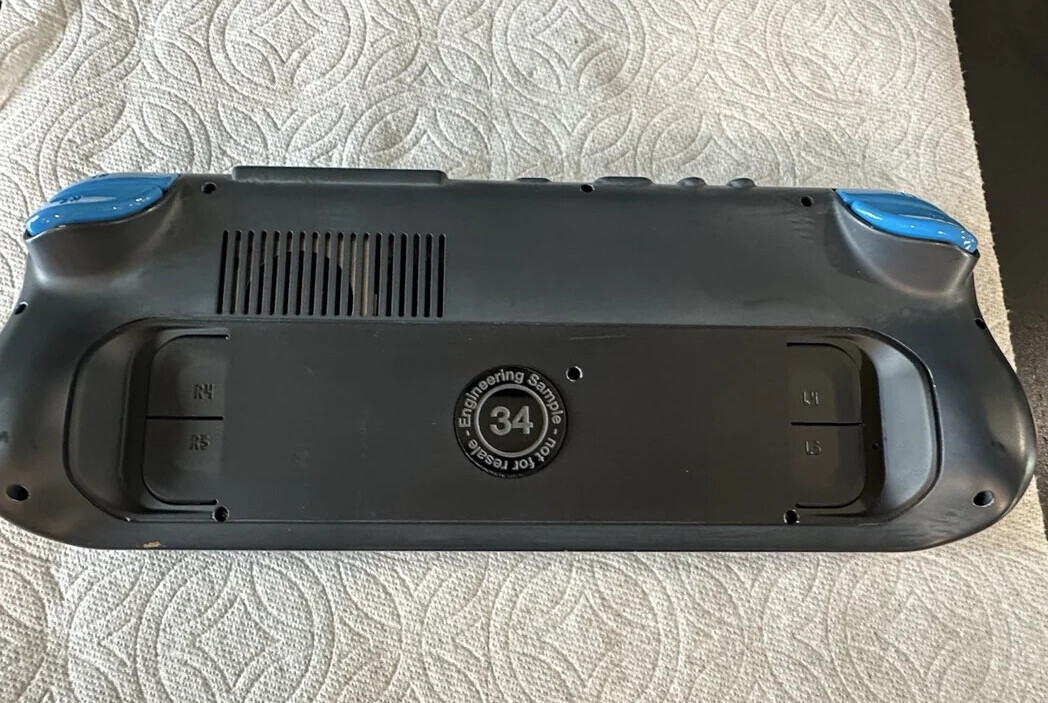
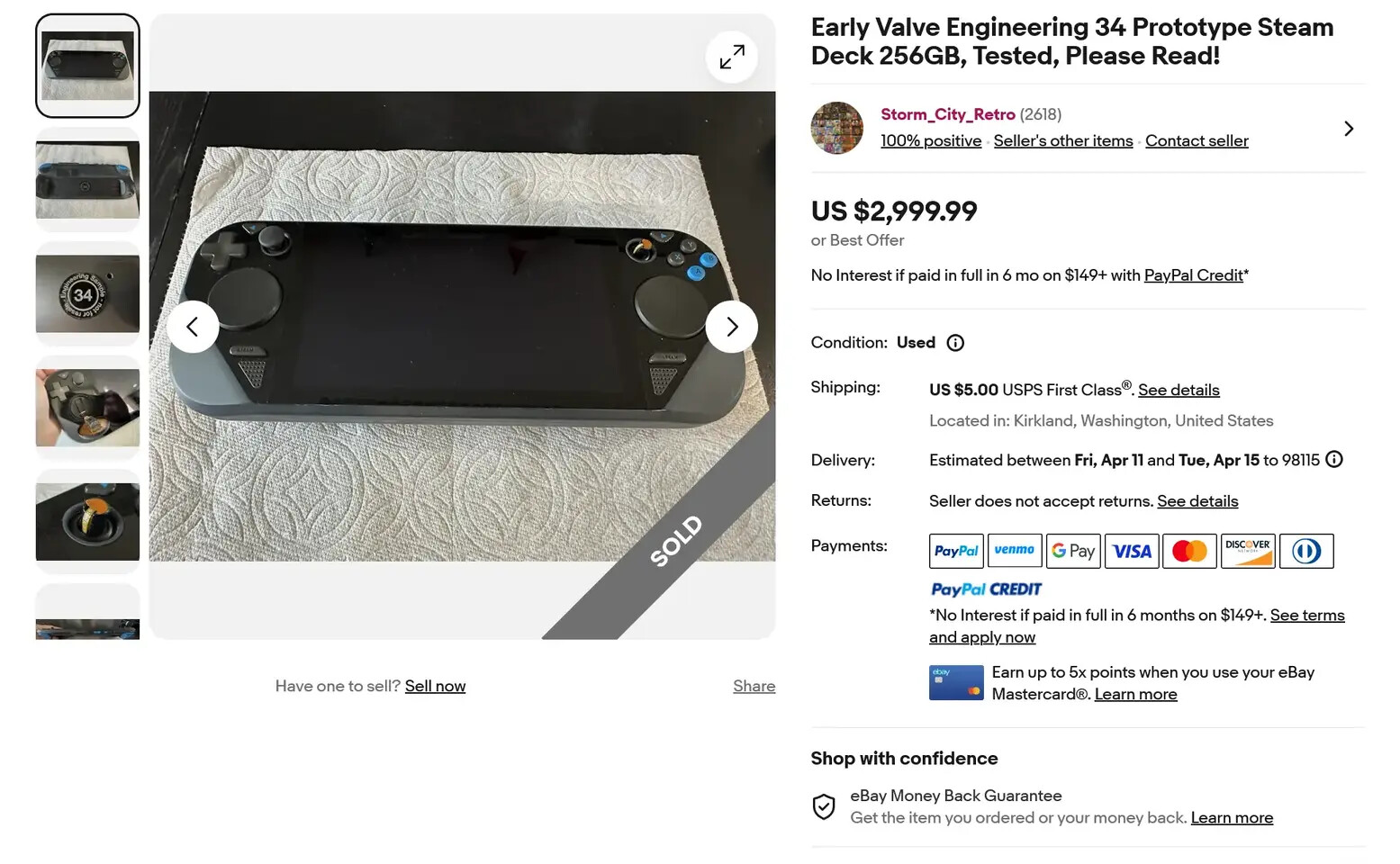
Not too long ago, Storm City Retro's Ebay store listed an unusual Steam Deck model—the original asking price was $2999.99, although potential buyers were allowed to bid with "best offers." The sales page was titled: "Early Valve Engineering 34 Prototype Steam Deck 256 GB, Tested, Please Read!" Gary_the_mememachine—a member of the Steam Deck subreddit—reported an eventual successful transaction, on April 8. The seller—a "primarily online" Kirkland, Washington-based retro video specialist—managed to attract a buyer; who apparently bagged "Engineering Sample No. 34" for a cool two thousand bucks. Given the presence of a sticker that states "not for resale," Valve is likely not enthused by the appearance of pre-commercial phase hardware via second hand channels. The company's Bellevue HQ is located not too far away from Storm City Retro's placement; both being in the Greater Seattle (Pacific NW) area. Kotaku reached out to its contacts at Valve, but a spokesperson has not provided a comment regarding the alleged leak of an AMD " Picasso " APU-powered engineering sample.

Handheld gaming device experts have analyzed saved screenshots and photos; prototype number 34 seems to of February 2020 vintage. It was compared to various "officially revealed" prototype units—as seen in an informative infographic . An exact match was not found in this compilation, but it is obvious that No. 34 differs greatly—externally and internally—when lined up against final retail models. In 2022, Pierre-Loup Griffais—one of the architects of SteamOS— provided some insight about a similar looking proto device: "the best part is that they (mostly) all still boot, serving as an exciting reminder of how far things have come since. This one has a Picasso APU, at about half of the GPU power of the final Deck . The flatter ergo was an interesting experiment and taught us a ton about comfort." The Steam Deck LCD model launched back in early 2022, with a custom 7 nm AMD Ryzen "Aerith" APU onboard—utilizing Zen 2 + processor cores and RDNA 2 graphics architecture. An OLED refresh arrived over a year later with a die shrink; now 6 nm. Team Red had kindly prepared a more efficient Ryzen "Sephiroth" mobile processor design .