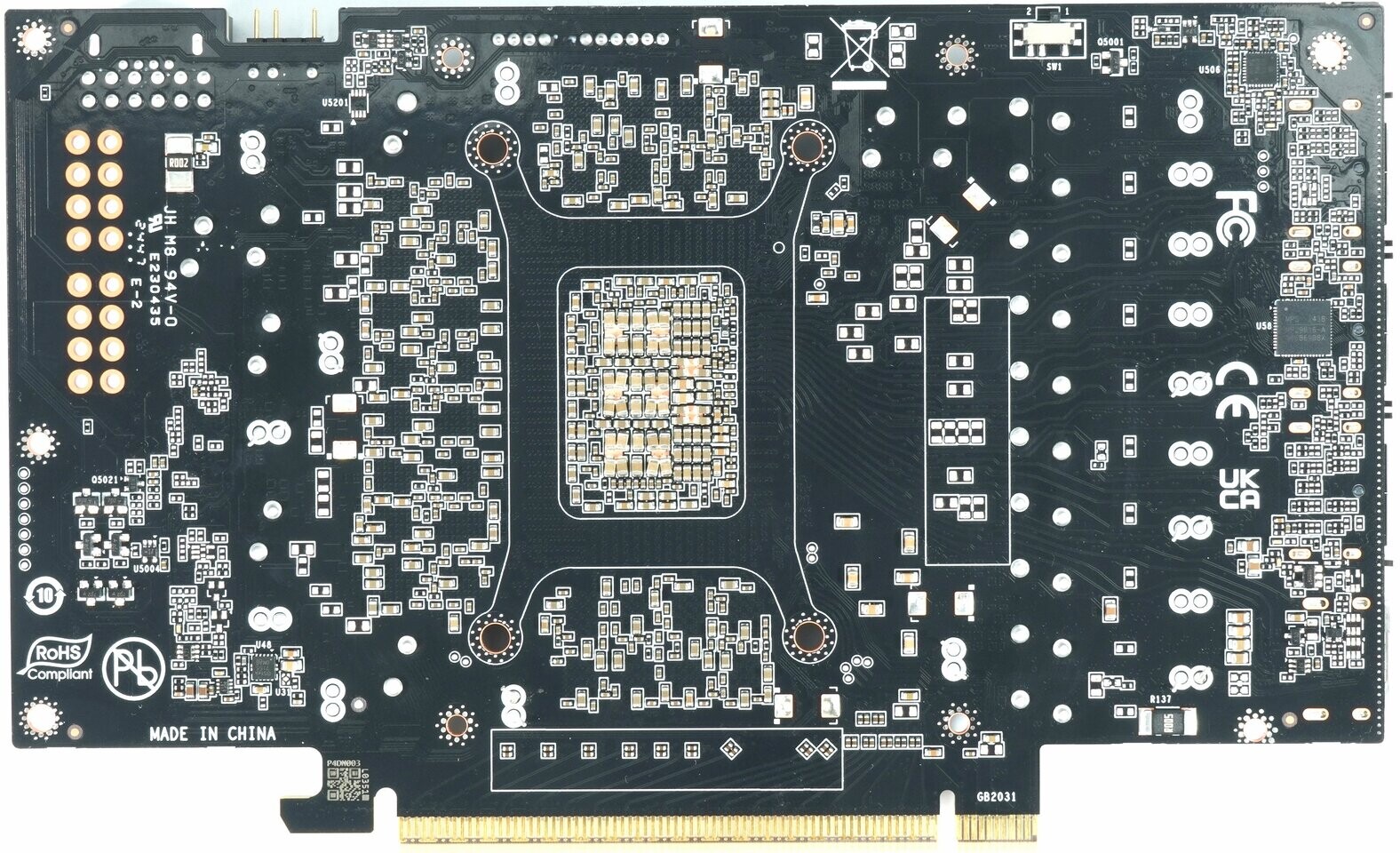
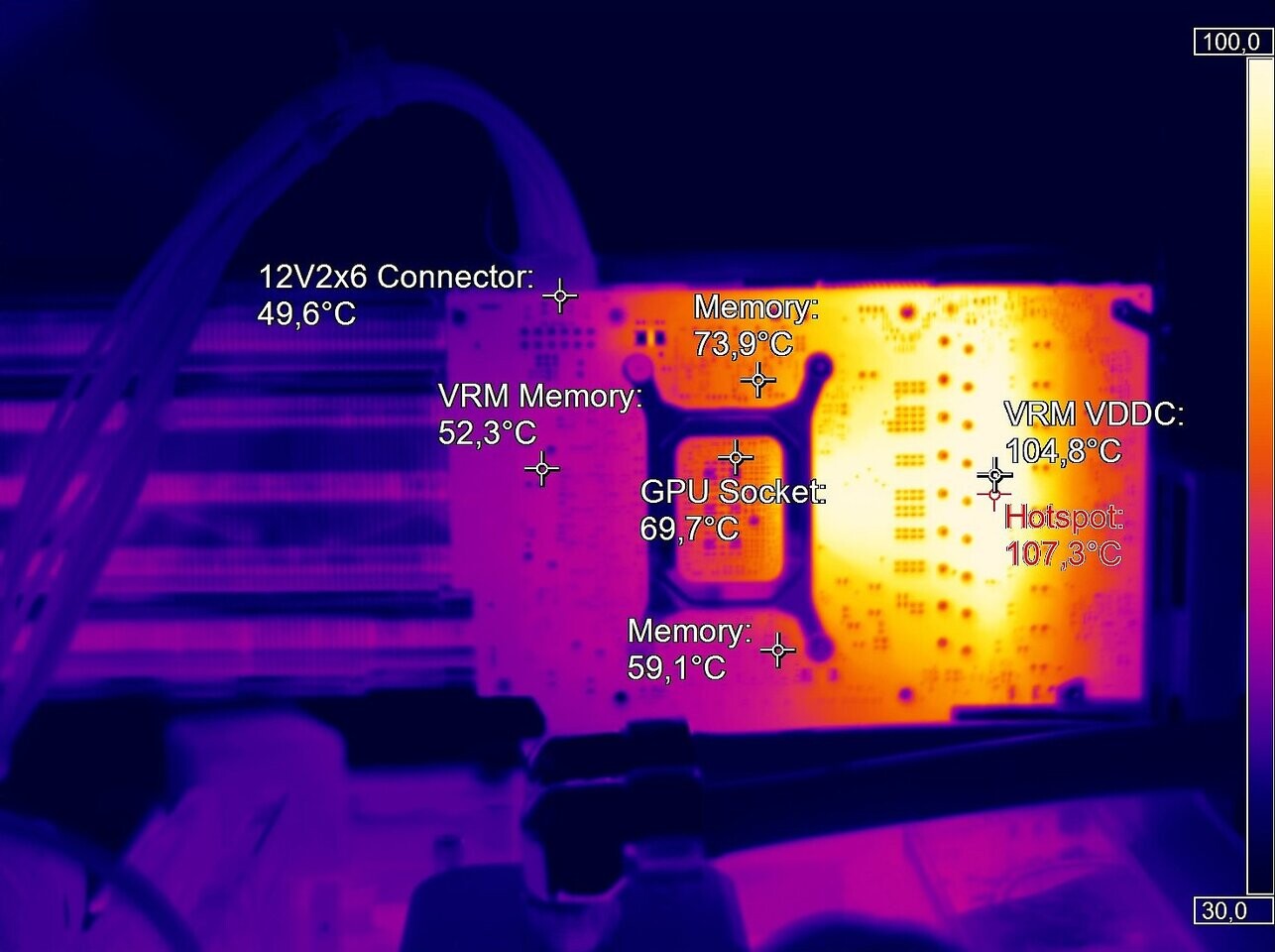
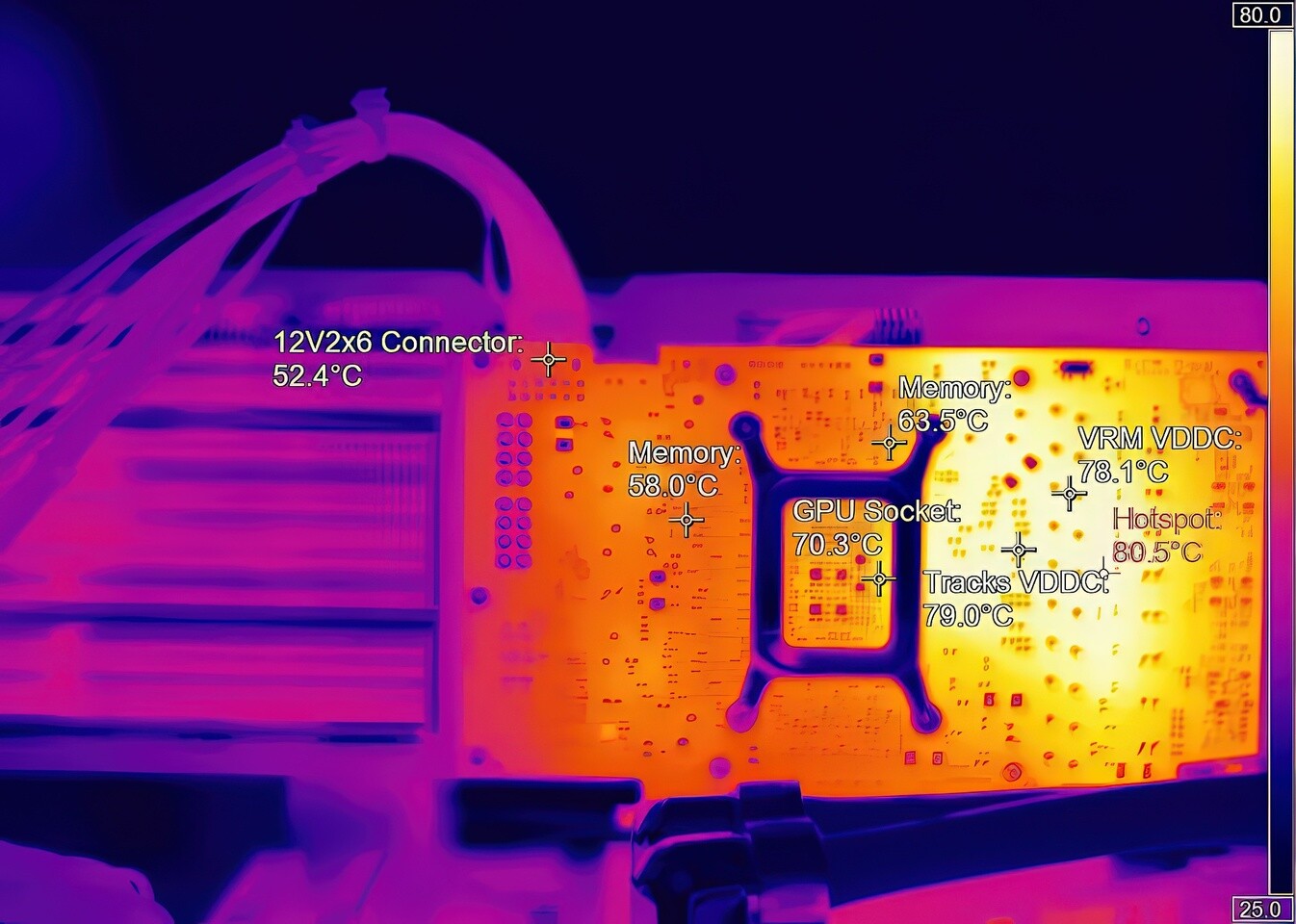
Igor's Lab has run independent testing and thermal analysis of NVIDIA's latest GeForce RTX 50-series graphics cards, including the add-in card partner design RTX 5080, 5070 Ti, and 5060 Ti, which are now attracting attention for surprising thermal "hotspots" on the back of their PCBs. These hotspots are just the areas on PCB that get hot under load, and not the "Hot Spot" sensor
NVIDIA removed with RTX 5090 series. Infrared tests have shown temperatures climbing above 100°C in the power delivery region, even though the GPU die stays below 80°C. This isn't a problem with the silicon but with concentrated heating in clusters of thin copper planes and via arrays. Card makers like Palit, PNY, and MSI have all seen the same issue since they closely follow NVIDIA's reference PCB layout and use similar cooler mounting. A big part of the trouble comes down to how PCB designers and cooler engineers work separately.
NVIDIA's Thermal Design Guide gives AIC partners detailed power-loss budgets, listing worst-case dissipation for the GPU, memory, NVVDD and FBVDDQ rails, inductors, MOSFETs, and other components, and it recommends ideal thermal interface materials and mounting pressures. The guide assumes that even heat is spreading and that there is perfect airflow in a wind tunnel, but actual consumer PCs don't match those conditions. Multi-layer PCBs force high currents through 35 to 70 µm copper layers, which join at tight via clusters under the VRMs. Without dedicated thermal bridges or reinforced vias, these areas become bottlenecks where heat builds up, and the standard backplate plus heat-pipe layout can't pull it away fast enough.