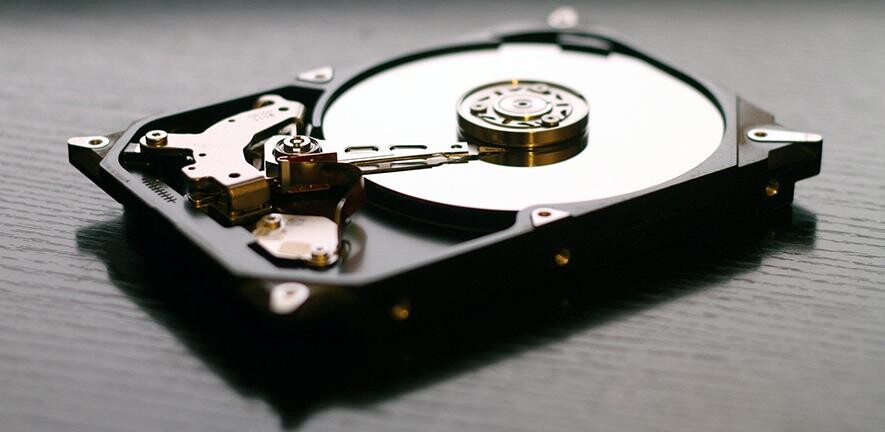
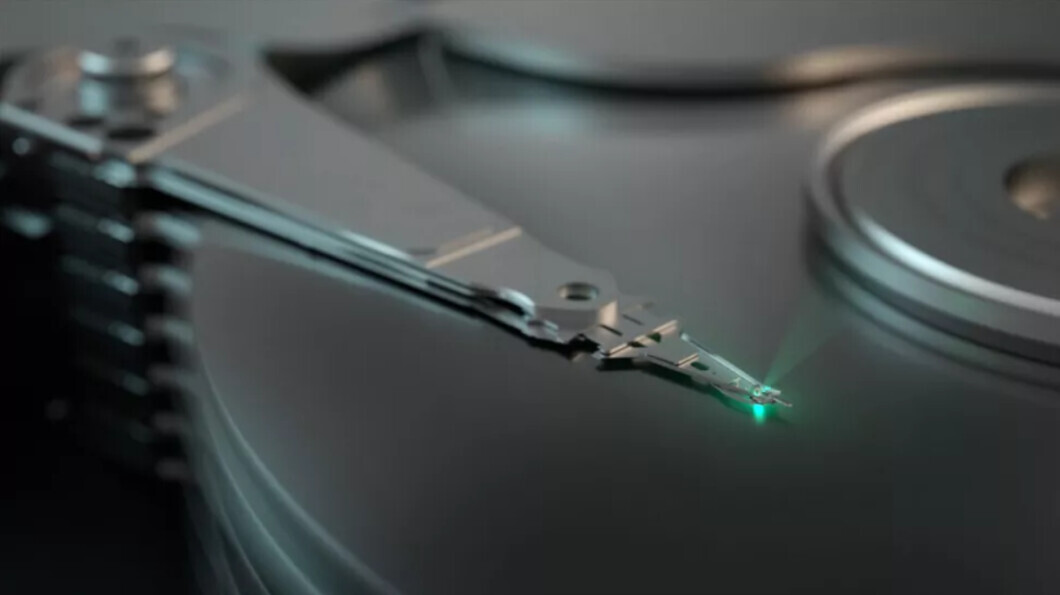
HDD manufacturers have tirelessly worked to reinvent the spinning drive technology (and sometimes topology) with increased storage density capabilities (potentiated by the development of technologies such as HAMR (Heat Assisted Magnetic Recording) and MAMR (Microwave Assisted Magnetic Recording). Researchers with the Cambridge Graphene Centre have collaborated with the University of Exeter, India, Switzerland, Singapore and the US to showcase how much life there might still exist in HDDs - if only graphene were to be used.
The research shows how a single graphene layer (researchers tested up to four layers) can be used as a replacement for multiple layers of carbon-based overcoats (COCs), which are deployed on platters to protect them from mechanical damages and corrosion. Current COC thickness stands at only 3 nm, but any existing space between platters presents a bottleneck to the number of platters (and thus storage density) that can be achieved in the HDD world. The researchers demonstrated that graphene enables a two-fold reduction in friction and provides better corrosion and wear protection than current state-of-the-art solutions. In fact, one single graphene layer reduces corrosion by 2.5 times. The researchers further demonstrated that graphene can still be deployed as protective layers in HAMR-totting HDDs - a feat that current carbon-based overcoats can't reproduce, as they fail at the high temperatures arising from the heat-assisted recording. Just one more feather on graphene's utility cap.