Japan has decided to ramp up its AI-focused investments by collaborating with NVIDIA, Fujitsu, and RIKEN to develop the nation's most powerful supercomputer.
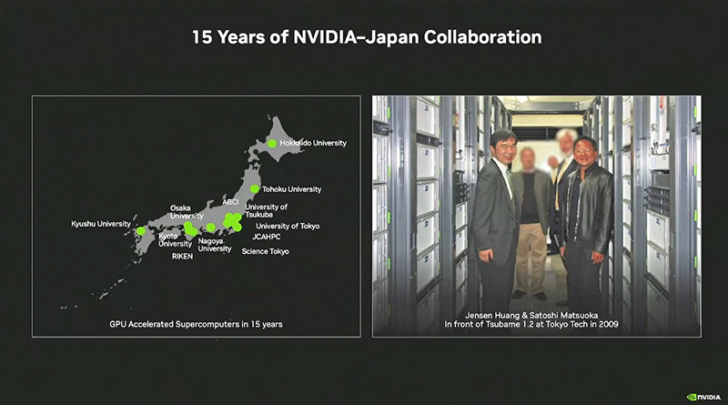
When it comes to nations investing in AI, Japan has been at the forefront, collaborating with NVIDIA and others at both the state and corporate levels. And now, , it is revealed that RIKEN, a research institute in Japan, will team up with NVIDIA and Fujitsu to develop Japan's most advanced computing machine. This machine will be a successor to the 'Fugaku' supercomputer and will be the first in the nation to adopt NVIDIA's AI accelerators and Fujitsu's MONAKA-X server CPUs.
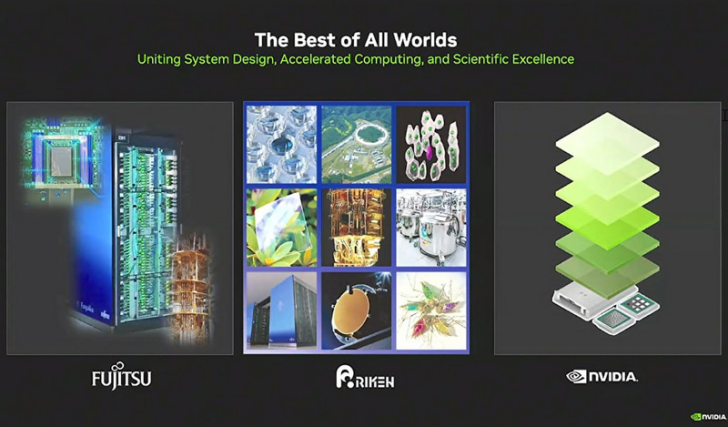
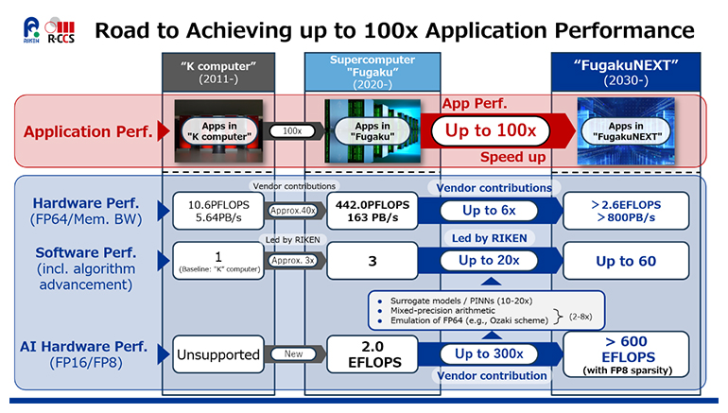
The Fugaku Next will be Japan's leading AI and HPC computing platform, responsible for both simulation and AI applications that will bolster scientific advancements in the region. When it comes to performance figures, Fugaku Next is shaping itself to be one of the most powerful supercomputers out there, originally intended to bring in up to 600 exaFLOPS in FP8 sparsity, with plans to ramp up this figure to a zetta-scale benchmark, becoming the first supercomputer to achieve this feat.
Interestingly, the supercomputer is a hardware joint venture effort between NVIDIA and Fujitsu, and both firms will collaborate to develop CPU+GPU solutions that work best together. In terms of the technologies expected to be employed, the supercomputer will utilize NVLink Fusion to interconnect the onboard components, along with NVIDIA CUDA-X libraries to leverage application-specific workloads like quantum computing and LLM deployment. Fugaku Next is expected to be a one-of-a-kind AI supercomputer.
NVIDIA's VP of HPC, Ian Buck, revealed at the event that the supercomputer won't be limited to Blackwell or Rubin generations; instead, by collaborating with Fujitsu, we can expect 'newer inventions', which could mean the use of an exclusive architecture on the machine, although this isn't certain for now. The partners expect a whopping '100-fold' increase in performance over the previous-gen Fugaku, driven by architectural advancements and new simulation technologies.
News Source: