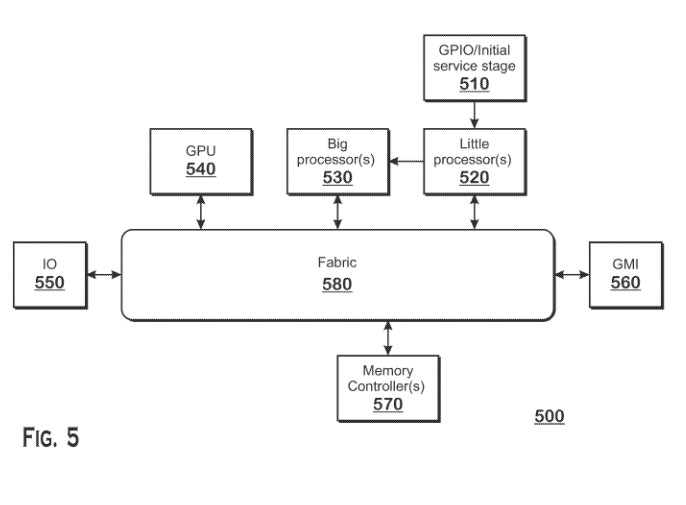
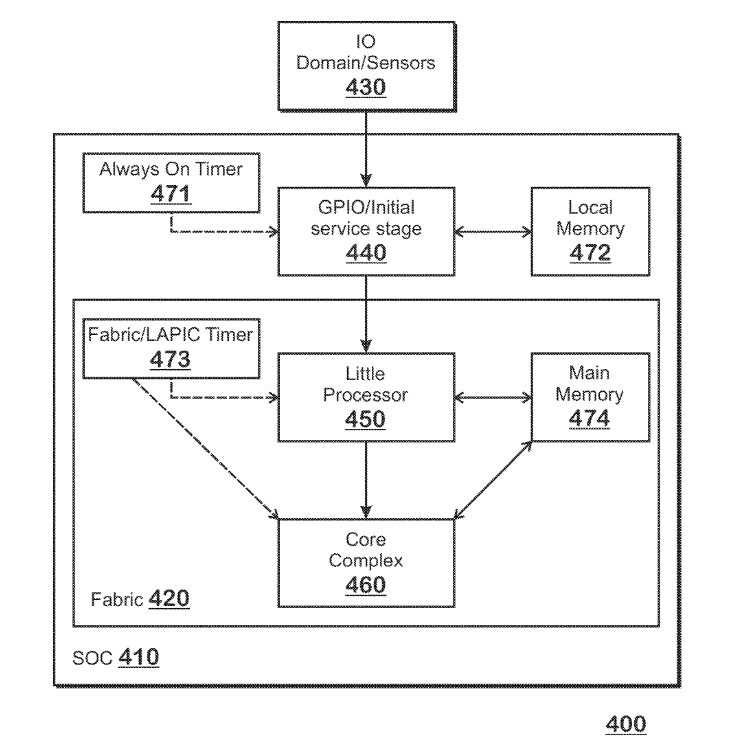
AMD is innovating its own x86 hybrid processor technology formulated along the Arm big.LITTLE hybrid CPU core topology that inspired Hybrid processors by Intel. Under this, the processor has two kinds of CPU cores with very different performance/Watt bands—one kind focuses on performance and remains dormant under mild processing loads; while the other hand handles most lightweight processing loads that don't require powerful cores. This is easier said than done, as the two kinds of cores feature significantly different CPU core microarchitectures, and instruction sets.
AMD has filed a patent describing a method for processing workloads to be switched between the two CPU core types, on the fly. Unlike homogenous CPU core designs where workload from one core is seamlessly picked up by another over a victim cache like the L3, there is some logic involved in handover between the two core types. According to the patent application, in an AMD hybrid processor, the two CPU core types are interfaced over the processor's main switching fabric, and not a victim cache, much in the same way as the CPU cores and integrated GPU are separated in current-gen AMD APUs.