Intel Ponte Vecchio to use OAM module form factor
Back in January by Raja Koduri himself has first shown the complex multi-tile GPU design. More recently, Intel’s new CEO, Pat Gelsinger, has provided more details on this product.
Ponte Vecchio is a next-generation accelerator for high-performance computing. This chip will combine 47 ‘magical tiles’, which consist mainly of compute tiles, base tiles, Rambo Cache tile, and Xe Link tiles, each manufactured using a different fabrication node.
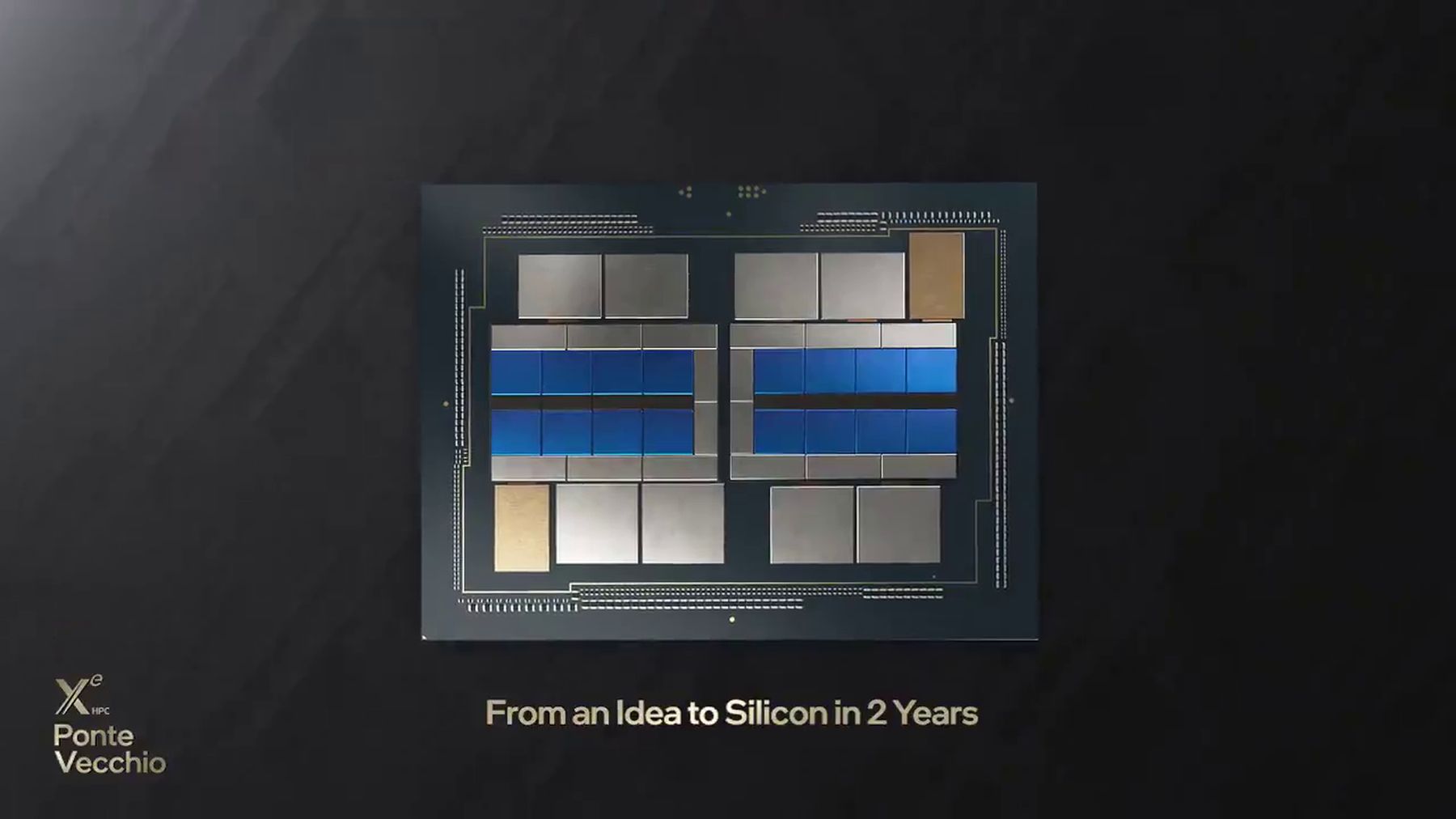
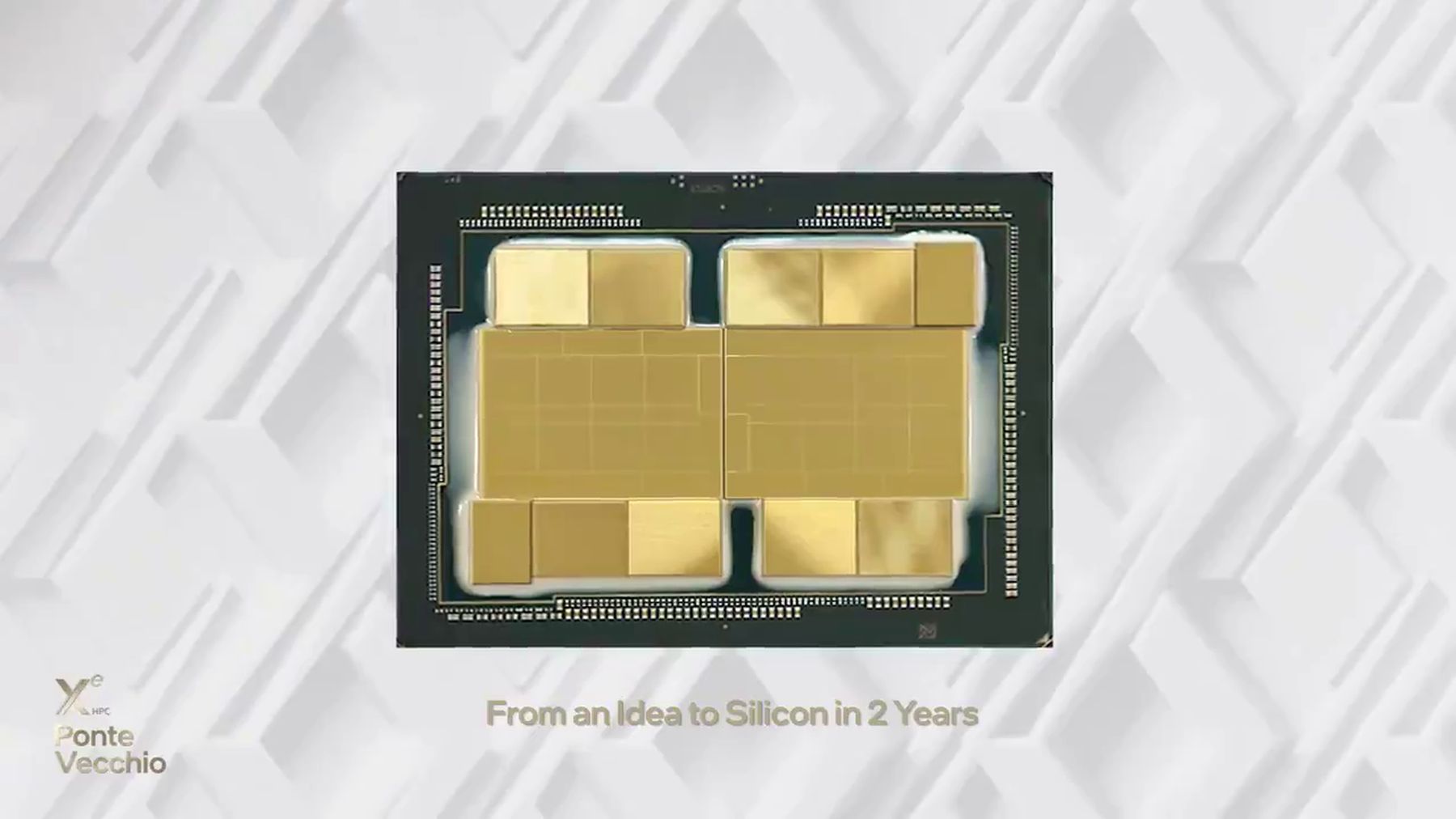
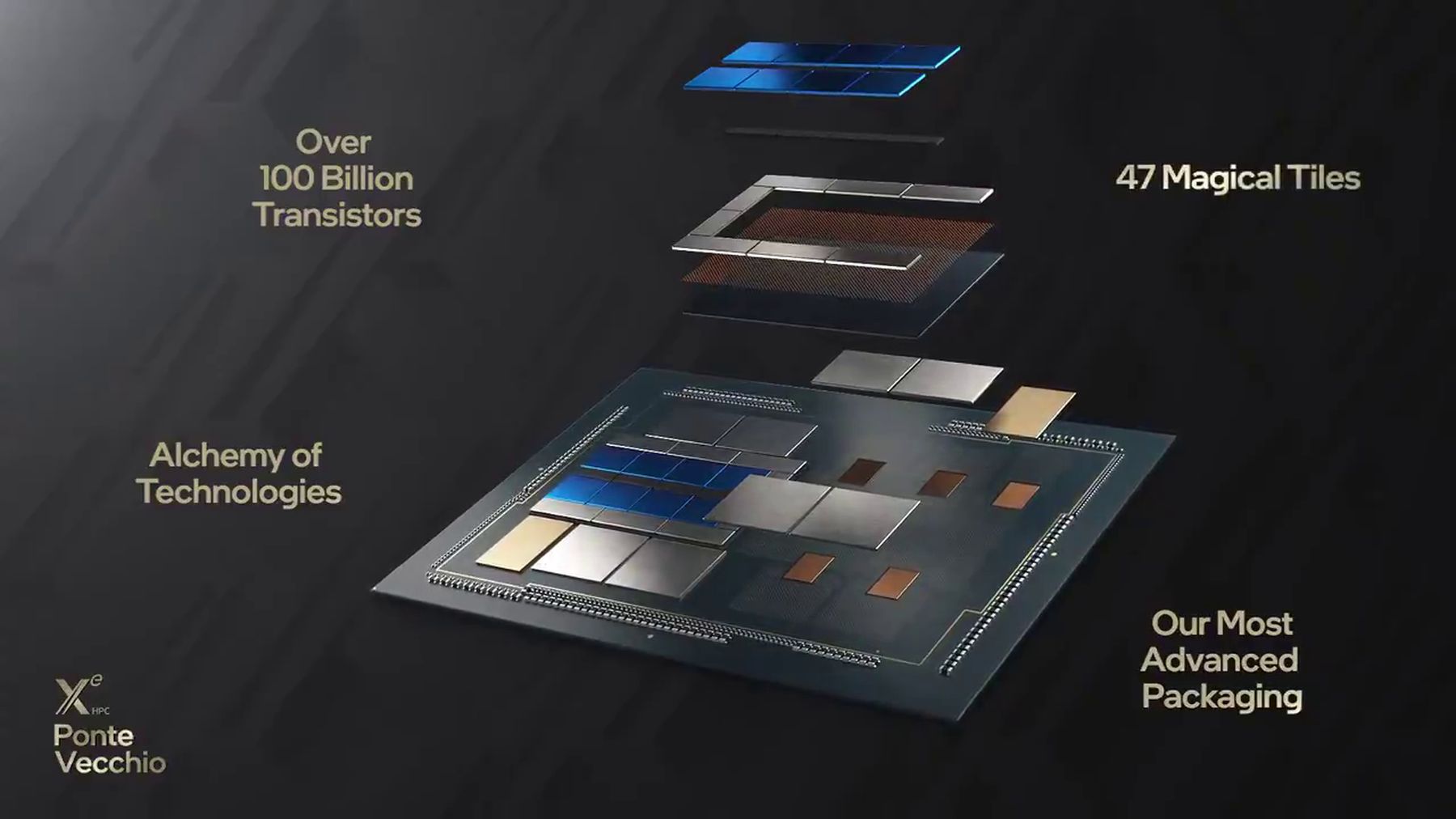
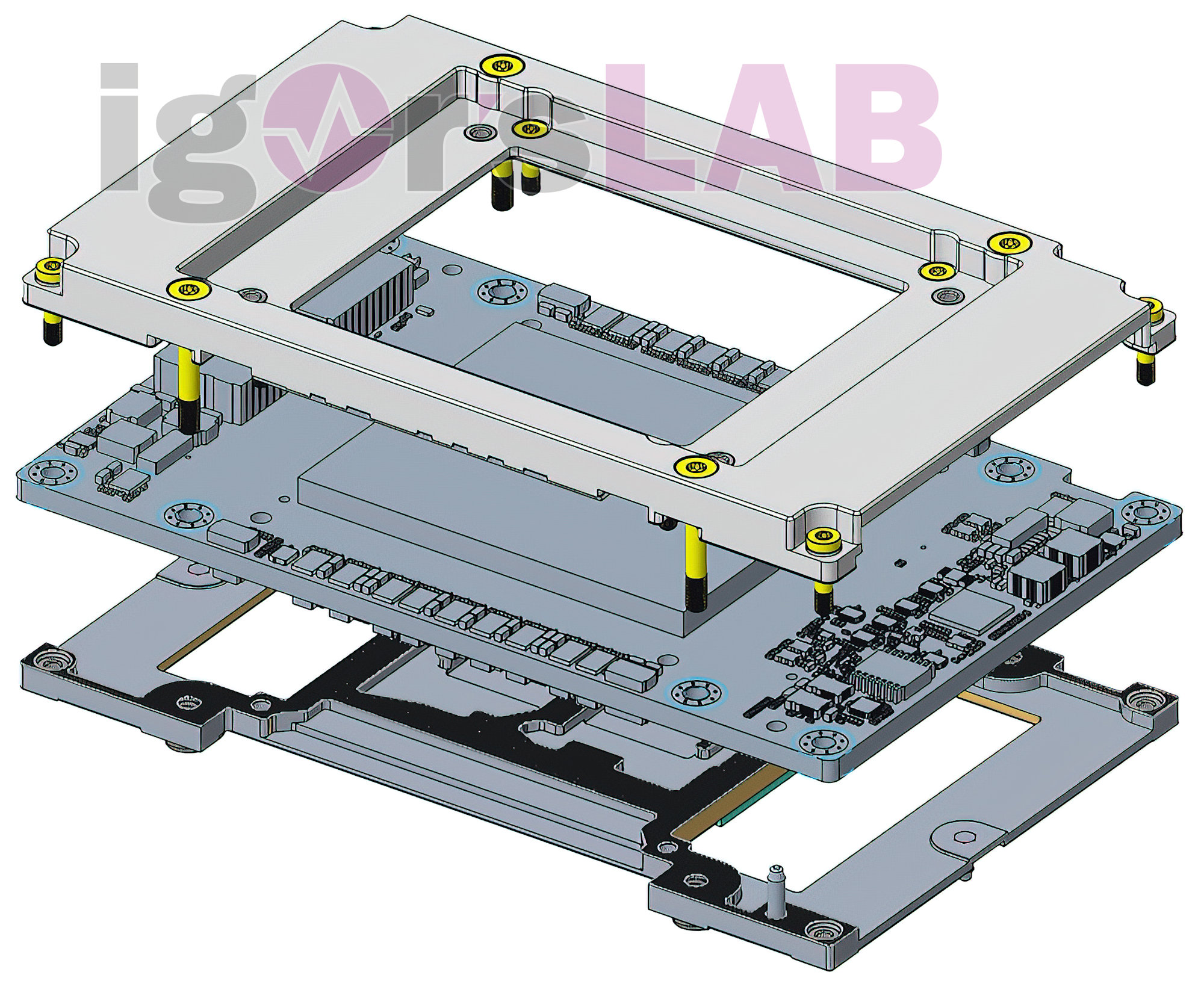
Igor Wallossek from Igor’sLAB has gained access to some materials that define (possibly) the final design of the Ponte Vecchio OAM module. OAM module (OCP Accelerator Module) is an open standard for mezzanine form factor accelerators. It rivals PCIe-based accelerators by offering simplified and standardized designs for server modules. Interestingly, this module form factor will also be used by Ponte Vecchio’s competitor, AMD Instinct MI200 which is based on dual-die (MCM) Aldebaran GPU.
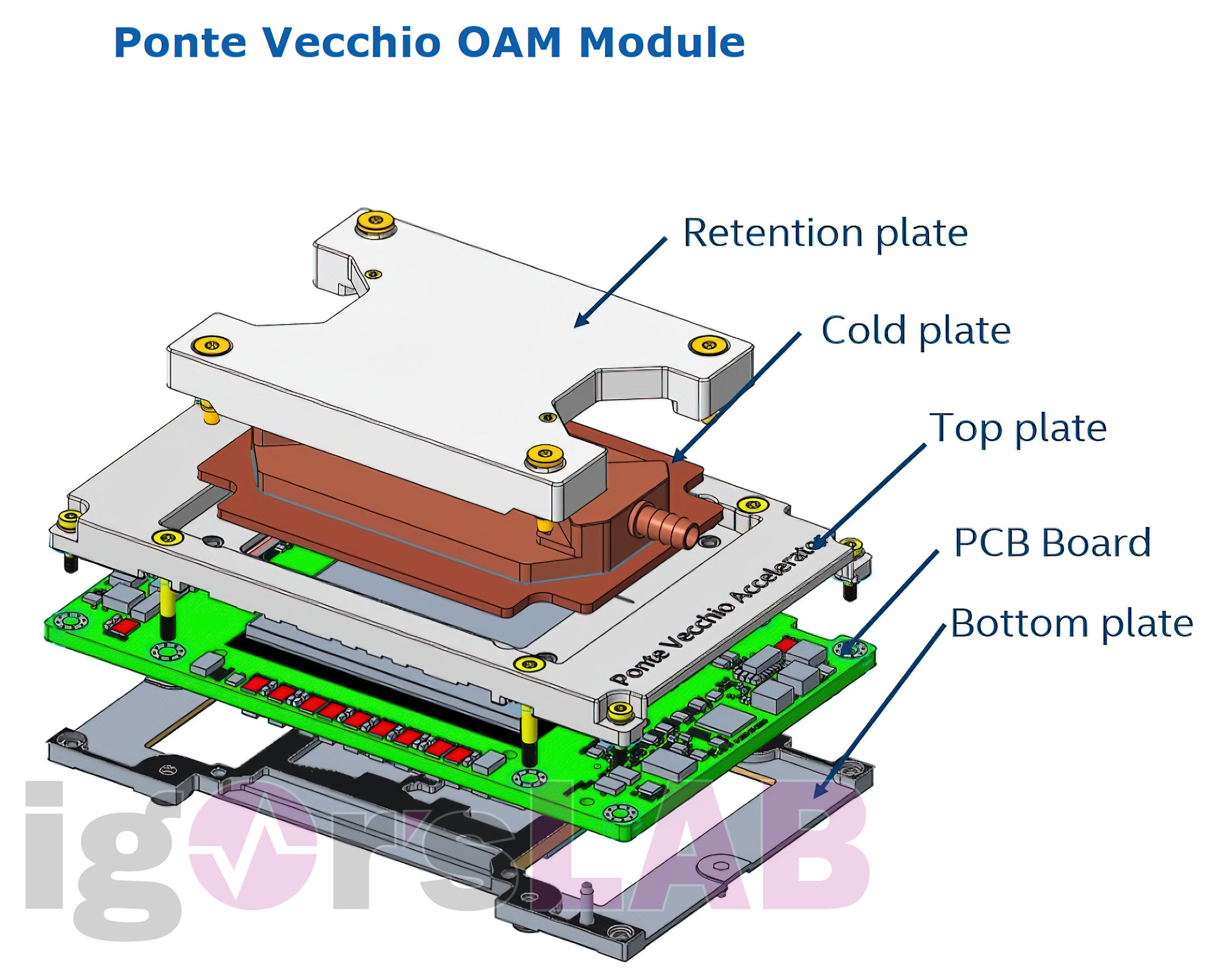
Ponte Vecchio GPU OAM module, Source: Igor’sLAB
The renders that have leaked show a 2-tile Ponte Vecchio design (at this moment the only known version), which was also shown by Koduri and Gelsinger. This is a very complex processor that packs multiple different nodes on a single interposer. Ponte Vecchio uses a mix of Intel’s 7nm, 10nm Enhanced SuperFin, as well as TSMC 7nm and 5nm nodes. These tiles are packed using EMIB and Foveros 3D technology.
This combination could generate even 600W of power (or seven slightly more), Igor claims. Such a chip would require a powerful and efficient cooling solution such as liquid cooling. The renders do seem to suggest that such a cooling technique will be used. We can clearly see a cold plate with liquid cooling connectors sandwiched between the top and retention places.
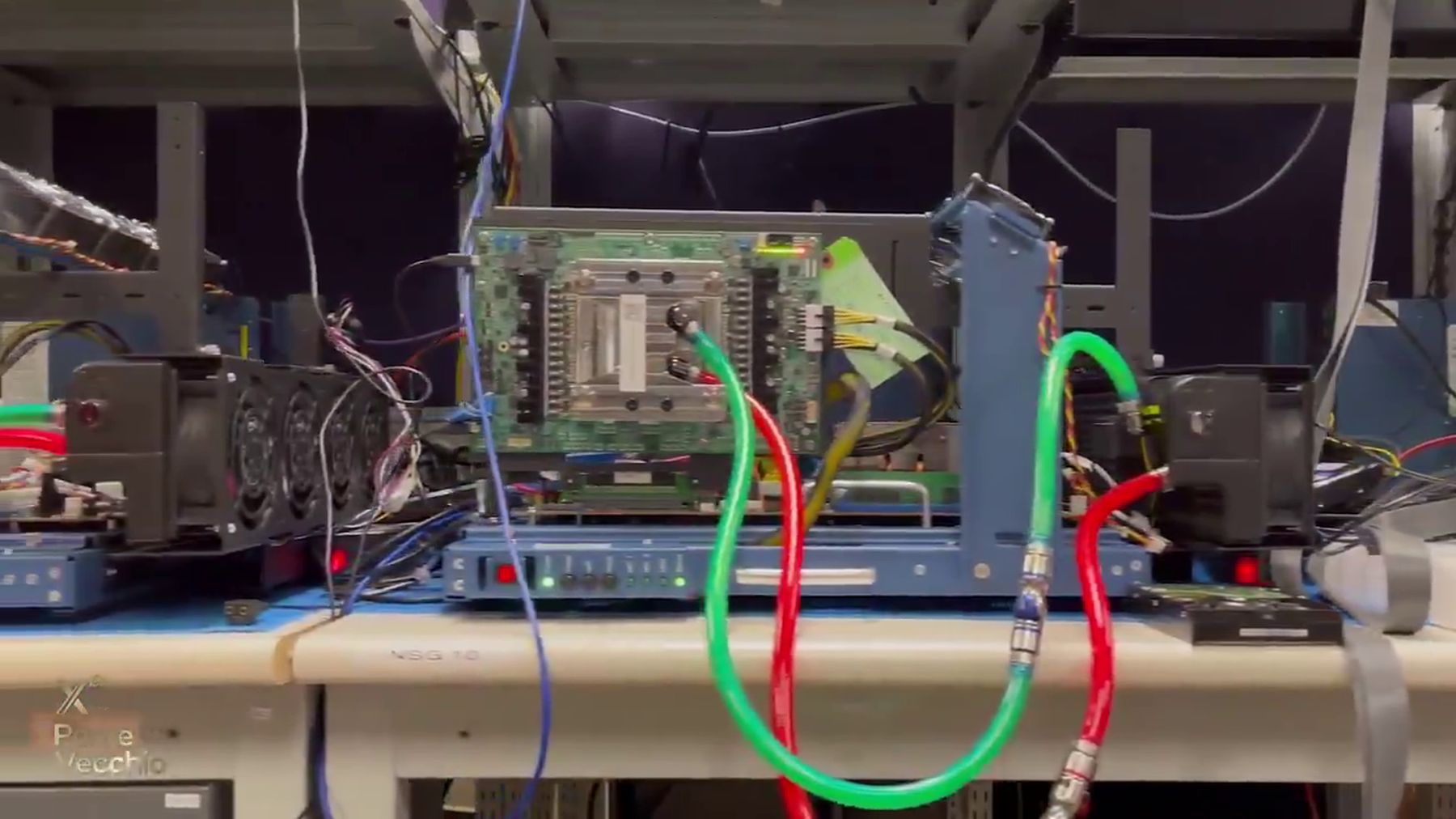
Intel has in fact already showed its Ponte Vecchio cooled down by liquid cooling back in March, however, it is quite common to use powerful cooling methods for engineering samples, which are simply unoptimized at the time for strict power and thermal requirements. In this case, it seems that the liquid cooling will remain.
Ponte Vecchio GPU OAM module, Source: Igor’sLAB
Source: Igor’sLAB