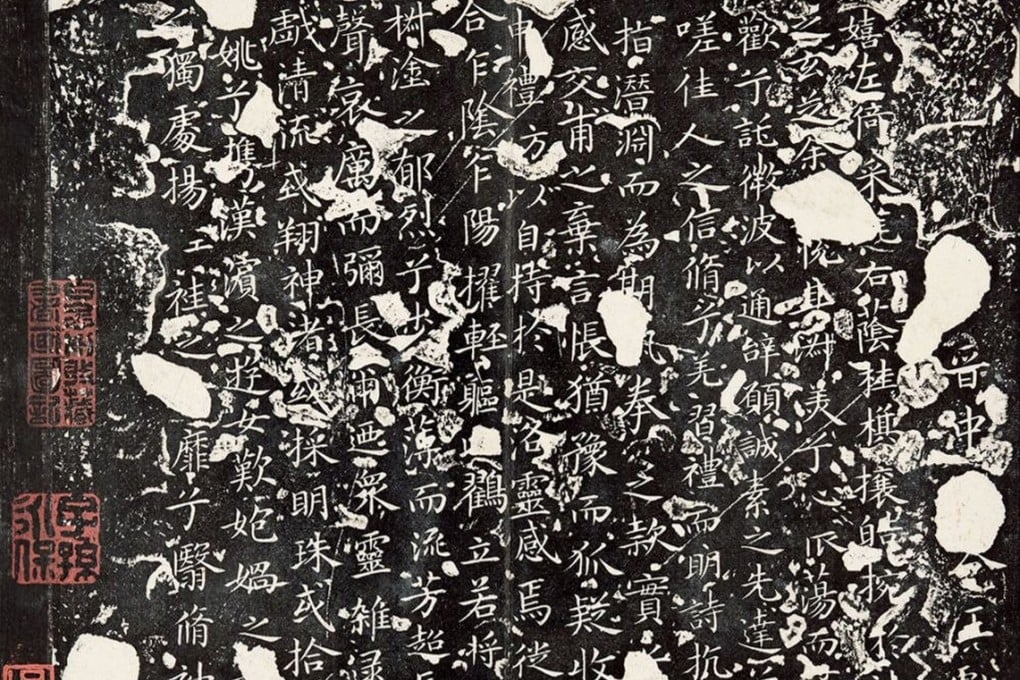
A Chinese research team has fully restored a 1,600-year-old romantic poetry scroll with the help of artificial intelligence (AI), showcasing how centuries-old art can be given a digital rebirth and regain its charm in the present day.
The masterpiece Rhapsody on the Luo River Goddess , or Luoshen Fu , was recently restored by Peking University. The work was penned by the esteemed Chinese calligrapher Wang Xianzhi in the 4th century, yet only around a quarter of its verses have survived.
According to a post on Peking University’s social media account on Thursday, a team from the university’s Centre for Chinese Font Design and Research successfully re-created this severely damaged calligraphy work by combining calligraphic font design with AI character creation technology.
Based on the surviving 250 characters and a detailed analysis of their stylistic traits, the team used AI to replicate and expand upon the original style and form. The result is a complete rendition of 919 characters presented in full scroll form.
The university wrote that this endeavour “vividly illuminates the fusion potential of ‘AI plus culture’ – where traditional calligraphic art gains fresh modes of expression in the digital age”.
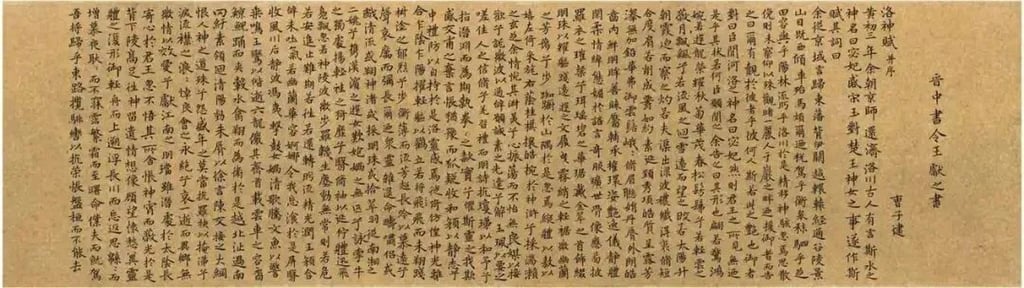
Luoshen Fu is a prose poem originally written around AD222 by Cao Zhi, a prince of the state of Cao Wei during China’s Three Kingdoms period , who was born in AD192 and died at the age of 40.