
It has been three years since Intel entered the desktop GPU market with the Arc A770 and A750 “Alchemist” series, launched on October 12, 2022. Of course, the actual Alchemist GPU series launch took place few months earlier, with the entry-level Arc A310/380 graphics, but it’s the high-end segment that finally brought Intel to gaming rigs.
Over the past year, Intel expanded its lineup with the Arc B580, B570, and the professional B60/B50 models under the “Battlemage” generation. These GPUs have been well received, largely thanks to competitive pricing and consistent day-1 driver updates with game optimizations. Intel’s mid-range cards are finally taken seriously by gamers and system builders who want solid performance at competitive prices.


Arc B580 and Pro B60 – flagship Battlemage GPUs (for now), Source: Intel
However, the outlook for Arc’s future is far less clear. Intel’s recent partnership with NVIDIA to integrate RTX GPU chiplets into future SoCs has raised questions about the company’s long-term discrete graphics roadmap. Intel has not clarified whether the deal affects the previously announced Celestial and Druid GPU series. May I remind you that Intel even asked about ideas for 5th Gen Xe architecture, nothing like that has taken place since then. It appears that the Intel marketing team has vanished.


Raja Koduri and Pat Gelsinger promoting Arc Alchemist (both former employees), Source: Intel
Arc’s marketing efforts have been essentially nonexistent since the Battlemage launch. There are no mobile versions of the B-series GPUs, and the long-rumored Arc B770, a high-end Battlemage model expected to use the BMG-G31 GPU with 16GB of memory, remains unannounced.

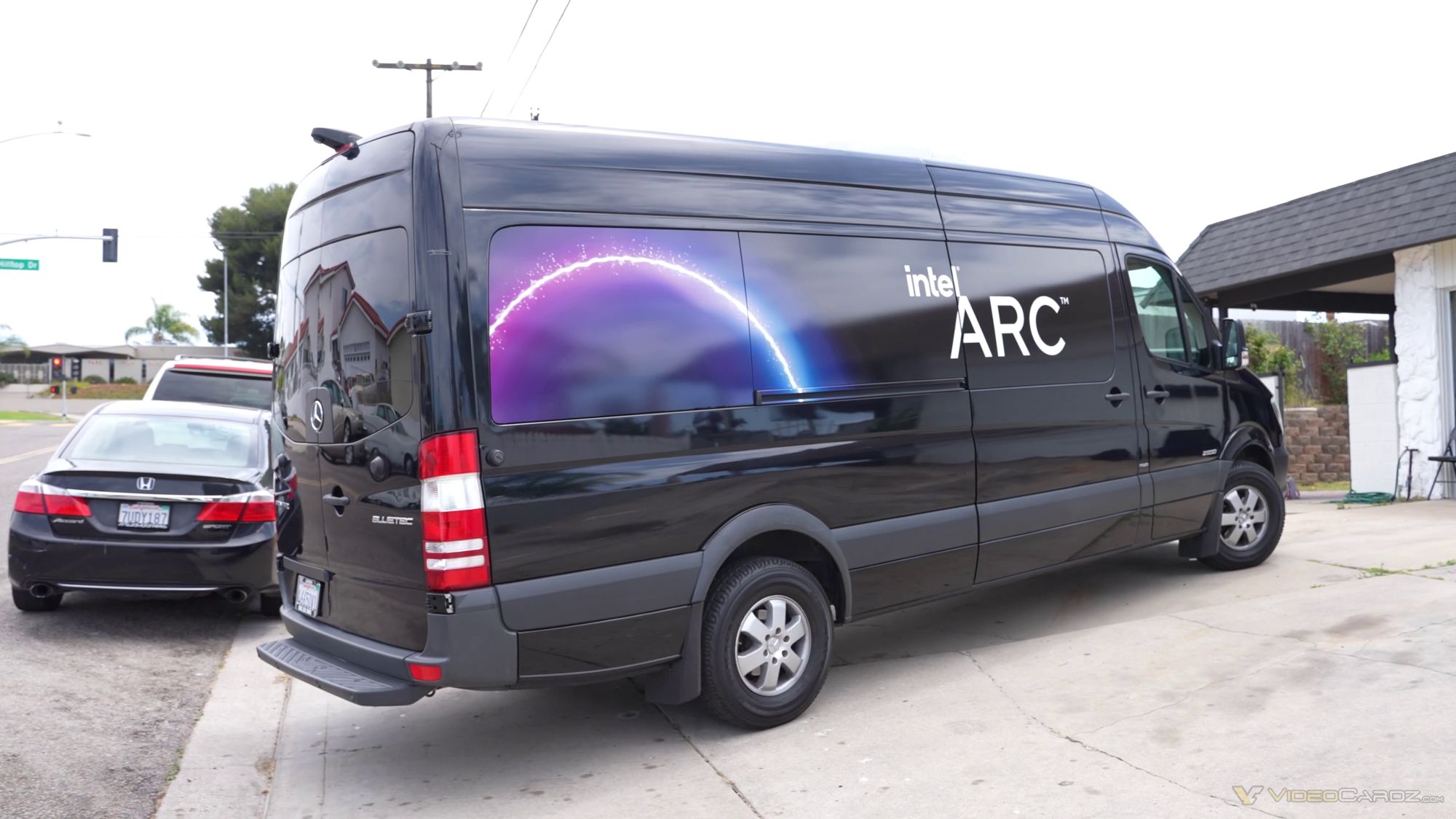

Marketing for Arc Alchemist launch, Source: Intel
Intel insists it is staying in the graphics business. The company recently teased XeSS 3 , a next-generation upscaling and frame-generation technology, now tied to the upcoming Panther Lake platform based on the Xe3 architecture. The expectation is that Xe3P could appear not only in the newly revealed Crescent Island data-center GPU but also in future discrete gaming products under the Celestial family.
I’m still hopeful this isn’t the final word from Intel and that we’ll see a rebound in the future. This year has been rather boring for Intel GPU fans, both in hardware and software, though many will appreciate how much the drivers have matured. Also, we got our first dual-GPU in many years , which is nice.