9to5Mac Security Bite is exclusively brought to you by Making Apple devices work-ready and enterprise-safe is all we do. Our unique integrated approach to management and security combines state-of-the-art Apple-specific security solutions for fully automated Hardening & Compliance, Next Generation EDR, AI-powered Zero Trust, and exclusive Privilege Management with the most powerful and modern Apple MDM on the market. The result is a totally automated Apple Unified Platform currently trusted by over 45,000 organizations to make millions of Apple devices work-ready with no effort and at an affordable cost. today and understand why Mosyle is everything you need to work with Apple .
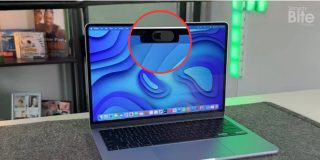
Plastic webcam covers—especially of the sliding kind—boomed in popularity sometime in the 2010s as a low-tech way to keep hackers from eavesdropping on compromised machines. The concern felt justified at the time. But by 2020, Apple was beginning to issue warnings that those covers aren’t actually needed and can even damage a MacBook’s display.
For this Security Bite, let’s set the tin-foil hats aside and talk about why webcam covers don’t meaningfully improve privacy, can cause features like to not work properly, and are far more likely to damage your screen than stop someone from spying on you.
On more modern —those with Apple Silicon and Intel (post-2008)—a malicious hacker can’t turn on your webcam without also triggering the green privacy indicator. The camera module hardware doesn’t allow it.
Macs produced before 2008 are a different story, though. Security researchers at Johns Hopkins a 2013 paper showing that Macs released prior to 2008 could, under certain advanced attacks, be coerced into powering the camera without the green LED indicator. It makes sense considering back then, Apple tied the camera sensor and indicator together with software.
However, this changed in late 2008, when Apple redesigned the camera module so the sensor and the green light share the same physical circuit. This way, the camera couldn’t receive power unless the LED did too. Fast-forward to today, and there’s still no known malware capable of bypassing that hardware design, likely because there’s no software to compromise anymore.
Apart from the danger to privacy, there’s also a danger of seriously cracking your MacBook’s screen.
Apple explicitly warns against closing a MacBook (Air or Pro) with anything thicker than 0.1 mm—basically a sheet of paper—between the display and the chassis. Today’s Retina panels are super thin and sit on extremely tight hinge tolerances. When you stick a cover over the camera and close the lid, you’re applying pressure to a concentrated spot on one of the most fragile parts of the screen.
I wouldn’t dream of putting one on my daily driver, which already shows ghostly marks where the display presses against the keyboard in my backpack.
Having good cyber hygiene is better than any camcover nowadays, at least on Mac… Windows could be a different story.
F ollow Arin: , ,
FTC: We use income earning auto affiliate links. More.