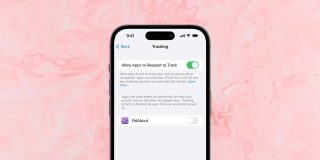
A competition regulator has accused Apple of misleading users about the level of privacy offered by the App Tracking Transparency feature. That accusation, while made in good faith, is based on a misunderstanding.
The iPhone maker has responded by saying that it may be forced to withdraw the privacy protection from EU users …
This is the latest development in a series of conflicts between Apple’s approach to privacy and European laws designed to prevent large companies from abusing a dominant position in the market.
EU laws say that Apple must provide a level playing field for third-party companies wishing to compete with the company’s own products. This means that if Apple has access to data it can use to improve the functionality of its own products, it must make that same data available to competing companies. Apple, however, argues that the way it accesses data respects user privacy and it cannot trust third-party companies to do the same.
In the most recent example, the EU noted that an Apple Watch is able to obtain the Wi-Fi history of a paired iPhone, while competing smartwatches cannot do the same. Apple has chosen to remove the feature from EU Apple Watches rather than share data with other companies.
App Tracking works by Apple assigning a unique identifier to your device. It doesn’t reveal any details about you, but does allow them to see (for example) that iOS user 30255BCE has visited gadget websites, and therefore would be a good target for gadget ads.
With App Tracking Transparency, app developers must ask you if you want to allow that tracking. If you say no ( as most people do ), then the apps are not allowed to use that system.
reports that the Polish competition regulator is accusing Apple of giving itself access to data whether or not users consent so that the company can sell targeted ads on its own platforms like the App Store.
Poland’s anti-monopoly office UOKiK is investigating whether Apple is restricting competition in the mobile advertising market through its privacy policy, it said on Tuesday.
“We suspect that the ATT policy may have misled users about the level of privacy protection while simultaneously increasing Apple’s competitive advantage over independent publishers,” UOKiK President Tomasz Chrostny was quoted as saying in a statement.
Apple has denied the accusation and is saying that it may be forced to withdraw the privacy feature from EU users.
“It is no surprise that the data tracking industry continues to oppose our efforts to give users back control over their data, and now intense pressure could force us to withdraw this feature, to the detriment of European consumers,” it said in an emailed statement.
The accusation is based on a misunderstanding, and it’s not the first time that this has happened.
It’s true that Apple does not present users with the tracking consent dialog for its own apps. However, that’s not because the company secretly allows its own apps to access this data. Instead, Apple doesn’t give itself the option of doing so, and therefore doesn’t need to present the permission pop-up.
Given that this misunderstanding has arisen before, it might be in Apple’s interests to begin using the dialog for its own apps even if it doesn’t plan to actually use the data when granted permission.
Image: 9to5Mac collage of images from Apple and on
FTC: We use income earning auto affiliate links. More.