The PLA Daily published a commentary on Tuesday titled “Exploring the Winning Formula for Unmanned Attrition Warfare” written by Zhou Xiaoli, Zhang Changfang and Zhu Qichao, although the outlet did not specify their institutional affiliations.
The authors said that in future warfare, it would be imperative to “flexibly deploy low-cost unmanned systems to continuously deplete the opponent’s high-value combat assets”, thereby “achieving optimal combat effectiveness with minimal battlefield expenditure”.
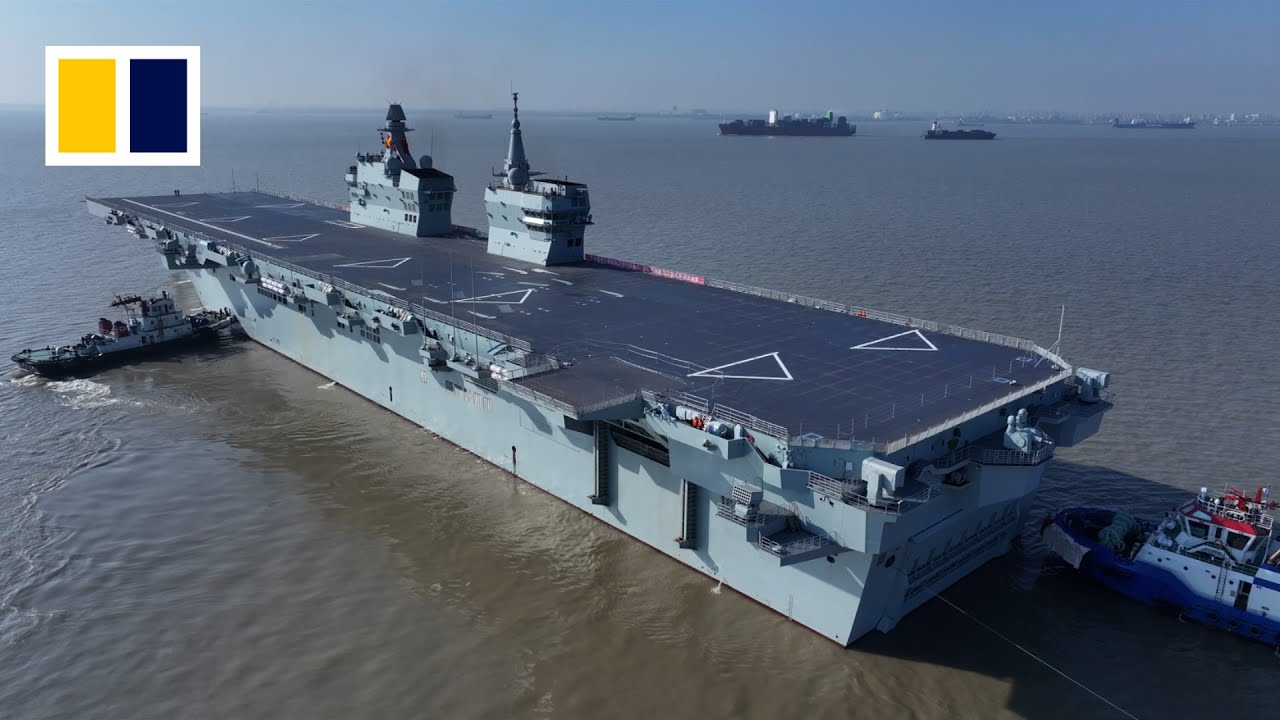
01:29
China’s first 076 ‘drone carrier’ amphibious assault ship begins sea trials
The article said that by releasing large numbers of drones in concentrated formations, unmanned systems could “launch simultaneous operations across multiple domains and directions”, thereby “forcing the enemy into a state of exhaustion and passive defence”.
Furthermore, unmanned combat forces could coordinate across multiple battlefield sectors, the article said. For instance, ground unmanned combat vehicles and aerial drones could operate in tandem, with “the former responsible for firepower strikes and target guidance, while the latter handles reconnaissance and support”.
And in wartime practice, unmanned combat systems could induce exhaustion in adversaries through “routine, incremental and sustained operations”.
Moreover, leveraging the flexibility, intelligence and diversity of unmanned systems could better achieve “asymmetric victory”, according to the article.
To improve the effectiveness of unmanned combat, such systems required greater autonomy, coordination and intelligence while also “integrating traditional tactics with unmanned technology”.