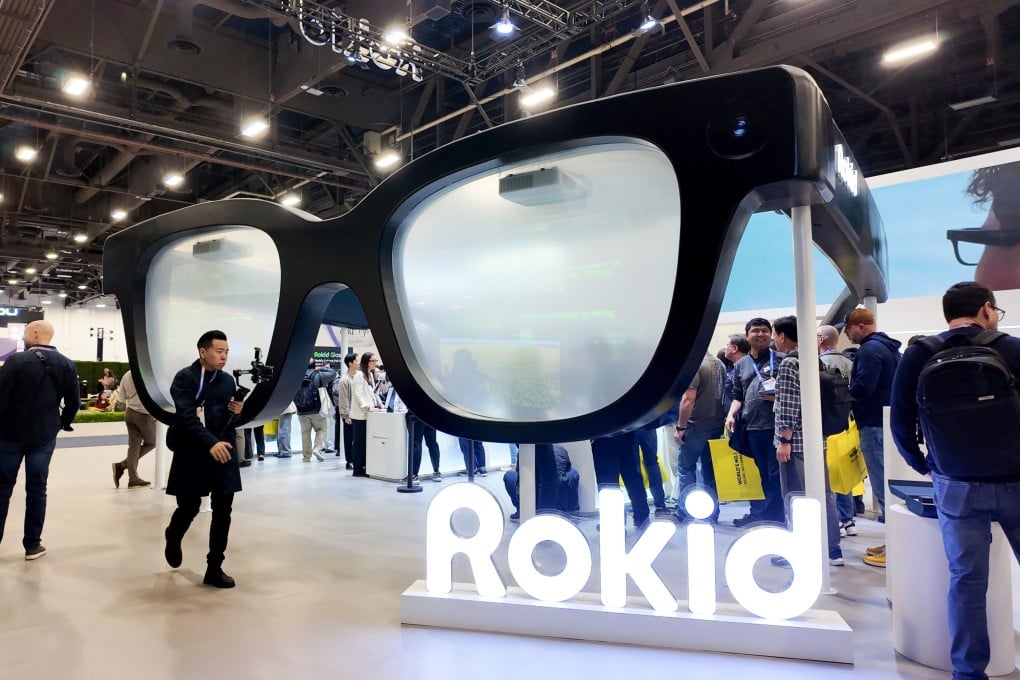
At the four-day annual trade show, which concluded on Friday, Chinese brands made up most of the roughly 60 smart eyewear exhibitors. Their products ranged from audio-first frames designed for all-day wear to augmented reality (AR) glasses that overlay digital information onto the real world.
Exhibitors included Rokid , which debuted its audio-centric, no-display product called the Rokid AI Glasses Style supported by a mix of US and Chinese large language models; Xreal , which unveiled new AR wearables such as the Xreal 1S and the video gaming -focused ROG Xreal R1; and RayNeo , which introduced its X3 Pro Project, featuring eSIM support that allowed the glasses to run without a smartphone link.
Also at CES were LLVision Technology, which showcased its Leion Hey2 translation-focused glasses; Even Realities , which featured its newly launched 36-gram Even G2 smart eyewear with a companion smart ring; and Alibaba Group Holding , which showed its Quark AI Glasses . Alibaba owns the South China Morning Post.
Other exhibitors included Meizu , Sharge, INMO, projector maker Xgimi and earphone brand Shokz.
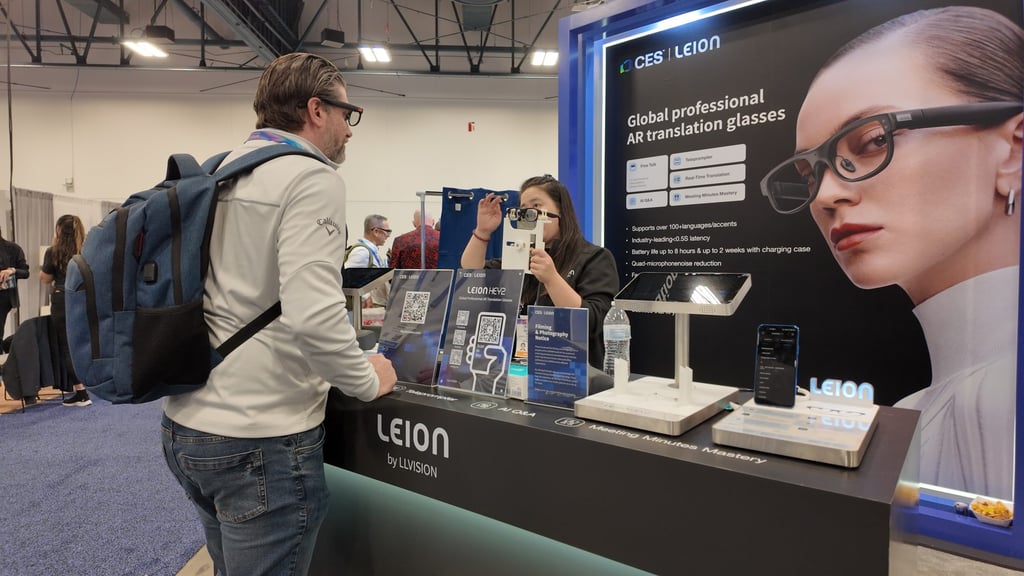
Chinese firms’ strong showing at CES underscored how large language models (LLMs) and multimodal AI had made it possible to embed intelligence into a fast-developing range of consumer hardware and wearables . Some already considered smart glasses as potentially the next major personal computing platforms after smartphones.