South Korea-Japan summit exposes ‘strategic’ divide amid great-power tensions

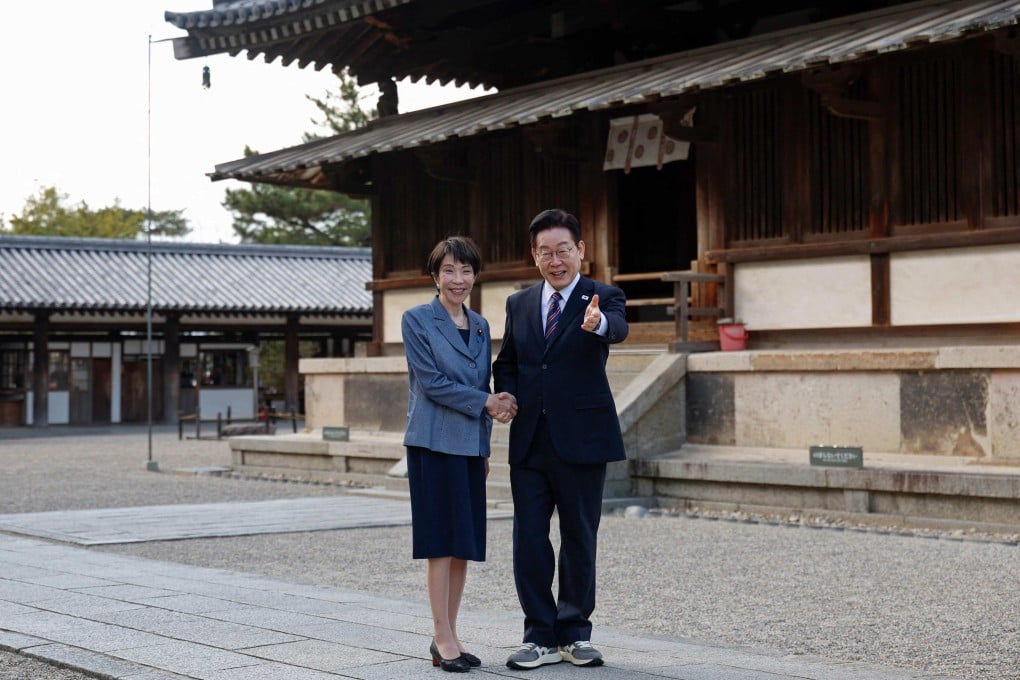
Japan’s Prime Minister Sanae Takaichi (left) and South Korea’s President Lee Jae Myung shake hands during a visit to Horyu-ji Temple in Ikaruga, Nara prefecture, on Wednesday. Photo: AFP

The summit between South Korea and Japan has exposed a growing divergence in how the two neighbours are responding to a more volatile regional order, as supply chains harden into strategic tools and great-power rivalry sharpens, analysts have said.
During a meeting in Nara, the hometown and electoral district of Japanese Prime Minister Sanae Takaichi , South Korean President Lee Jae Myung pressed the case for broader regional cooperation that included China, while Tokyo emphasised closer alignment with Washington and a tighter security partnership among US allies.

The talks followed Lee’s meeting with Chinese President Xi Jinping in Beijing a week earlier. The pair had last year also held discussions on the sidelines of the Asia-Pacific Economic Cooperation forum in Gyeongju in October and the G20 summit in South Africa in November.

The latest summit took place against the backdrop of China’s move to restrict exports of certain strategic materials to Japan, a step widely interpreted by analysts as retaliation for Takaichi’s remarks suggesting Tokyo could militarily intervene in the event of a conflict over Taiwan.
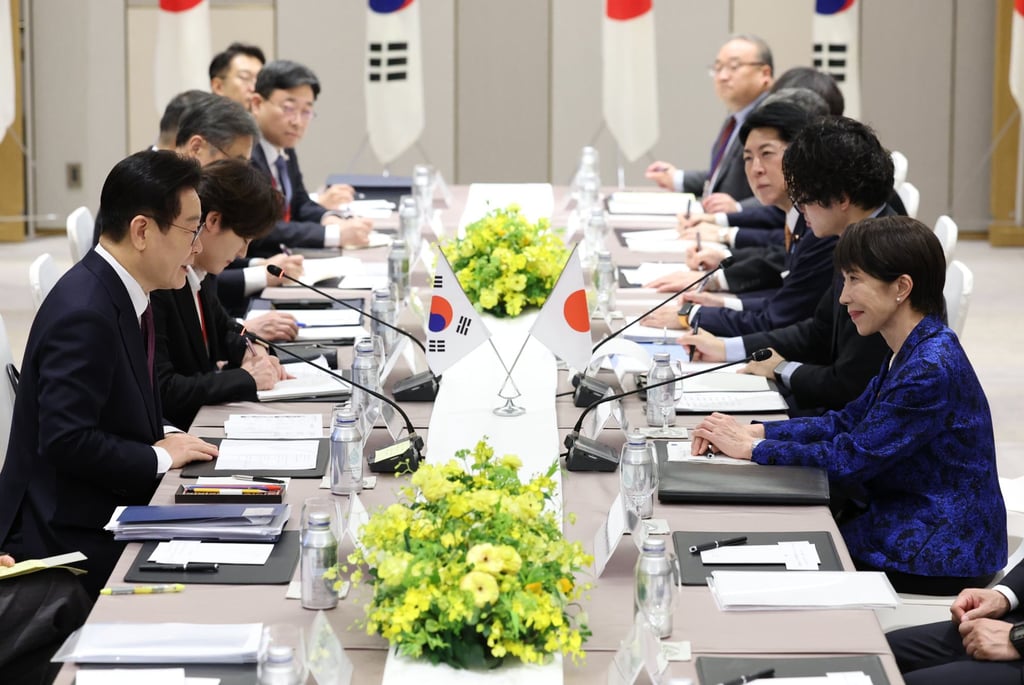
South Korea’s President Lee Jae Myung (left) and Japan’s Prime Minister Sanae Takaichi during their summit in Nara on Tuesday. Photo: dpa

Although rare earths were not explicitly mentioned in the joint press release, analysts said supply chain risks were likely discussed behind closed doors, given the knock-on effects for South Korea’s export-driven economy.

The two leaders agreed to deepen inter-ministerial discussions to pursue “strategic and mutually beneficial cooperation in the areas of economic security”, Takaichi said.

Choose your listening speed

Get through articles 2x faster