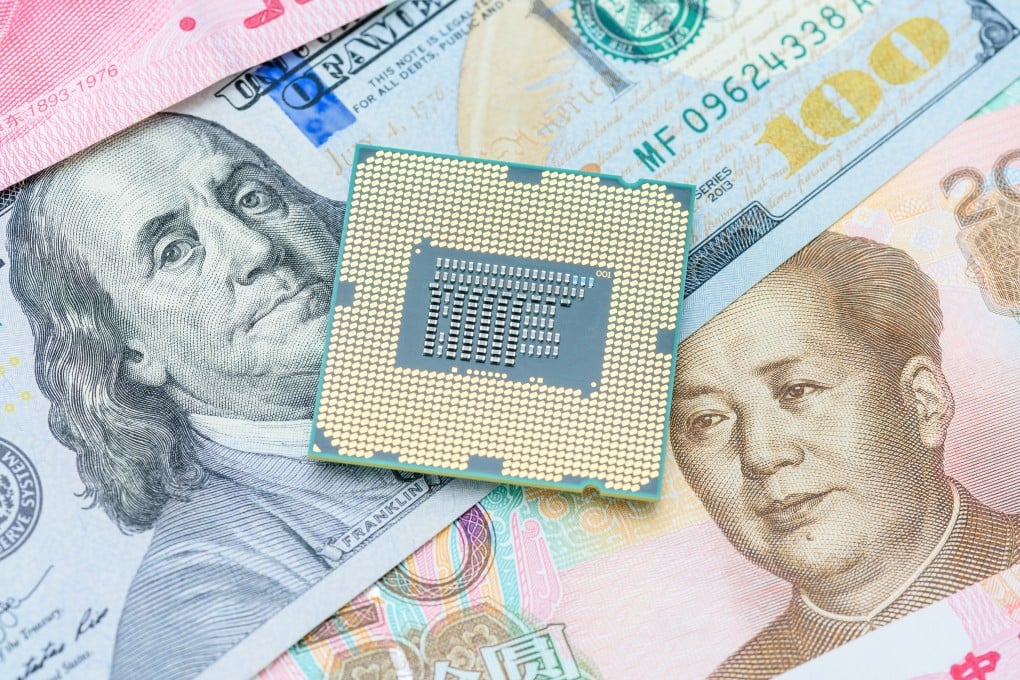
Chinese companies are expected to shoulder higher costs for deploying advanced chips from the US, owing to a new 25 per cent tariff imposed by Washington on select high-performance semiconductors , according to analysts.
According to the White House directive, US reliance on foreign semiconductor supply chains posed a national security and economic risk.
The new tariff appeared to encourage increased domestic chip production and reduce US dependence on foreign manufacturing hubs such as Taiwan . This implied that chips made by contract foundries, such as Taiwan Semiconductor Manufacturing Co , could not be shipped directly to mainland China, but must first be routed through the US.
The directive was announced a day after the Bureau of Industry and Security (BIS), under the US Department of Commerce , gave a conditional approval for Nvidia to sell its H200 chips in China. The US required every H200 shipment to undergo independent, third-party testing in the US to verify performance specifications before export.
“Essentially, we could be seeing the long-discussed 25 per cent US government ‘cut’ on H200 and MI325X revenue being put into practice,” said Chim Lee, a senior analyst at the Economist Intelligence Unit (EIU).