Winston Churchill wrote his four-volume masterpiece, A History of the English-Speaking Peoples , at the very moment a new era of world history was taking shape: victory over the Nazis, the birth of the United Nations, the Bretton Woods institutions. All signalled continuity of Anglo-Saxon leadership in world affairs, the baton passing fairly peacefully from Britain to America.
But 80 years on from the end of the second world war, the world is reconfiguring itself once more. And what it means for the UK remains to be seen.
Several military misadventures later, the rise of China, and the election of Donald Trump for a second presidential term – along with the mood he represents within the United States – mean we are not going back to whence we came.
So what are middle powers doing? They are hedging.
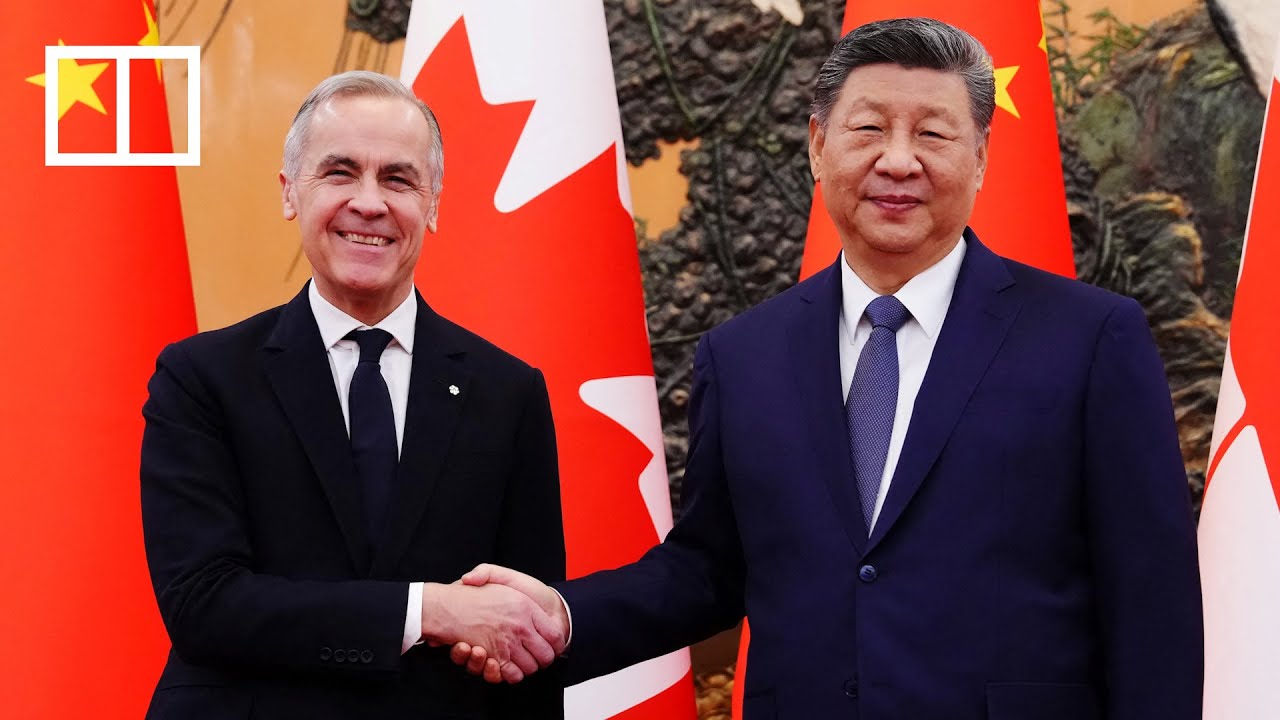
WATCH: Chinese President Xi Jinping meets with Canadian PM Mark Carney