Automatically building and publishing Ansible Galaxy Collections
I maintain a large number of Ansible Galaxy roles , and publish hundreds of new releases every year. If the process weren't fully automated, there would be no way I could keep up with it. For Galaxy roles, the process of tagging and publishing a new release is very simple, because Ansible Galaxy ties the role strongly to GitHub's release system. All that's needed is a webhook in your .travis.yml file (if using Travis CI):
notifications: webhooks: https:/Everyone might be a cluster-admin in your Kubernetes cluster
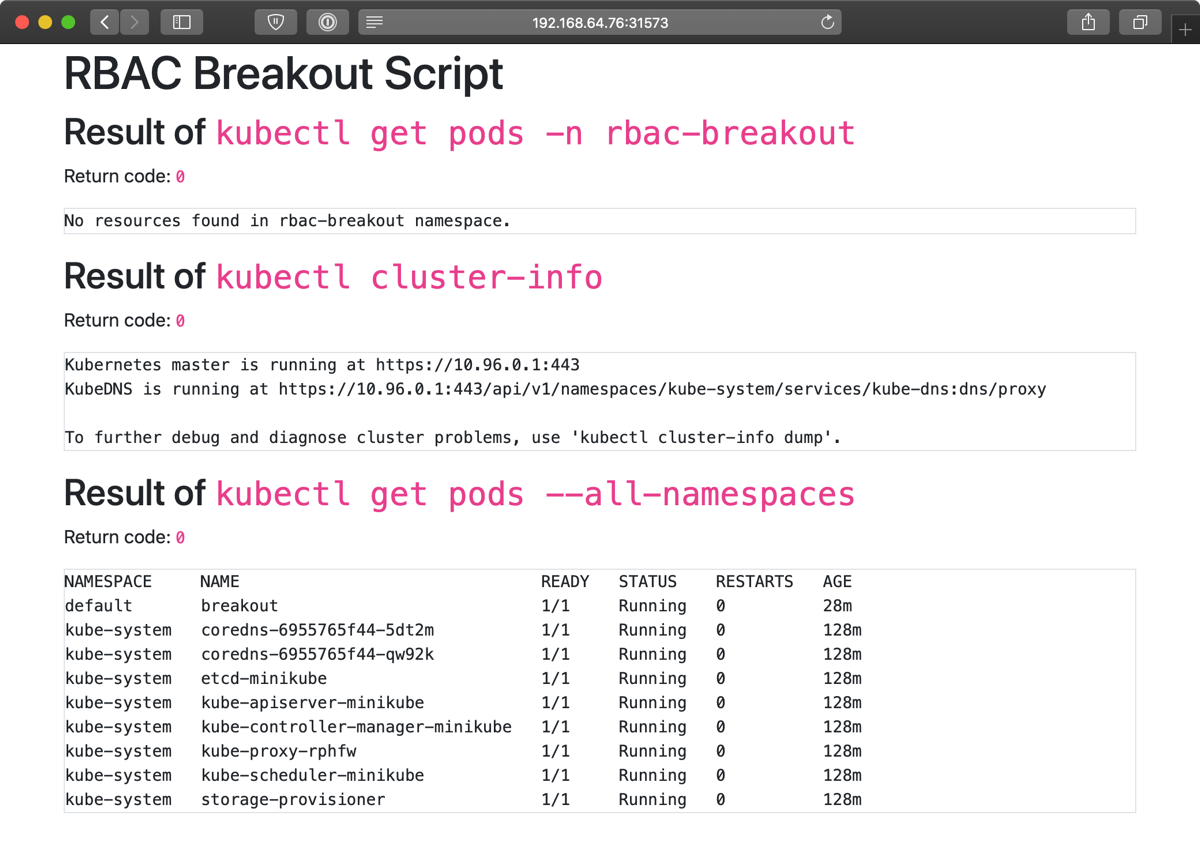
Quite often, when I dive into someone's Kubernetes cluster to debug a problem, I realize whatever pod I'm running has way too many permissions. Often, my pod has the cluster-admin role applied to it through its default ServiceAccount.
Sometimes this role was added because someone wanted to make their CI/CD tool (e.g. Jenkins) manage Kubernetes resources in the cluster, and it was easier to apply cluster-admin to a default service account than to set all the individual RBAC privileges
Quick and dirty way to strip ANSI terminal output in PHP
From time to time, I write up little PHP scripts to run a command via exec() and dump the output to the screen. Most of the time these are quick throwaway scripts, but sometimes I need them to persist a little longer, or share the output with others, so I make them look a little nicer.
One annoying thing that happens if you interact with CLI tools that generate colorized output is that PHP doesn't translate the terminal (ANSI) color codes into HTML colors, so you end
Collections signal major shift in Ansible ecosystem
Every successful software project I've worked on reaches a point where architectural changes need to be made to ensure the project's continued success. I've been involved in the Drupal community for over a decade, and have written about the successes and failures resulting from a major rearchitecture in version 8. Apple's Macintosh OS had two major failed rewrites which were ultimately scrapped as Apple moved on to Mac OS X.
It's a common theme, and because change is hard, the first response to a

The Kubernetes Collection for Ansible
October 2020 Update : This post still contains relevant information, but one update: the
community.kubernetescollection is moving tokubernetes.core. Otherwise everything's the same, it's just changing names.
The Ansible community has long been a victim of its own success. Since I got started with Ansible in 2013, the growth in the number of Ansible modules and plugins has been astronomical. That's what happens when you build a very simple but powerful toolâ
Z shell or Bash command alias to open two tabs to specified directories in macOS Terminal
There are a few projects I have where I need to work from two separate directories simultaneously, and while there are a number of ways I could set up workspaces in various esoteric IDEs or terminal session managers, I am stodgy in my ways and enjoy using the built-in Terminal in macOS for most things. If you use iTerm on the Mac, the commands are similar, but the AppleScript events that I use may need to be adjusted.
But I'm getting ahead of myself. For these projects, I
The power curve
Besides being a software developer and photographer, I take a deep interest in spaceflight and love reading about the history and development of air- and spacecraft, with a special focus on early space program development.
A few books I've read in the past couple years have gone beyond being interesting just for their historic contentâthey gave me a lot of ideas to reflect on in relation to my approach to software development, especially what I'd term 'professional' software development (vs. hacking something together
Running a Github Actions workflow on schedule and other events
One thing that was not obvious when I was setting up GitHub Actions on the Ansible Kubernetes Collection repository was how to have a 'CI' workflow run both on pull requests and on a schedule. I like to have scheduled runs for most of my projects, so I can see if something starts failing because an underlying dependency changes and breaks my tests.
The documentation for on.schedule just has an example with the workflow running on a schedule. For example:
on: schedule: # * is a special character inSaying 'No' to burnout as an open source maintainer
There's been a ton of writing about OSS stewardship, sustainability, funding, etc. in the past year, along with story after story of burnout. In this time, I've become very strict in my open source maintainership:
Unless it's generating income, it's for me and I'm not going to spend more than a couple hours a month looking at itâif that.
There are a number of projects that I maintain, which I'm not actively using
Migrating JeffGeerling.com from Drupal 7 to Drupal 8 - How-to video series

This website is currently (as of February 2020) running on Drupal 7. Drupal 8 was released in November 2015âhalf a decade ago. Drupal 7 support has been extremely long-lived, as it will not be end-of-life'd until November 2021. As with all software, once it is out of date, and security patches are no longer provided, it becomes harder to ensure the software is secure, much less running well on