
Linux 5.10 To Make One Of Its Pseudo Random Number Generators Less Predictable

The Linux kernel's prandom_u32() interface for providing pseudo-random number generation is used heavily by the kernel's networking code but that PRNG output can be figured out rather predictably. Thus lining up for Linux 5.10 is a new prandom_u32 implementation.

The prandom_u32 functionality is used in the networking code by several different drivers and for functionality like random port numbers, but since it can be trivially predicted, that isn't good.

The

Btrfs With Linux 5.10 Brings Some Sizable FSync Performance Improvements

The Btrfs file-system is seeing some promising additions with Linux 5.10 .

Most notable are seeing performance improvements in the area of fsync. The Btrfs code for this next kernel version has less contention over the log mutex yielding a few percentage improvements in throughput but more significant latency reduction with multiple clients. There is also an optimization to skip unnecessary commits for link and rename yielding possible 6% throughput improvements and as much as 30% lower latency or even 75% lower latency for renames. Another change

NVIDIA GeForce RTX 3080 Linux Gaming Performance

After last week exploring the NVIDIA GeForce RTX 3080 Linux GPU compute performance for this Ampere graphics card along with the Blender 2.90 performance , today is a look at the Linux gaming performance for the RTX 3080 both for native games as well as those Windows games running on Linux via Steam Play (Proton).
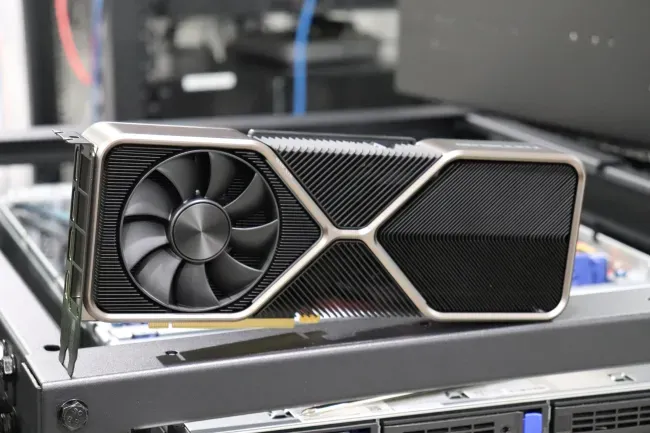
In the week since receiving the GeForce RTX 3080, the Linux performance has been very captivating not only for the CUDA/OptiX/OpenCL benchmarks across dozens of

Continue reading...

OpenCV 4.5 Released With Support For Multiple OpenCL Contexts, OpenVINO Backend

OpenCV as the widely-used, real-time computer vision library is out this week with version 4.5 as a big feature release.

OpenCV 4.5 brings OpenCL support for multiple contexts, its DNN module now supports OpenVINO 2020.1 as a possible back-end for inference, and there are optimizations to the NVIDIA CUDA DNN code path. OpenVINO supports inference on both CPUs and Intel graphics hardware.

OpenCV 4.5 also lands many Google Summer of Code 2020 projects including

Linux 5.10 To See Static Calls For Helping Cases Where Retpolines Are Used

A new kernel feature sent in today for the Linux 5.10 merge window is static calls, which can be helpful in cases where Retpolines (return trampolines) are currently used as part of protections against speculative execution vulnerabilities like Spectre.

Worked on by Red Hat and others is static calls as a replacement to global function pointers in the kernel. Static calls rely on code patching to allow for direct calls to be used rather than indirect and yield better performance especially where Retpolines are otherwise used.

The pull for mainlining static

Linux 5.10 Scheduler Updates Bring SMT Balancing Tweaks

Ingo Molnar as usual is quite quick in submitting his changes for the new kernel merge window in the areas he oversees. With the scheduler changes for Linux 5.10 there are some changes worth mentioning.

- Cache hotness is now ignored for SMT migration since they share the same core and in turn the same caches.

- A set of patches to improve the fairness between CFS tasks. The work aims to improve the fairness of rebalancing of the system and benchmarks have shown a 0.5~2.7%

Many Intel/AMD x86 Changes Kick Off Linux 5.10 Development From Zen 3 To SERIALIZE

On this first official day of breaking open Linux 5.10 for development with its merge window, quite a number of noteworthy Intel and AMD x86 processor changes have already been sent in for landing.

Some of the x86 material going in for Linux 5.10 we've previously discussed in recent weeks but here is a look at all of the x86-related changes sent in so far this morning for the Linux 5.10 merge window:

The x86/

GNU Linux-libre 5.9-gnu Released After The Usual Deblobbing

Within hours of Linus Torvalds releasing the Linux 5.9 kernel , the GNU folks maintaining the GNU Linux-libre downstream released their version of the kernel that prevents the loading of binary-only modules as well as the loading of binary-only firmware/microcode blobs.

GNU Linux-libre continues to be the choice of GNU / Free Software Foundation approved distributions due to being more pure than the upstream kernel in allowing proprietary modules to be loaded and microcode/firmware files that may not be open-source, among other

Open Source LLM

LLVM 11.0 Finally Available With Flang Fortran Compiler, Continued C++20 Work

After being one and a half months late, LLVM 11.0 is now tagged and ready to ship.

Release candidates not shipping on schedule and the need for additional RCs in recent weeks due to open bugs led to the LLVM 11.0 release schedule falling well off track. But in any case LLVM 11.0 is now available for download from LLVM's GitHub repository .

There are many improvements in LLVM 11.0 and Clang 11.0 including continued work bringing up C+

Linux 5.9 Released With Initial AMD RDNA 2 GPU Enablement, Other New Hardware Support

Linus Torvalds has just released Linux 5.9 as stable.

Linux 5.9 is out as the 2020 autumn kernel update. Linux 5.9 has a number of exciting improvements including initial support for upcoming Radeon RX 6000 "RDNA 2" graphics cards, initial Intel Rocket Lake graphics, NVMe zoned namespaces (ZNS) support, various storage improvements, IBM's initial work on POWER10 CPU bring-up, the FSGSBASE instruction is now used, 32-bit x