Given the impending release of Linux 5.9 , I was having some fun with cloc today looking at the current lines of code count for this near-final Linux 5.9 kernel state.
As of today in Linux 5.9 Git, the kernel is about 20.49 million lines of code plus another 3.58 million lines of code comments and another 3.72 million blank lines. Or all in, Linux 5.9 comes in at roughly 27.81 million
Pitivi 2020.09 is now available (well, actually, was tagged ten days ago but only announced today) as the first release for this GNOME video editor solution since Pitivi 0.999 back in August 2018.
Given two years have passed since the previous Pitivi release, Pitivi 2020.09 is bringing with it many improvements and quite significantly better stability. Pitivi 2020.09 ships with "a ridiculous number" of new features
The Linux 5.9 kernel is expected for release this evening which will in turn kick off the Linux 5.10 merge window for the next two weeks. As we've already been closely monitoring the various "-next" development trees in recent weeks of material building up for this next cycle, here is a look at a portion of what's to come for this late 2020 kernel.
While the Linux 5.9 kernel isn't even being released until later today, the ARM64 architectural changes have already been mailed in ahead of the opening of the Linux 5.10 merge window.
Most notable with the ARM64 architecture additions in Linux 5.10 is the Memory Tagging Extension (MTE) now being wired up and ready for user-space usage. MTE ended up slightly missing the Linux 5.9 target but is a useful security addition new to ARMv8.5
Intel engineers continue working on "Protection Keys for Supervisor" support for the Linux kernel as a feature coming to a future generation of processors (presumably Sapphire Rapids). The initial users of this PKS support will be helping to protect persistent memory as well as adding safeguards to Trusted Keys within the Linux kernel.
Protection Keys for Supervisor (PKS) is akin memory protection keys (PKU / PKEYs) that has been supported since 1st Gen Xeon Scalable processors while the "supervisor" focus is in reference to the elevated ring
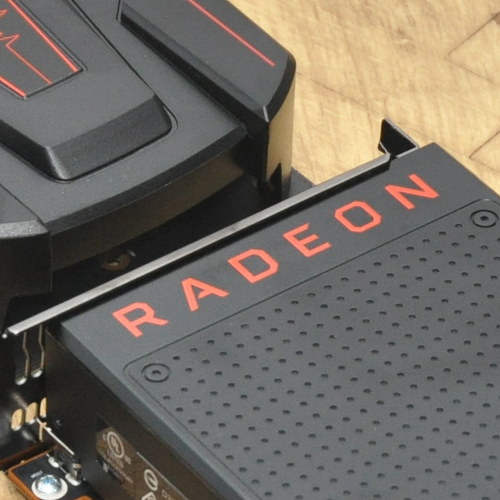
Seeing new AMDGPU targets added to mainline LLVM for aging Radeon GFX7/GFX8 graphics hardware wasn't what I expected to see this weekend.
For a few GCN 1.0 (GFX6) and GCN 1.1 (GFX7) graphics processors there are new targets added in a clean-up effort. An internal AMD code audit uncovered some corner cases where they were consolidating several GPUs onto a single AMDGPU target but where it would be better off differentiating them in order to avoid workarounds.
Just over one week ago Intel released the Media Driver 2020.3 with Gen12/Xe AV1 decode and other improvements for their quarterly feature release of this open-source video acceleration driver. They have also now released their adjoining Media SDK 20.3 open-source update.
The Intel Media SDK provides their open-source C API for hardware-accelerated video encode/decode/filtering for their graphics hardware. As with the Intel Media Driver 20.3 release, the Media
KDE developers have been busy not only putting the finishing touches on the soon to be released Plasma 5.20 but also early feature work continues on what will be Plasma 5.21 .
Most exciting of the latest batch of 5.21 feature work is, again, about Wayland. KDE Plasma 5.21 will allow iGPU multi-monitor functionality for simultaneously using both integrated and discrete graphics for driving multiple monitors. This is basically multi-GPU output support on Wayland with KDE Plasma by using Udev
It was in January that AMD finally published an open-source Linux driver for their Sensor Fusion Hub used by AMD Ryzen laptops for various sensor functionality. As we approach the end of the year this driver still hasn't been mainlined yet but a new revision was sent out on Friday.
Friday marked the eighth revision to the AMD "SFH" Linux kernel driver patches for supporting the sensor functionality on many Ryzen laptops. This was the first revision to the driver since the prior patches were sent out in August. This
Adding to the growing list of Mesa 20.3 features is now RADV ACO supporting NGG GS. Or rather, the Radeon Vulkan driver with the ACO back-end now supports geometry shaders with Next-Gen Geometry (NGG) as found on newer AMD GPUs.
The NGG GS ACO support merged on Friday and is enabled by default. Along the way of wiring up this support new NIR capabilities were also introduced like the ability to count emitted primitives, filter out incomplete GS primitives, and other bits. There were