The ASRock Z590 OC Formula Review: An Iconic Brand Revival
Whether overclocking the CPU is your cup of morning tea/coffee/something stronger or not, there are specific motherboards built by professional overclockers and engineers designed to squeeze out as much performance as possible. For example, while the regular everyday PC user might groan at the thought of spending $500 on a Z590 motherboard with two memory slots, boards such as the ASRock Z590 OC Formula pay homage to the art of overclocking. As such, legendary overclocker and ASRock employee Nick Shih has
Next Gen NVMe SD Card Review: The SM2708 Controller Serves it Hot and Fast
Flash-based removable media has a host of use cases in products ranging from content capture devices to portable game consoles. Behind the standards of these is the SD Association, and we saw the introduction of an NVMe-based SD Express standard (SD 7.0) in 2018, with a SD 8.0 follow-up in 2020. SD cards, as well as card readers based on these new standards, have been making the rounds at various trade shows since 201
The MSI GE76 Raider Review: Tiger Lake Plus Ampere Equals Framerate
Let us pretend we are desktop people, thinking about building a new system. What would we look for? If we are after a gaming system, clearly we need a big GPU. A very beefy CPU is a nice touch as well if we want to keep the GPU fed. Plenty of memory, lots of storage, and maybe lots of ports for expansion. Add in a nice RGB keyboard, perhaps a high refresh display, and lots of cooling. Now let us imagine we pack that into a 2.
IBM Power10 Coming To Market: E1080 for ‘Frictionless Hybrid Cloud Experiences’
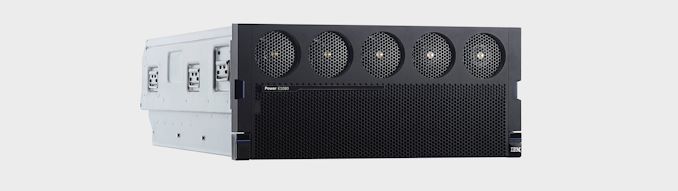
Last year IBM presented details about its new Power10 family of processors: eight threads per core, 15 cores per chip, and two chips per socket, with a new core microarchitecture, built on Samsung’s 7nm process. New technologies such as PCIe 5.0 for add-in cards, PowerAXON for chip-to-chip interconnect, and OpenCAPI for a super wide memory support made Power10 sound like a beast, but the question was always about time to market – when could customers
Does an AMD Chiplet Have a Core Count Limit?
When it was announced that AMD was set to give a presentation at Hot Chips on its newest Zen 3 microarchitecture, I was expecting the usual fare when a company goes through an already announced platform – a series of slides that we had seen before. In the Zen 3 presentation this was largely the case, except for one snippet of information that had not been disclosed before. This bit of info is quite important for considering AMD’s growth strategy.
China's SMIC To Build a GigaFab for $8.87B: An Answer to the Shortages
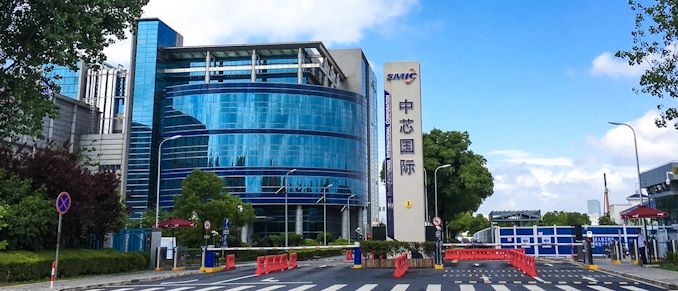
As a result of being on the US Entity list, SMIC's blacklisting has caused troubles in the company developing and deploying leading-edge fabrication technologies. As a result, it has been forced to focus on mature nodes, which still have plenty of use in long-life cycle parts for electronics and the automotive industry. On Friday the company announced plans to build China's first GigaFab, a 300 mm production facility with planned capacity of around 100,000 wafer starts per month
The Axon 30 with Under Display Camera: Hands-on Mini-Review
The Axon 30 uses a new second-generation under-display camera with an OLED from Visionox, and features the Snapdragon 870- does it convince enough for the $499 price tag?
Did IBM Just Preview The Future of Caches?
At Hot Chips last week, IBM announced its new mainframe Z processor. It’s a big interesting piece of kit that I want to do a wider piece on at some point, but there was one feature of that core design that I want to pluck out and focus on specifically. IBM Z is known for having big L3 caches, backed with a separate global L4 cache chip that operates as a cache between multiple sockets of processors – with the new Telum chip, IBM has done away with that –
Western Digital Reimagines HDD - Flash Integration with OptiNAND
The last few years have seen plenty of new innovations come up in the hard-disk drive market. For quite some time, the HDD technology roadmap was shared industry-wide - vendors introduced new technologies at different points in time, but they were all similar in nature. As a recent example, HGST (now, Western Digital) was the first to market with helium-filled HDDs, but both Seagate and Toshiba followed up with similar drives within a few years.
Prior to 2017, there was
Intel Xeon Sapphire Rapids: How To Go Monolithic with Tiles
One of the critical deficits Intel has to its competition in its server platform is core count – other companies are enabling more cores by one of two routes: smaller cores, or individual chiplets connected together. At its Architecture Day 2021, Intel has disclosed features about its next-gen Xeon Scalable platform, one of which is the move to a tiled architecture. Intel is set to combine four tiles/chiplets through its fast embedded bridges, leading to better CPU scalability at higher core counts. As part of