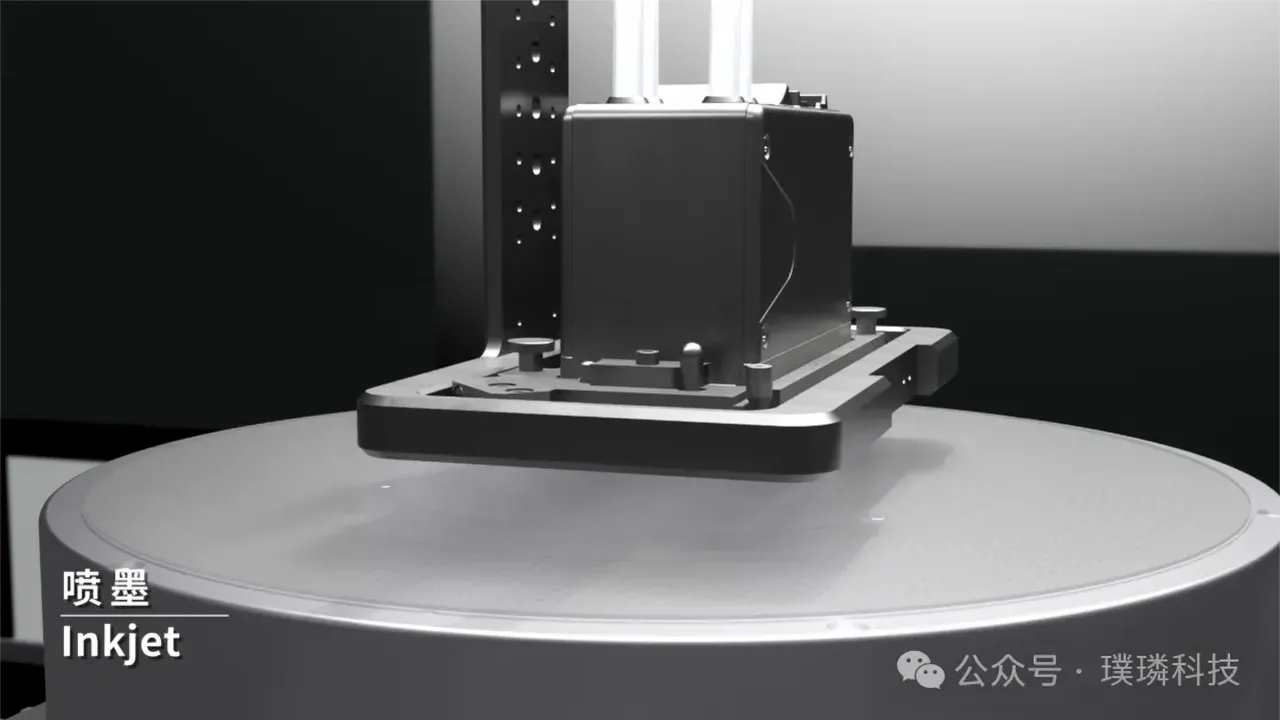
China-based firm delivers its first chipmaking tool that stamps nanoscale processor designs onto wafers — Prinano's nanoimprint lithography tool uses quartz molds engraved with circuits

(Image credit: Prinano)

Prinano Technology, a China-based developer of nanoimprint tools, has delivered its first semiconductor-grade step-and-repeat nanoimprint lithography system to a Chinese customer that is focused on specialty process technologies. Instead of using traditional light-based lithography techniques, this type of chipmaking tool 'stamps' a chip design onto the wafer with a quartz mold that's imprinted with the circuit design.

Prinano's PL-SR-series machine is the first nanoimprint lithography tool (NIL)

Continue reading...

Bizarre cyberattack blamed on Russia and China-linked hackers permanently breaks dozens of speed cameras in the Netherlands — authorities decline to reveal location of affected cameras, for obvious re

(Image credit: Getty / Steve Russell)

It's often said that "character is who you are when no one is watching." Drivers in the Netherlands have been given the opportunity to put that theory to the test, at least when it comes to obeying local traffic laws, because a bunch of speed cameras that were reportedly taken down by Russian and Chinese hackers in July remain offline.

TechSpot reported that "dozens of speed cameras"—including "standard fixed and average speed cameras, as well as mobile

Continue reading...

Russia hacked and took control of a Norwegian dam, police chief claims — released over 1,900,000 gallons of water before attack was noticed

(Image credit: Shutterstock)

The head of Norway’s Police Security Service (PST) has told the media that Moscow is to blame for a cyberattack on a dam, which remotely opened the floodgates. According to a Guardian report, the actions of an unnamed crew of pro-Russian cyber-felons released 500 liters (132 gallons) of water a second, sustained for around four hours before it was noticed and stopped. Beate Gangås, the head of PST, mentioned the Bremanger

Continue reading...

AMD's elusive Radeon AI Pro R9700 makes its first retail appearance for the DIY market — Customer on Reddit buys the Gigabyte "AI Top" variant for $1,324

(Image credit: AMD)

AMD announced the Radeon AI Pro R9700 back at Computex earlier this year, a professional GPU built on the RDNA 4 architecture meant to give Nvidia a run for its money. As the name suggests, it's geared towards AI workloads that require a lot of memory. Therefore, even though the R9700 shares many of the same specs as the gaming-oriented RX 9070 XT, it has double the VRAM at 32 GB.

Continue reading...

Intel

Asus says 90% of PC and motherboard production has been offshored from China to blunt tariffs — manufacturing moved to Thailand, Vietnam, and Indonesia

(Image credit: Asus)

Asus said during its earnings call that it has moved most of the production of its motherboards and PCs out of China. During the company’s 2Q 2025 Investor Conference call, one participant asked about Asus' supply chain resilience for the U.S. market, which was when the speaker confirmed that the company is expanding its production bases to other sites in Southeast Asia. This is in addition to the company moving its server production into the U.S. by

Continue reading...

Intel's new graphics driver lets you dedicate up to 87% of laptop memory capacity to the iGPU for VRAM — Core Ultra CPUs get "Shared GPU Memory Override" feature

(Image credit: Intel)

Intel’s Arc graphics driver version 32.0.101.6987 introduces a first for the company’s integrated GPUs: manual control over system memory allocation for graphics workloads. "Intel Graphics Software now supports Shared GPU Memory Override control for Built-in Intel Arc GPUs in select Intel Core Ultra Processors (series 1 and 2) in Windows 10 and Windows 11 host systems," the release notes state .

Intel's integrated GPUs use

Continue reading...

AI experts warn that China is miles ahead of the US in electricity generation — lack of supply and infrastructure threatens the US’s long-term AI plans

(Image credit: Shutterstock)

A U.S. analyst of Chinese technology said that the country has already solved its energy problem — at least in terms of power for its AI infrastructure. Rui Ma, founder of Tech Buzz China, posted on X that the country’s massive investments in advanced hydropower and nuclear technologies meant that its “electricity supply is secure and inexpensive.” This is in contrast to the U.S., where many AI data centers are disrupting its electricity grid and supply , resulting in

Continue reading...

3D print

I've reviewed one hundred 3D printers — these are the best features that have become non-negotiable

(Image credit: Tom's Hardware)

3D printing technology is evolving at breakneck speed, and features considered cushy add-ons five years ago are now becoming everyday essentials. 3D printer forums used to buzz with questions about necessary mods just to make their machines usable, but now people want to know if they can run their printer from a phone.

I checked my notes, and during my time at Tom’

Continue reading...

China introduces up to 2TB 'Mini SSD' that's 3X faster than the microSD Express used in the Switch 2, but smaller — tiny '1517' SSD is just 15x17mm and boasts impressive performance claims

(Image credit: Biwin)

Chinese gaming console makers have just taken the covers off a new external storage solution that rivals the microSD Express used by Nintendo for the Switch 2. According to The Verge , this new SSD form factor is more than three times faster than the microSD Express while keeping a footprint that’s only slightly larger. Storage manufacturer Biwin calls it the Mini SSD, while another OEM tagged it as the 1517, which refers to its dimensions and is similar to how JEDEC, the Joint

Continue reading...

Intel

Researchers build world’s first “microwave brain” chip that can think like AI and talk like a radio — all at gigahertz speeds

(Image credit: Cornell University)

In a quiet Cornell University lab, researchers have taken a hammer to decades of digital circuit convention. The result is a silicon chip that thinks less like a clock-driven processor and more like a living brain—only instead of neurons, it uses controlled bursts of microwave energy.

Dubbed the “microwave brain,” this experimental processor can juggle two jobs at once: crunching ultrafast data streams and talking wirelessly, all inside a footprint small enough for a smartwatch. And it does it

Continue reading...