Apple Silicon|Intel

AMD Ryzen 7 5800U Review: Fight for the Ultraportable Performance Throne


The Ryzen 7 5800U is AMD's answer to Intel's Tiger Lake and is their fastest available chip for ultraportable and ultrathin laptops. This is the first Ryzen Mobile 5000 U-series processor to land in our office.

Continue reading...

Apple Silicon

Docker Desktop正式支援Apple Silicon

Docker官方在去年底的時候,為了回應急切的社羣,發布支援M1晶片的Docker Desktop for Mac技術預覽版,經過許多開發者的測試和臭蟲回報,現在終於推出 正式版本

Apple在去年11月的線上發表會,首次發表自家設計用於Mac上的Arm晶片Apple Silicon,


Apple Silicon

Parallels釋出支援蘋果M1的新版本,可於M1裝置上安裝Windows 10 on ARM

專門針對Mac電腦提供硬體虛擬化軟體的Parallels, 在本週發表了 新一代的Parallels Desktop 16.5 for Mac,它除了支援基於英特爾處理器的Mac電腦之外,也支援M1處理器的Mac電腦,讓使用者可於M1版Mac上,執行Windows 10 on ARM Insider Preview與許多熱門的Linux版


Apple Silicon|Intel

Bitspower Summit M Silver Metal CPU Block Review

Bitspower clearly decided three Summit M CPU block reviews weren't enough on TechPowerUp, so we take a look at the Summit M Silver Metal version today. It is a full metal water block with extensive CPU socket support across both Intel and AMD that cuts down on RGB and OLED add-ons in favor of value, performance, and build quality.


Apple Silicon

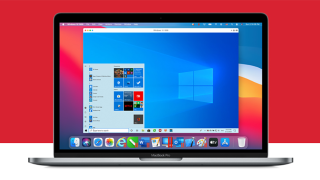
Parallels Desktop 16.5 Enables Windows 10 on Mac M1 at Native Speeds

(Image credit: Parallels)

Parallels has released a new version of its Parallels Desktop for Mac virtualization software that features full native support for Mac computers equipped with either Apple M1 or Intel processors. The program allows users to run Windows 10 Arm Insider Preview as well as various Linux distributions on systems running the M1 SoC at native speeds.

Running Windows on Apple's Mac computers may not be a priority for most of their owners, but there are still quite a lot of users who need to run Windows
Apple Silicon|Intel

(PR) OpenFive Tapes Out SoC for Advanced HPC/AI Solutions on TSMC 5 nm Technology

OpenFive, a leading provider of customizable, silicon-focused solutions with differentiated IP, today announced the successful tape out of a high-performance SoC on TSMC's N5 process, with integrated IP solutions targeted for cutting edge High Performance Computing (HPC)/AI, networking, and storage solutions.

The SoC features an OpenFive High Bandwidth Memory (HBM3) IP subsystem and D2D I/Os, as well as a SiFive E76 32-bit CPU core. The HBM3 interface


Apple Silicon|Intel

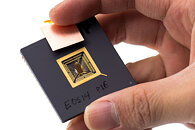
SiFive Tapes Out First 5nm TSMC RISC-V Chip With 7.2 Gbps HBM3

(Image credit: OpenFive)

SiFive on Tuesday said that that its OpenFive division has successfully taped out the company's first system-on-chip (SoC) on TSMC's N5 process technology. The SoC can be used for AI and HPC applications and can be further customized by SiFive customers to meet their needs. Meanwhile, elements from this SoC can be licensed and used for other N5 designs without any significant effort.

The SoC contains the SiFive E76 32-bit CPU core(

Continue reading...

Apple Silicon|Intel

SiFive Tapes Out Their First 5nm RISC-V Processor Core

SiFive's OpenFive business unit announced today they have completed their first tape out of a RISC-V processor core using TSMC's 5nm process.

This 5nm RISC-V SoC will be for "advanced AI/HPC" solutions using a chiplet architecture with SiFive 7-Series processor IP and OpenFive HBM3 IP subsystem.

SiFive announced their 5nm RISC-V processor tape out on their blog .

Via OpenFive.com their press release outlines more details, including the use of SiFive E76 3

Apple Silicon|Chip Shortage|Intel

Car-making nightmare could soon get a fix, thanks to Intel

Intel has a plan to help alleviate the global chip shortage that has hampered the automotive industry, among others.


Apple Silicon|Intel

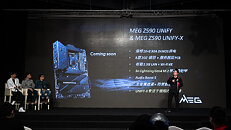
MSI Readies MEG Z590 Unify Series and Spatium M.2 NVMe SSDs

At a media event in China, MSI unveiled a handful new products it hasn't yet launched globally. These include the ATX MEG Z590 Unify series, and the new Spatium line of high-end M.2 NVMe SSDs. The company already launched the MEG Z590I Unify Mini-ITX motherboard, which will soon be joined by the larger MEG Z590 Unify and the MEG Z590 Unify-X, in the standard ATX form-factor. Both these

Continue reading...