LattePanda Mu crams x86 PC into SoM form factor

LattePanda's been building Intel-based SBCs for almost a decade, but until now, they've never attempted to unite an Intel x86 chip with the popular SoM-style form factor Raspberry Pi's dominated with their Compute Module boards.
This year they've introduced the LattePanda Mu , a SoM that marries an Intel N100 SoC with a new edge connector standard they've designed, using a DDR4 SODIMM form factor.
Right now they offer two carrier boards: a lite
The Cicadas are Here

There are annual cicadas. Then there are 13-year cicadas. And 17-year cicadas. Then there are days like today when 13 and 17 year cicadas emerge from the ground around the same time, creating a fairly odd event in our backyard.
microSD cards' SBC days are numbered
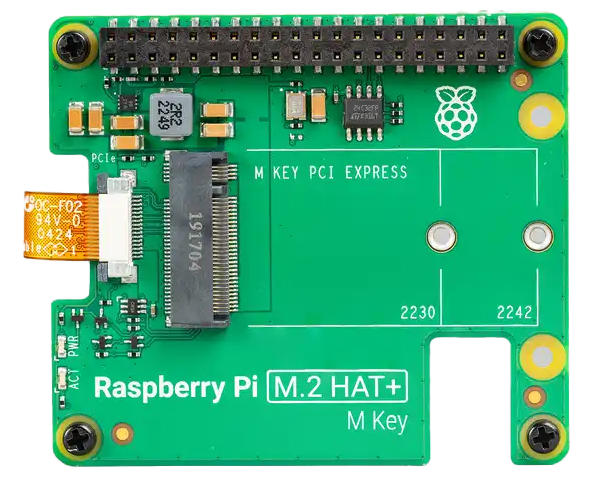
For years, SBCs that aren't Raspberry Pis experimented with eMMC and M.2 storage interfaces. While the Raspberry Pi went from full-size SD card in the first generation to microSD in every generation following (Compute Modules excluded), other vendors like Radxa, Orange Pi, Banana Pi, etc. have been all over the place.
Still, most of the time a fallback microSD card slot remains.
But microSD cardsâeven the fastest UHS-II/A2/V90/
Quick NVMe performance testing with fio
I've recently been debugging some NVMe / PCIe bus errors on a Raspberry Pi, and I wanted a quick way to test NVMe devices without needing to create a filesystem and use a tool like iozone . I don't care about benchmarks, I just want to quickly push the drive and read and write some data to it.
fio is the tool for the job, and after a quick install sudo apt install -y fio , I create a configuration file named nvme-read.fio :
[global]Import unsupported camera RAW files into Apple Photos
Many years ago, I decided to migrate my photo library from Apple's now-defunct Aperture to Photos , so I could take advantage of Apple's iCloud Photo Library (don't worry, I still have three full complete local backups, plus a separate cloud backup besides Apple's iCloud originals).
One pain point is RAW support. As camera manufacturers add new models, their proprietary RAW codecs are updated, and software vendors like Apple, Adobe, and Microsoft have to update photo editing tools to

Achieving Pro Zoom meeting quality on my Mac

For the past decade, I've worked remote. I slowly moved from full-time software and infrastructure dev to YouTuber, and throughout that time, I kept tweaking my desk video recording/conferencing setup.
I wanted to document my setup today, as I've tweaked it a bit in my new studio space. Hopefully some of my tools and techniques can help you, or maybe you can find a way to make a simpler (hopefully cheaper) but higher quality setup!
I made a video going through
Raspberry Pi is getting into the services game
...and it's all freeâ so far .

Raspberry Pi today launched Raspberry Pi Connect , a free remote VPN service for all Pi OS users.
If you create a Raspberry Pi ID , you can sign up for Connect, install rpi-connect on a Pi 4 or 5 running 64-bit Pi OS 12 'Bookworm', and register that Pi with the service.
Then, on any other device's web browser, you can log in and remote control your Pi
4-way NVMe RAID comes to Raspberry Pi 5
With the Raspberry Pi 5's exposed PCI Express connector comes many new possibilitiesâwhich I test and document in my Pi PCIe Database . Today's board is the Geekwork X1011 , which puts four NVMe SSDs under a Raspberry Pi.

Unlike the Penta SATA HAT I tested last month, this carrier uses thinner and faster NVMe storage, making it a highly-compact storage expansion option, which has the added benefit of freeing up the top of the Pi 5 for other HAT expansion options
Turing RK1 is 2x faster, 1.8x pricier than Pi 5
I've long been a fan of Pi clusters. It may be an irrational hobby, building tiny underpowered SBC clusters I can fit in my backpack, but it is a fun hobby.

And a couple years ago, the 'cluster on a board' concept reached its pinnacle with the Turing Pi 2, which I tested using four Raspberry Pi Compute Module 4's .
Because Pi availability was nonexistent for a few years, many hardware companies started building their own substitutesâand Turing Pi was no exception
Corporate Open Source is Dead
IBM is buying HashiCorp for $6.4 billion .
That's four months after HashiCorp rugpulled their entire development community and ditched open source for the 'Business Source License.'
As someone on Hacker News pointed out so eloquently:
IBM is like a juicer that takes all the delicious flavor out of a fruit
skywhopper replied:
HashiCorp has done a good job of pre-draining any flavor it once had.
Some people wonder if HashiCorp's decision to drop open source was because they wanted to juice the books for