CubeSats are fascinating learning tools for space

These are CubeSats. Satellites that are going to spaceâor at least, the ones I have here are prototypes . But these have one thing in common: they're all powered by either a Raspberry Pi, or a microcontroller.
There are already Pis in space, like on Mark Rober's SatGus , on GASPACS , and the Astro Pis on the Space station . Another Pi is going up this weekend , which is why I'm posting this today. I'll get to that one
YouTube views are down (don't panic)
September 15 update : @YouTubeInsider confirmed that the issue is related to viewers who have adblockers enabledâYouTube's been in an arms race with ad blocking tools , and the fallout is a substantial cut in counted views for creators who have a large audience watching from desktop.
Many YouTube content creators, myself included, noticed something in early to mid-August: views were down.
After being on the platform since 2006 (though for me, not being a 'professional' YouTuber until

I bought the cheapest EV (a used Nissan Leaf)

I bought a used 2023 Nissan Leaf in 2025, my first 'new' car in 15 years. The above photo was taken by the dealership; apparently their social media team likes to post photos of all purchasers.
I test drove a Tesla in 2012, and quickly realized my mistake. No gasoline-powered car (outside of supercars, maybe? Never drove one of those) could match the feel of pressing the throttle on an electric.
I started out with
How to install TrueNAS on a Raspberry Pi
Now that Joel0 in the TrueNAS community has created a fork of TrueNAS that runs on Arm , I thought I'd give it a spinâon a Raspberry Pi.

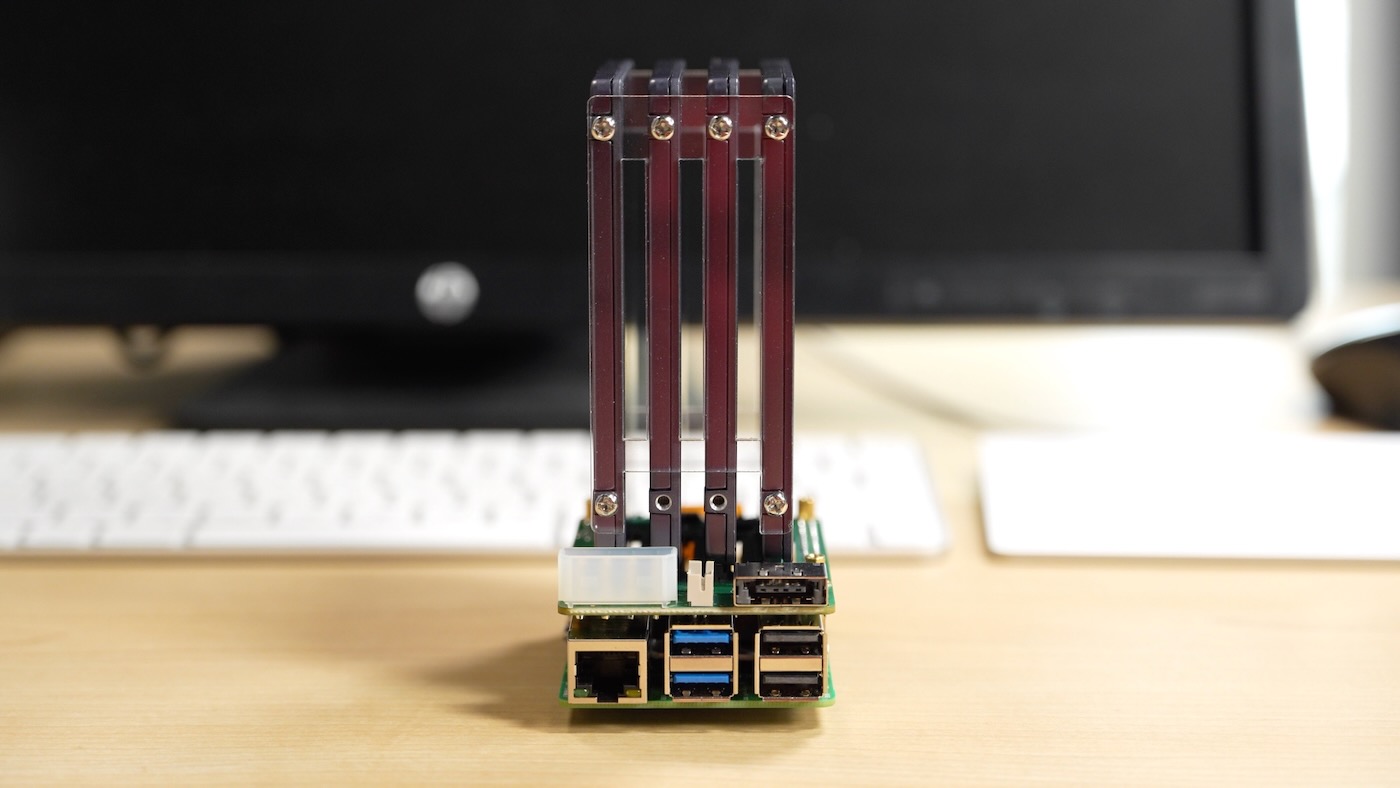
I currently run an Ampere Arm server in my rack with Linux and ZFS as my primary storage server, and a Raspberry Pi with four SATA SSDs and ZFS as backup replica in my studio. My configuration for these Arm NASes is up on GitHub .
I've been looking forward to TrueNAS support on Arm for years, though it
Reverse Engineering ALL the Raspberry Pis
Earlier this month I covered Jonathan Clark's effort to reverse-engineer the Pi Zero 2 W , and just yesterday, I discovered TubeTime reverse-engineered the Compute Module 5 .
Both are graciously sharing their schematics and
TrueNAS on Arm is finally a thing
A few years ago, I admit it was rare to find someone running Arm hardware more powerful than a Raspberry Pi in a homelab (or more serious) setting, outside of cloud providers running Ampere or custom Arm CPUs.
But as Pis and Rockchip boards have become more powerful (and efficient), and Apple's M-series silicon has become more interesting (the M4 mini being an excellent value proposition for a quiet, tiny server), and even Ampere Altra pricing coming down a bit since it'
Build log: Macintosh Classic
Continuing the retro computer series , I've recently completed the first part of a restoration of my Aunt's old Macintosh Classic.

This Classic was handed to me alongside my Uncle Mark's Apple II, which I'll probably cover later (we've played a game of whack-a-mole with issues on that machine! Well worth it but I haven't hit a point where enough things are working to cover it well, heh).
The Classic is a strange Macâ
Jellyfin on macOS for a quick self-hosted media library
I forgot to bring my portable Pi media server running Jellyfin on a family trip, but had a small selection of my ripped movie and TV show library on my portable SSD.
One dreaded part of choosing a movie or show to watch after a rainy afternoon and all other avenues of entertainment are exhausted is having the kids (especially the youngest, who can't read yet) choose a movie without the 'movie shelf' showing the movie posters/cover artwork.
So... without the Pi, and only
Reverse Engineering the Raspberry Pi Zero 2W

This is not a Raspberry Pi Pico. Despite it's tiny size and castellated edges, this is actually a full Raspberry Pi Zero 2W.
Well, sorta. At Open Sauce, probably the most interesting encounter I had was with Jonathan Clark .
You see, I was on a Reverse Engineering panel at Open Sauce, but I mentioned on Twitter , I wouldn't call myself a reverse engineer, more like a 'guy who breaks things sometimes taking them apart, and learns many ways to not break things
Increasing the VRAM allocation on AMD AI APUs under Linux
Since I saw some posts calling out the old (now deprecated) way to increase GTT memory allocations for the iGPU on AMD APUs (like the AI Max+ 395 / Strix Halo I am testing in the Framework Mainboard AI Cluster ), I thought I'd document how to increase the VRAM allocation on such boards under Linuxâin this case, Fedora:
# To remove an arg: `--remove-args`# Calculation: `([size in GB] * 10