Edgar: Solving Mysteries Faster with Observability
Edgar helps Netflix teams troubleshoot distributed systems efficiently with the help of a summarized presentation of request tracing, logs, analysis, and metadata.
Everyone loves Unsolved Mysteries. There’s always someone who seems like the surefire culprit. There’s a clear motive, the perfect opportunity, and an incriminating footprint left behind. Yet, this is Unsolved Mysteries! It’s never that simple. Whether it’s a cryptic note behind the TV or a mysterious phone call from an unknown number at a critical
Key Challenges with Quasi Experiments at Netflix
Kamer Toker-Yildiz , Colin McFarland , Julia Glick
At Netflix, when we can’t run A/B experiments we run quasi experiments ! We run quasi experiments with various objectives such as non-member experiments focusing on acquisition, member experiments focusing on member engagement, or video streaming experiments focusing on content delivery. Consolidating on one methodology could be a challenge, as we may face different design or data constraints or optimization goals. We discuss some key challenges and approaches Netflix has been using to handle small sample size and
Optimized shot-based encodes for 4K: Now streaming!
by Aditya Mavlankar , Liwei Guo , Anush Moorthy and Anne Aaron
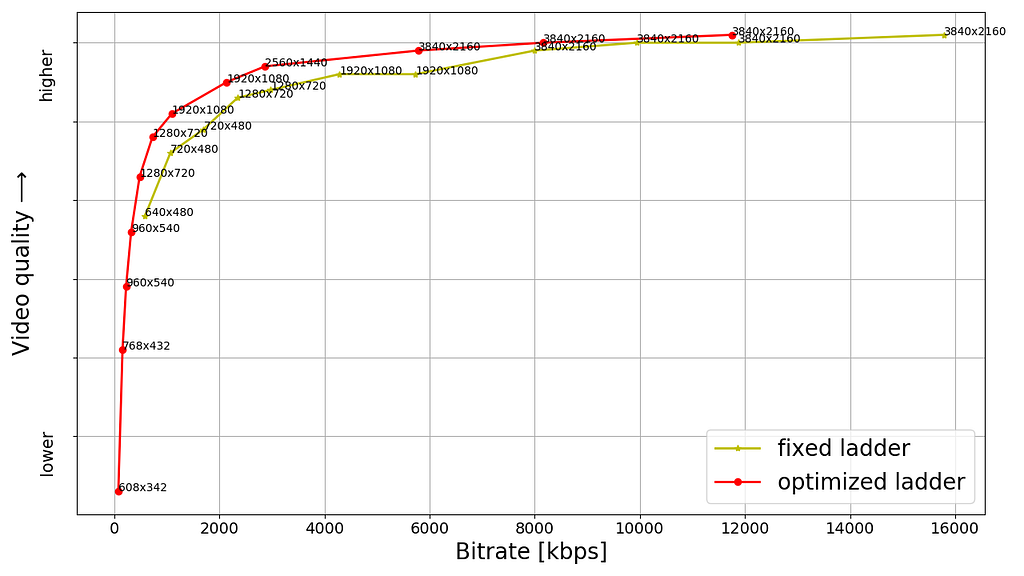
Netflix has an ever-expanding collection of titles which customers can enjoy in 4K resolution with a suitable device and subscription plan. Netflix creates premium bitstreams for those titles in addition to the catalog-wide 8-bit stream profiles¹. Premium features comprise a title-dependent combination of 10-bit bit-depth, 4K resolution, high frame rate (HFR) and high dynamic range (HDR) and pave the way for an extraordinary viewing
Telltale: Netflix Application Monitoring Simplified
By Andrei U., Seth Katz , Janak Ramachandran , Jeff Butsch , Peter Lau , Ram Vaithilingam , and Greg Burrell
Our Telltale Vision
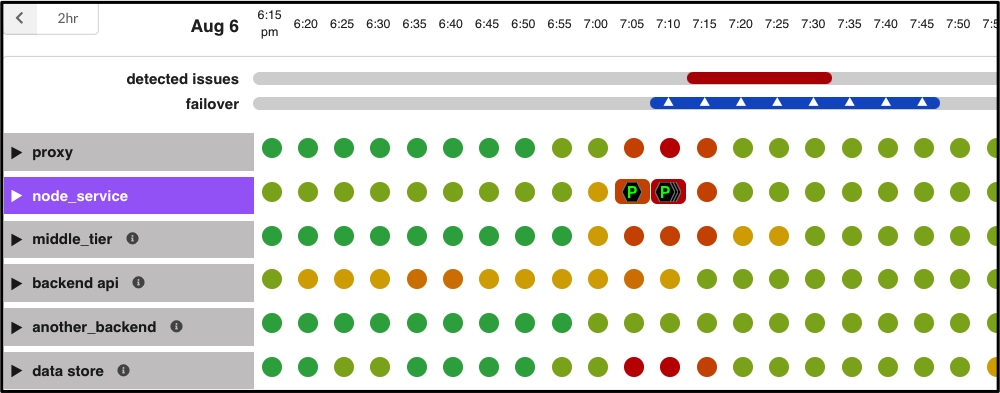
An alert fires and you get paged in the middle of the night. A metric crossed a threshold. You’re half awake and wondering, “Is there really a problem or is this just an alert that needs tuning? When was the last time somebody adjusted our alert thresholds? Maybe it’s due to an upstream or downstream service?” This is a critical application so
Computational Causal Inference at Netflix
Jeffrey Wong , Colin McFarland
Every Netflix data scientist, whether their background is from biology, psychology, physics, economics, math, statistics, or biostatistics, has made meaningful contributions to the way Netflix analyzes causal effects. Scientists from these fields have made many advancements in causal effects research in the past few decades, spanning instrumental variables, forest methods, heterogeneous effects, time-dynamic effects, quantile effects, and much more. These methods can provide rich information for decision making, such as in experimentation platforms (“XP

Improving our video encodes for legacy devices
by Mariana Afonso , Anush Moorthy , Liwei Guo , Lishan Zhu , Anne Aaron
Netflix has been one of the pioneers of streaming video-on-demand content — we announced our intention to stream video over 13 years ago, in January 2007 — and have only increased both our device and content reach since then. Given the global nature of the service and Netflix’s commitment to creating a service that members enjoy, it is not surprising that we support a wide variety of streaming devices, from set

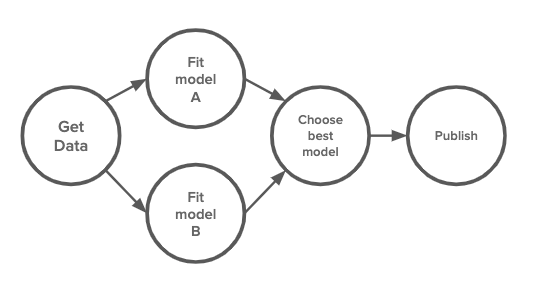
Unbundling Data Science Workflows with Metaflow and AWS Step Functions
by David Berg, Ravi Kiran Chirravuri, Romain Cledat, Jason Ge, Savin Goyal, Ferras Hamad, Ville Tuulos
Machine Learning for a Better Developer Experience
Stanislav Kirdey , William High
Imagine having to go through 2.5GB of log entries from a failed software build — 3 million lines — to search for a bug or a regression that happened on line 1M. It’s probably not even doable manually! However, one smart approach to make it tractable might be to diff the lines against a recent successful build, with the hope that the bug produces unusual lines in the logs.
Standard md5 diff would run quickly but still produce at least hundreds of thousands

Empowering the Visual Effects Community with the NetFX Platform
The cloud-based platform allows vendors, artists and creators to connect and collaborate on visual effects (VFX) from anywhere in the…