Ansible playbook to upgrade Ubuntu/Debian servers and reboot if needed
I realized I've never posted this playbook to my blog... I needed to grab it for a project I'm working on, so I figured I'd post it here for future reference.
Basically, I need a playbook I can run whenever, that will ensure all packages are upgraded, then checks if a reboot is required, and if so, reboots the server. Afterwards, it removes any dependencies no longer required.
---- hosts: all gather_facts: yes becomeUsing 4G LTE wireless modems on a Raspberry Pi
For a recent project, I needed to add cellular connectivity to a Raspberry Pi (actually, an entire cluster... but that's a story for a future time!).

I figured I'd document the process in this blog post so people who follow in my footsteps don't need to spend quite as much time researching. This post is the culmination of 40+ hours of reading, testing, and head-scratching.
There doesn't seem to be any good central resource for
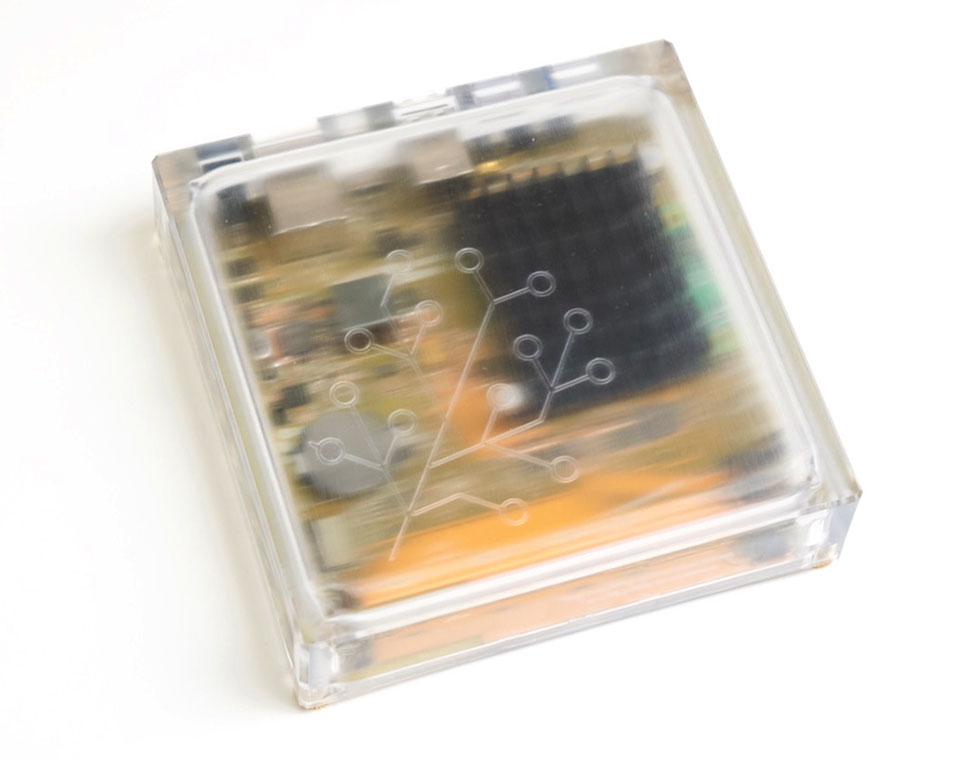
Home Assistant Yellow - Pi-powered local automation
I've dipped my toes in 'smart home' automation in the past.
Typically I approach 'smart' and 'IoT' devices as a solution to one simple problem, instead of trying to do 'all the things'.
For example, I wanted to make it easy for my kids to control a home theater with four different devices and complex audio/visual routing, so I bought a Harmony remote and programmed it to control TV, a game console, an Apple TV, and radio. I don
Network interface routing priority on a Raspberry Pi

As I start using Raspberry Pis for more and more network routing activitiesâespecially as the Compute Module 4 routers based on Debian, OpenWRT, and VyOS have started appearingâI've been struggling with one particular problem: how can I set routing priorities for network interfaces?
Now, this is a bit of a loaded question. You could dive right into routing tables and start adding and deleting routes from the kernel. You could mess with subnets, modify firewalls, and futz with iptables.
But
SSH and HTTP to a Raspberry Pi behind CG-NAT
For a project I'm working on, I'll have a Raspberry Pi sitting behind a 4G LTE modem:

This modem is on AT&T's network, but regardless of the provider, unless you're willing to pay hundreds or thousands of dollars a month for a SIM with a public IP address, the Internet connection will be running behind CG-NAT .
What this means is there's no publicly routable address for the Piâyou can't access it from the
Quick 'Hello World' HTTP deployment for testing K3s and Traefik
Recently I needed to test the full HTTP stack between a Kubernetes cluster's member nodes and an external Internet routing setup, and so I wanted to quickly install K3s (which includes Traefik by default, and load balances through ports 80 and 443 on all nodes), then get a quick 'hello world' web page up, so I could see if the traffic was routing properly all the way from the external host through to a running container exposed via Traefik Ingress.
Here's how
Autofocus on a Pi - ArduCam's new 16MP camera

ArduCam recently completed a successful crowdfunding campaign for a 16 megapixel Raspberry Pi camera with built-in autofocus.
The camera is on a board with the same footprint as the Pi Camera V2, but it has a Sony IMX519 image sensor with twice the resolution (16 Mpix vs 8 Mpix) and a larger image sensor (1/2.53" vs 1/4"), a slightly nicer lens, and the headline feature: a built-in autofocus motor.
Autofocus performance
The burden of an Open Source maintainer
Or: Why can't you just merge my ten-line PR already?
I maintain over 200 open source projects. Apparently (this is news to me) I am ranked in the top 200 GitHub users by followers, and there are 18,000 forks and 42,000 stars across my repos.
On an average day, I see between 50-100 emails across my repositories for issues and pull requests, and I filter those down to
Red Shirt Jeff Special and 2021 YouTube channel retrospective
In 2020, I got serious about my YouTube channel after seeing explosive growth from a series on the Turing Pi Raspberry Pi cluster . Early in 2021, the success of my books and the YouTube channel resulted in me quitting my last paid consulting gig , and focusing all my time on Hosted Apache Solr , writing, and making videos.
In 2021 the channel went from just under 100,000 subscribers to 253,000 (and counting

Raspberry Pi holds its own against low-cost ARM NAS
Earlier this year, I pitted the $549 ASUSTOR Lockerstor 4 NAS against a homebrew $350 Raspberry Pi CM4 NAS , and came to the (rather obvious) conclusion that the Lockerstor was better in almost every regard.

Well, ASUSTOR introduced a new lower-cost NAS, the $329 Drivestor 4 Pro (model AS3304Tâpictured above), and sent me one to review against the Raspberry Pi, since it make for a better matchupâ