Building a 2.5 Gbps 5-drive Pi NAS - Hardware Setup
A few months ago, an ASUSTOR representative emailed me with an offer I couldn't refuse. He saw my blog post and video about building the fastest Raspberry Pi NAS , and asked if I wanted to put up my best Pi-based NAS against an Asustor NAS.
We settled on the Asustor Lockerstor 4, with dual-2.5 Gbps networking, 4 GB of RAM, and a quad-core Intel CPU. To make things even, he convinced Seagate to send four 8TB IronWolf NAS drives.
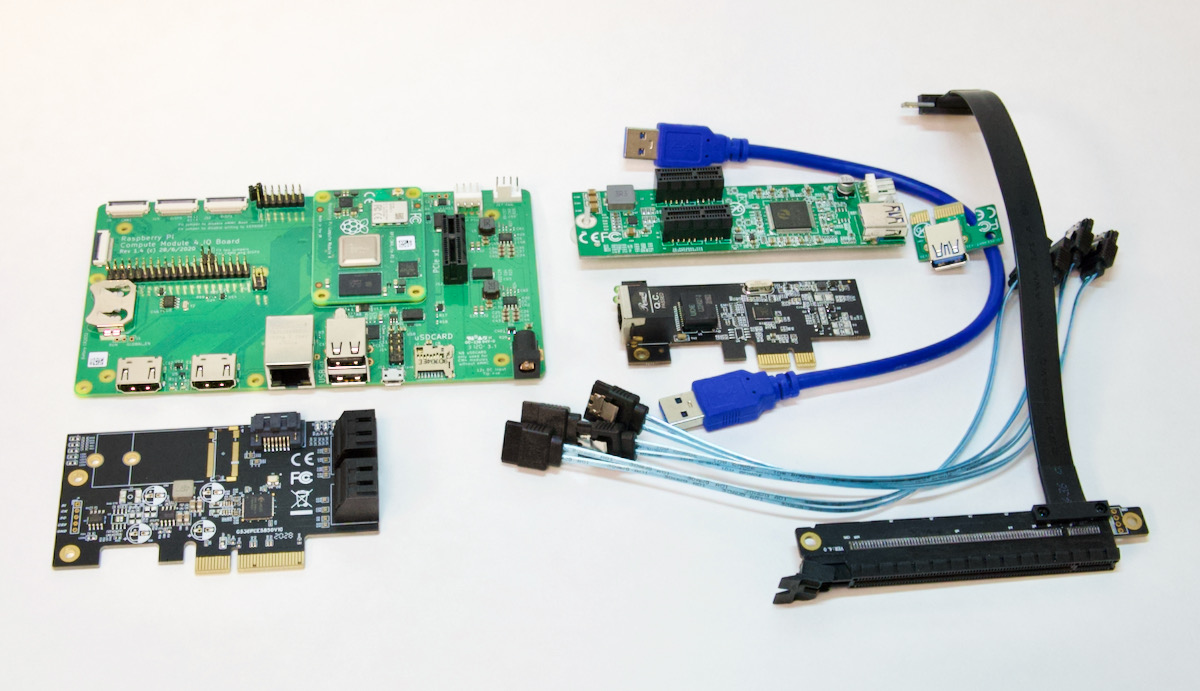
Setting up a Pi for remote Internet connection monitoring
So... recently I acquired a Starlink 'Dishy', and I'm going to be installing it at a rural location near where I live, but since it's a bit of a drive to get to it, I wanted to set up a Raspberry Pi to monitor the Starlink connection quality over time.

I know the Starlink app has its own monitoring, but I like to have my own fancy independent monitoring in place too.
The wrinkle with a Starlink-based Internet connection, though, is
The Raspberry Pi can boot off NVMe SSDs now
When the Compute Module 4 was released (see my CM4 review here ), I asked the Pi Foundation engineers when we might be able to boot off NVMe storage, since it was trivially easy to use with the exposed PCIe x1 lane on the CM4 IO Board.
The initial response in October 2020 was "we'll see". Luckily, after more people started asking about it, beta support was added for direct NVMe boot just a couple weeks ago.

And in a stroke of
Building the World's Tiniest NVMe RAID Array
Just posting to the blog for reference; I posted this video on YouTube recently, in which I built (what I believe to be) the world's tiniest NVMe SSD RAID array, using the Raspberry Pi Compute Module 4 and three diminutive WD SN520 NVMe drives (which are M.2 2230 size, which makes them each about the size of a quarter):
How to join multiple MP4 files from a GoPro with ffmpeg
I recently shot some footage with a GoPro, and realized after the fact the GoPro 'chapters' the footage around 4 GB, so I ended up with a number of 4 GB files, instead of one larger file. There are various reasons for this, but in the end, I really wanted one long file, so it would be easier to synchronize with footage from another camera and my audio recorder.
2023 Update : The following one-liner works a bit faster, and doesn't require
Ignore noisy logs with fluentd in EKS or other Kubernetes clusters
Recently, I decided to use the fluentd-kubernetes-daemonset project to easily ship all logs from an EKS Kubernetes cluster in Amazon to an Elasticsearch cluster operating elsewhere.
The initial configuration worked great out of the boxâjust fill in details like the FLUENT_ELASTICSEARCH_HOST and any authentication info, and then deploy the RBAC rules and DaemonSet into your cluster, and you're off to the races (assuming your Elasticsearch instance is configured to allow access from the cluster!).
But once I did
Pi Day 2021 - Livestream of 16 drives on a Raspberry Pi (2nd attempt)
For Pi Day, I'm going to livestream my second attempt at getting 16 hard drives (well, 12 hard drives and 4 SSDs) recognized by a Raspberry Pi.
The first attempt went decently well... but I wound up running into power supply issues.
M.2 on a Raspberry Pi - the TOFU Compute Module 4 Carrier Board
Ever since the Pi 2 model B went to a 4-core processor, disk IO has often been the primary bottleneck for my Pi projects.
You can use microSD cards, which aren't horrible , but... well, nevermind, they're pretty bad as a primary disk. Or you can plug in a USB 3.0 SSD and get decent speed, but you end up with a cabling mess and lose bandwidth and latency to a USB-to-SATA or USB-to-NVMe

Launched: Red Shirt Jeff merch store
It makes me throw up a little in my mouth to say this, because it's such a YouTuber thing to do... but I now have an official merch store to go along with my YouTube channel :
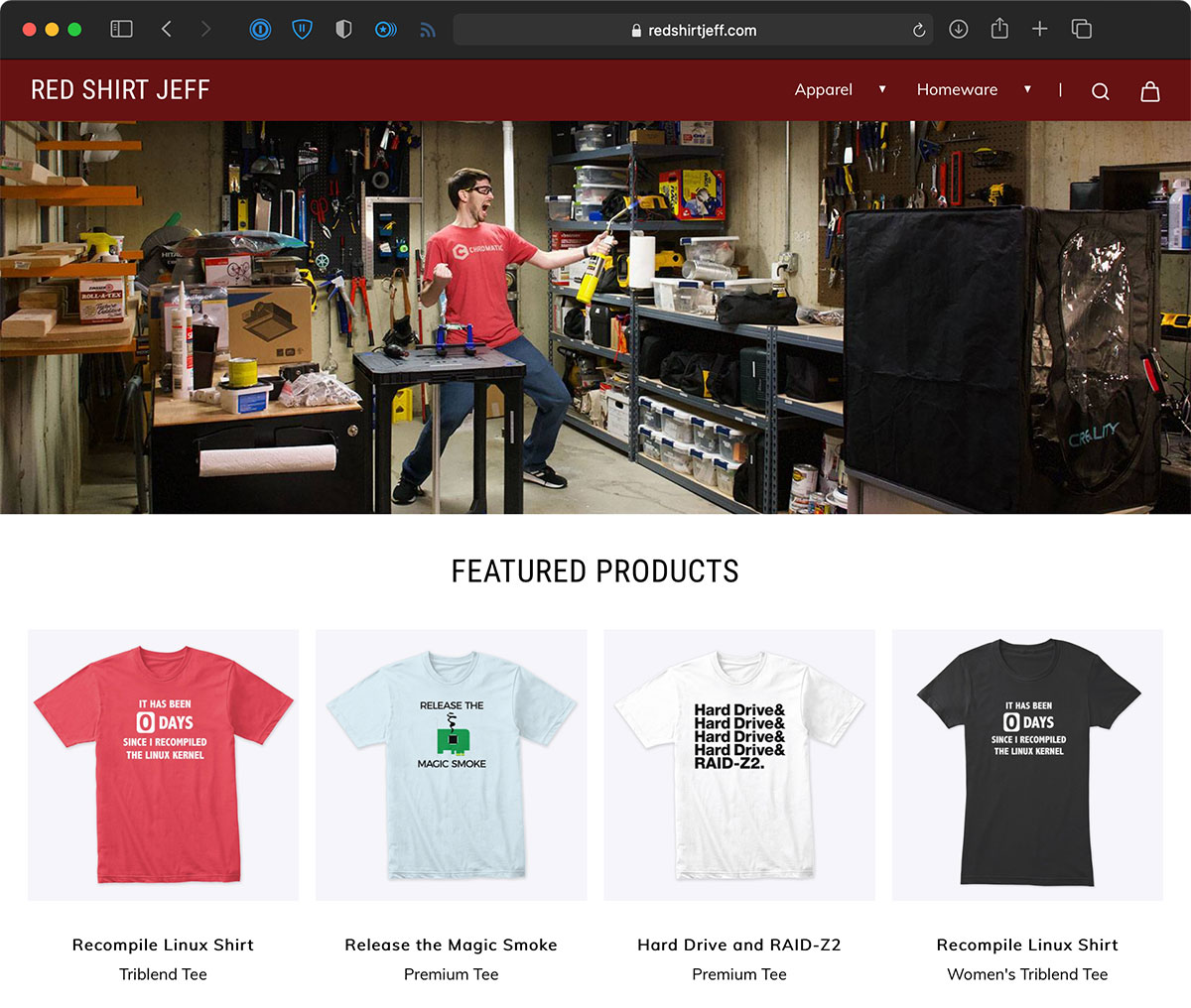
The Red Shirt Jeff store has original designs that I find interesting or funny, and there are three shirt designs available at launch:
Hardware RAID on the Raspberry Pi CM4
A few months ago, I posted a video titled Enterprise SAS RAID on the Raspberry Pi ... but I never actually showed a SAS drive in it. And soon after, I posted another video, The Fastest SATA RAID on a Raspberry Pi .

Well now I have actual enterprise SAS drives running on a hardware RAID controller on a Raspberry Pi, and it's faster than the 'fastest' SATA RAID array I set up in that other video.
A Broadcom engineer named Josh watched my earlier videos and realized