Rapid Event Notification System at Netflix
By: Ankush Gulati , David Gevorkyan
Additional credits: Michael Clark , Gokhan Ozer
Intro
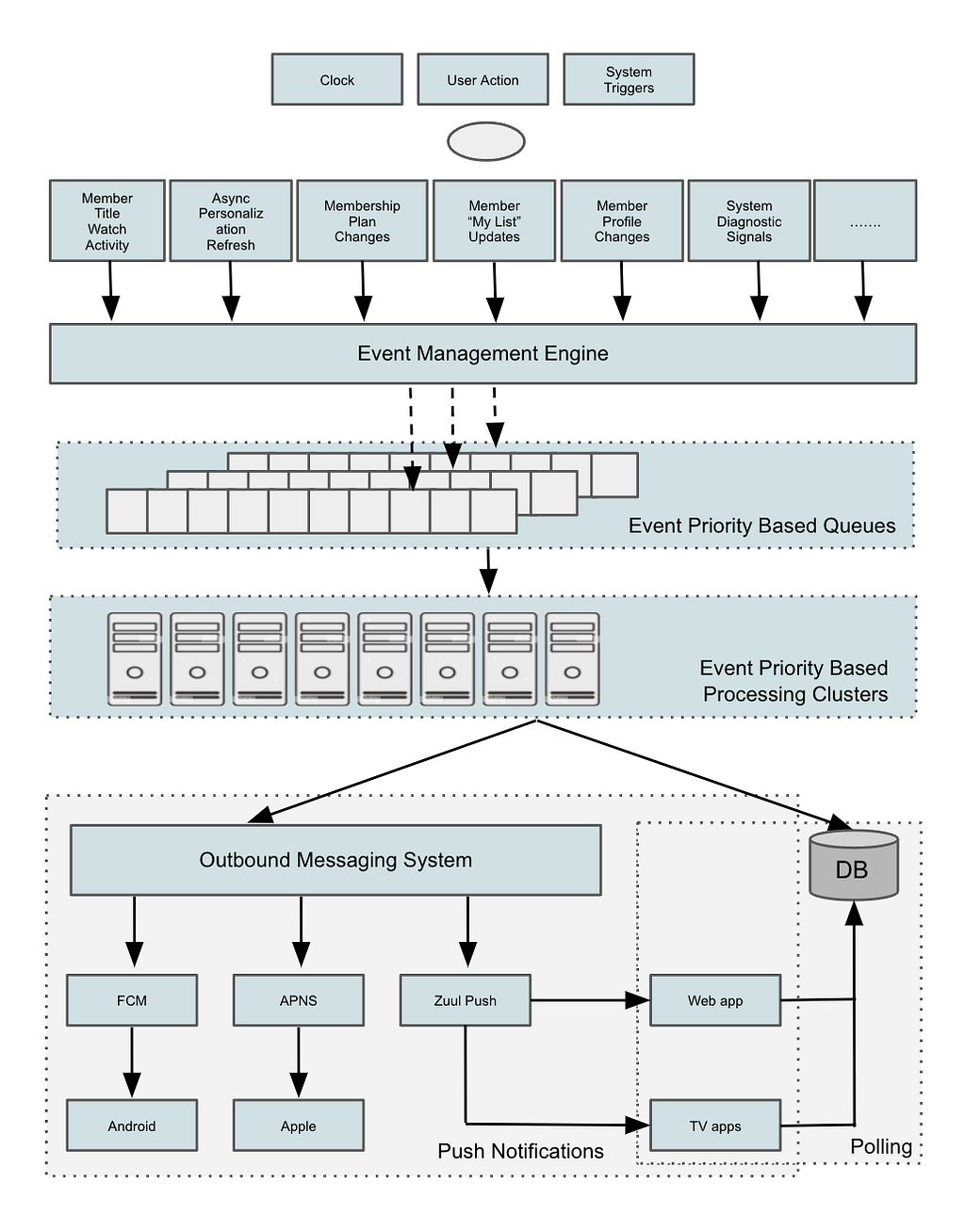
Netflix has more than 220 million active members who perform a variety of actions throughout each session, ranging from renaming a profile to watching a title. Reacting to these actions in near real-time to keep the experience consistent across devices is critical for ensuring an optimal member experience. This is not an easy task, considering the wide variety of supported devices and the sheer volume of actions our members perform. To this end, we
Data pipeline asset management with Dataflow
by Sam Setegne, Jai Balani, Olek Gorajek
Glossary
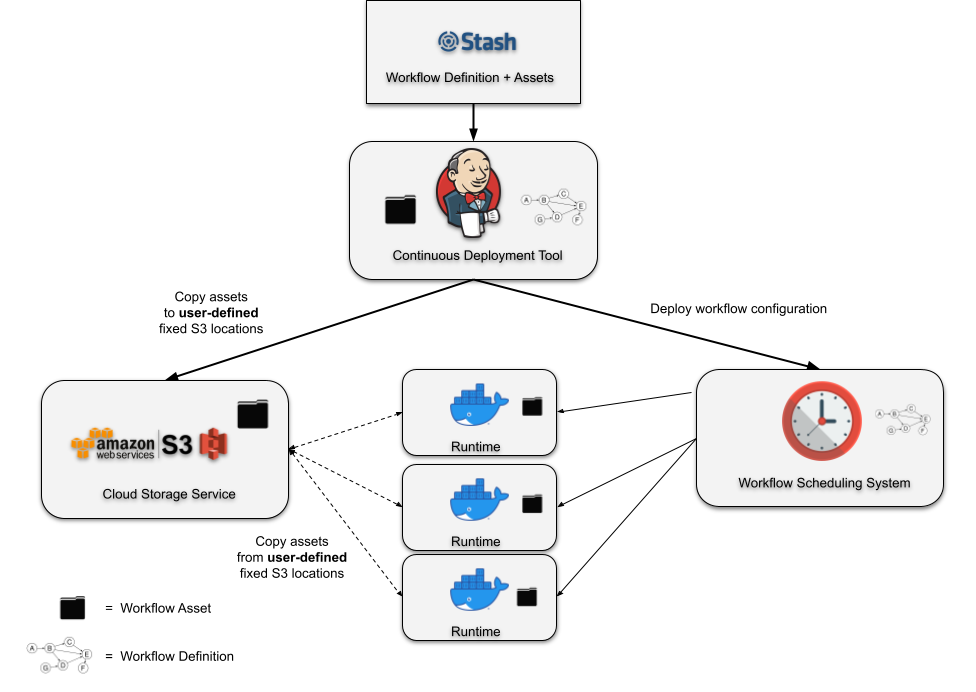
- asset — any business logic code in a raw (e.g. SQL) or compiled (e.g. JAR) form to be executed as part of the user defined data pipeline.
- data pipeline — a set of tasks (or jobs) to be executed in a predefined order (a.k.a. DAG) for the purpose of transforming data using some business logic.
- Dataflow — Netflix homegrown CLI tool for data pipeline management.
- job — a
Demystifying Interviewing for Backend Engineers @ Netflix
By Karen Casella, Director of Engineering, Access & Identity Management

Have you ever experienced one of the following scenarios while looking for your next role?
- You study and practice coding interview problems for hours/days/weeks/months, only to be asked to merge two sorted lists.
- You apply for multiple roles at the same company and proceed through the interview process with each hiring team separately, despite the fact that there is tremendous overlap in the roles.
- You go through the interview process, do really well, get really
Netflix: A Culture of Learning
Martin Tingley with Wenjing Zheng , Simon Ejdemyr , Stephanie Lane , Colin McFarland , Mihir Tendulkar , and Travis Brooks
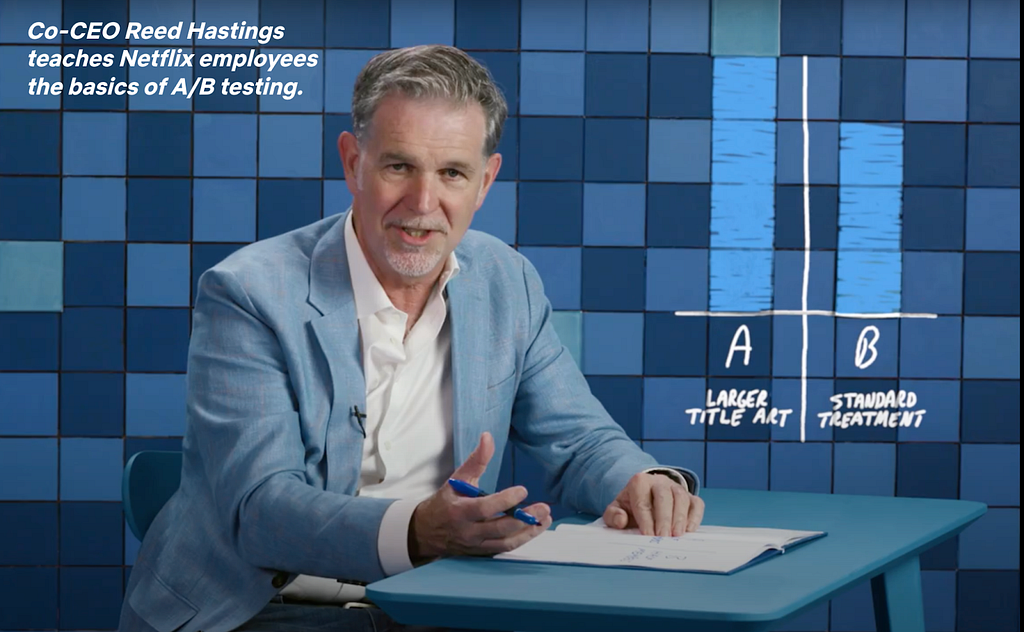
This is the last post in an overview series on experimentation at Netflix. Need to catch up? Earlier posts covered the basics of A/B tests ( Part 1 and Part 2 ), core statistical concepts ( Part 3 and Part 4 ), how to build confidence in a decision ( Part 5 ), and the the role of Experimentation and A/B testing within the larger Data Science and Engineering organization
Fixing Performance Regressions Before they Happen

Netflix is used by 222 million members and runs on over 1700 device types ranging from state-of-the-art smart TVs to low-cost mobile devices.
At Netflix we’re proud of our reliability and we want to keep it that way. To that end, it’s important that we prevent significant performance regressions from reaching the production app. Sluggish scrolling or late rendering is frustrating and triggers accidental navigations. Choppy playback makes watching a show less enjoyable. Any performance
Auto-Diagnosis and Remediation in Netflix Data Platform
By Vikram Srivastava and Marcelo Mayworm
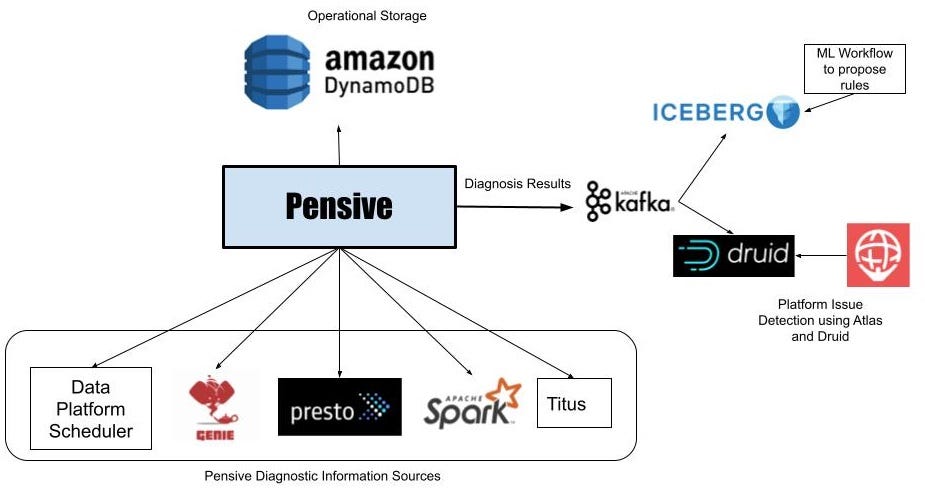
Netflix has one of the most complex data platforms in the cloud on which our data scientists and engineers run batch and streaming workloads. As our subscribers grow worldwide and Netflix enters the world of gaming , the number of batch workflows and real-time data pipelines increases rapidly. The data platform is built on top of several distributed systems, and due to the inherent nature of these systems, it is inevitable that these workloads run into failures periodically. Troubleshooting these problems is not a trivial task and
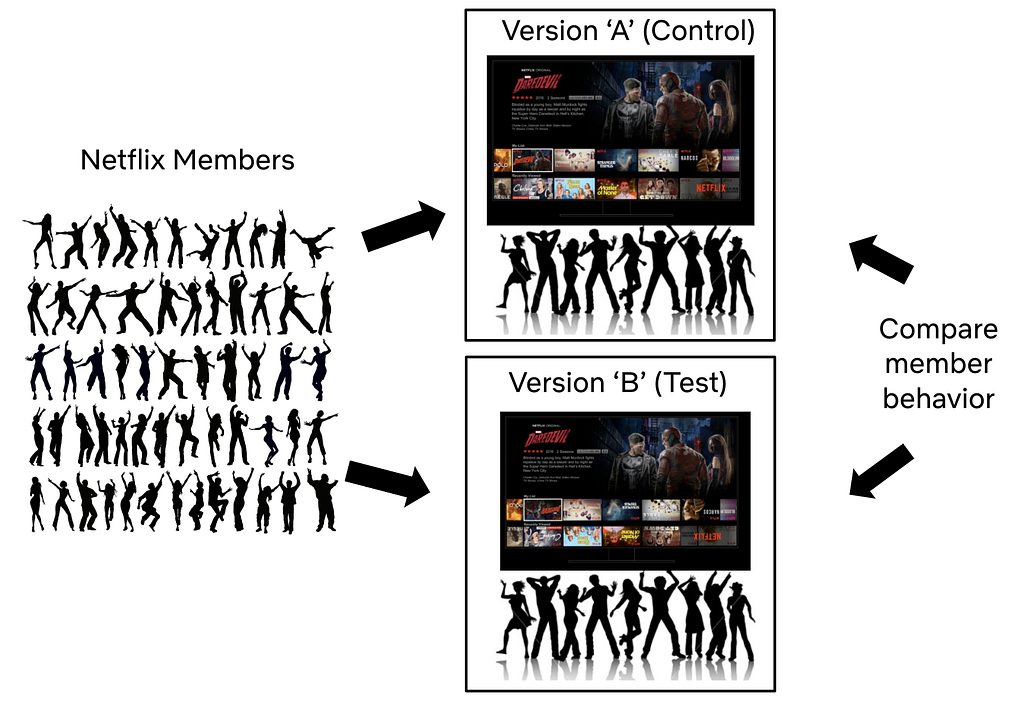
Experimentation is a major focus of Data Science across Netflix
Martin Tingley with Wenjing Zheng , Simon Ejdemyr , Stephanie Lane , Colin McFarland , Andy Rhines , Sophia Liu , Mihir Tendulkar , Kevin Mercurio , Veronica Hannan , Ting-Po Lee
Earlier posts in this series covered the basics of A/B tests ( Part 1 and Part 2 ), core statistical concepts ( Part 3 and Part 4 ), and how to build confidence in decisions based on A/B test results ( Part 5 ). Here we describe the role of Experimentation and A/B testing within the larger
Snaring the Bad Folks
Project by Netflix’s Cloud Infrastructure Security team ( Alex Bainbridge , Mike Grima , Nick Siow)
Cloud security is a hard problem, but an even harder one is cloud security at scale. In recent years we’ve seen several cloud focused data breaches and evidence shows that threat actors are becoming more advanced with their techniques, goals, and tooling . With 2021 set to be a new high for the number of data breaches , it was plainly evident that we needed to evolve how we approach our cloud

Building confidence in a decision
Martin Tingley with Wenjing Zheng , Simon Ejdemyr , Stephanie Lane , Michael Lindon , and Colin McFarland
This is the fifth post in a multi-part series on how Netflix uses A/B tests to inform decisions and continuously innovate on our products. Need to catch up? Have a look at Part 1 (Decision Making at Netflix), Part 2 (What is an A/B Test?), Part 3 (False positives and statistical significance), and Part 4 (False negatives and power). Subsequent posts
Bringing AV1 Streaming to Netflix Members’ TVs
by Liwei Guo , Ashwin Kumar Gopi Valliammal , Raymond Tam , Chris Pham , Agata Opalach , Weibo Ni
AV1 is the first high-efficiency video codec format with a royalty-free license from Alliance of Open Media (AOMedia), made possible by wide-ranging industry commitment of expertise and resources. Netflix is proud to be a founding member of AOMedia and a key contributor to the development of AV1. The specification of AV1 was published in 2018. Since then, we have been working