Migrating Critical Traffic At Scale with No Downtime — Part 1
Migrating Critical Traffic At Scale with No Downtime — Part 1
Shyam Gala , Javier Fernandez-Ivern , Anup Rokkam Pratap , Devang Shah
Hundreds of millions of customers tune into Netflix every day, expecting an uninterrupted and immersive streaming experience. Behind the scenes, a myriad of systems and services are involved in orchestrating the product experience. These backend systems are consistently being evolved and optimized to meet and exceed customer and product expectations.
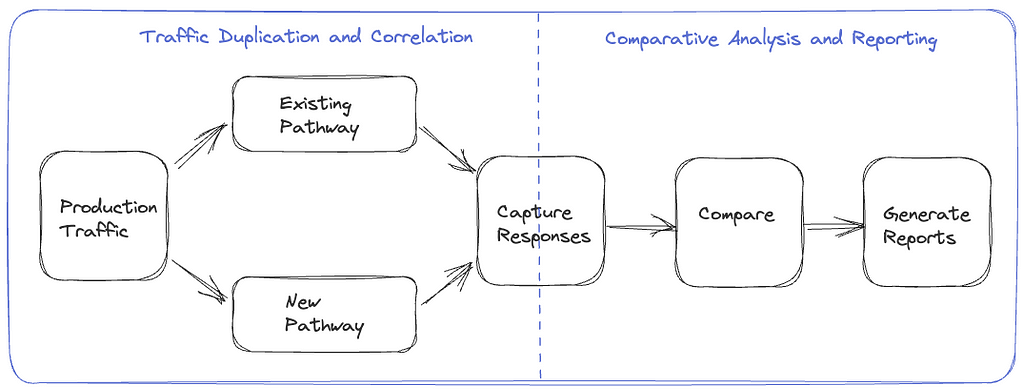
When undertaking system migrations, one of the main challenges is establishing confidence and seamlessly transitioning the traffic to the
Improved Alerting with Atlas Streaming Eval
Ruchir Jha , Brian Harrington , Yingwu Zhao
TL;DR
- Streaming alert evaluation scales much better than the traditional approach of polling time-series databases.
- It allows us to overcome high dimensionality/cardinality limitations of the time-series database.
- It opens doors to support more exciting use-cases.
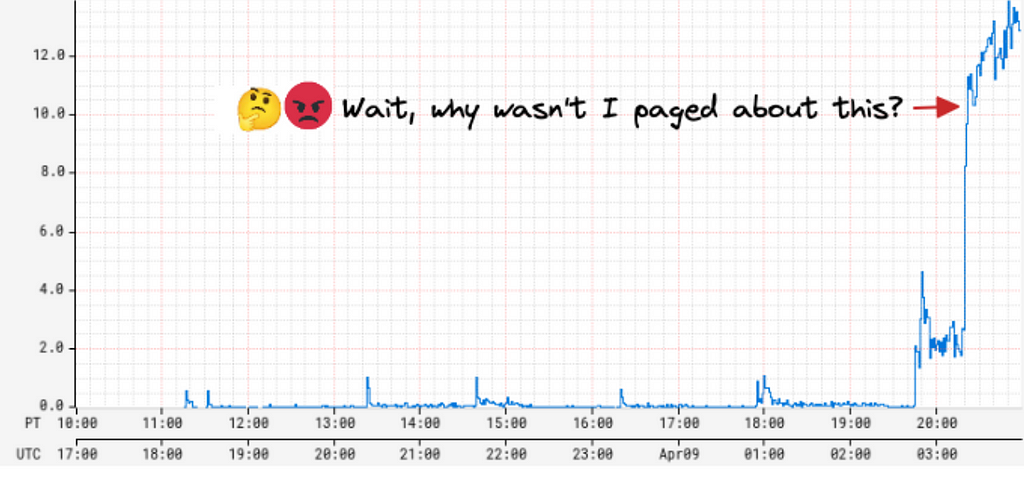
Engineers want their alerting system to be realtime, reliable, and actionable. While actionability is subjective and may vary by use-case, reliability is non-negotiable. In other words, false positives are bad but false negatives are
Building a Media Understanding Platform for ML Innovations
By Guru Tahasildar , Amir Ziai , Jonathan Solórzano-Hamilton , Kelli Griggs , Vi Iyengar
Introduction
Netflix leverages machine learning to create the best media for our members. Earlier we shared the details of one of these algorithms , introduced how our platform team is evolving the media-specific machine learning ecosystem , and discussed how data from these algorithms gets stored in our annotation service .
Much of the ML literature focuses on model training, evaluation, and scoring. In this post, we will explore an understudied aspect of the

Elasticsearch Indexing Strategy in Asset Management Platform (AMP)
By Burak Bacioglu , Meenakshi Jindal
Asset Management at Netflix
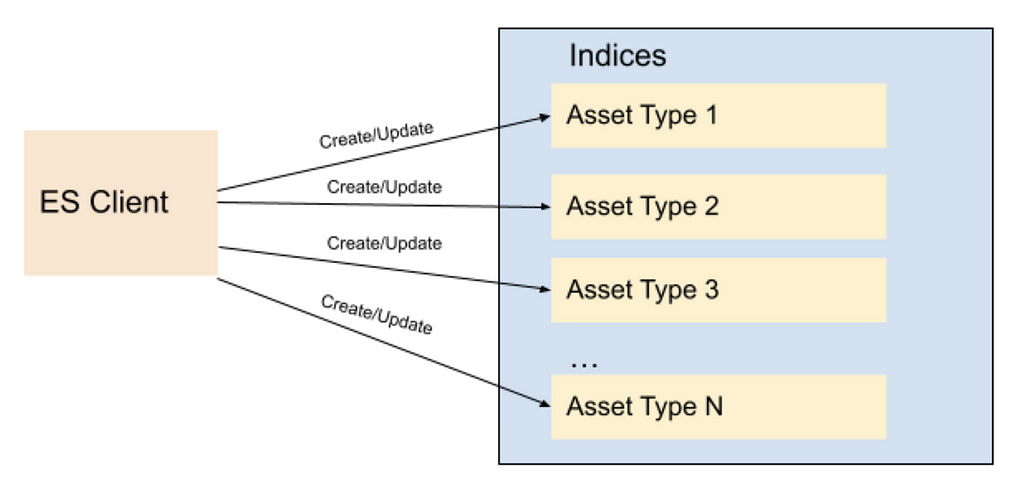
At Netflix, all of our digital media assets (images, videos, text, etc.) are stored in secure storage layers. We built an asset management platform (AMP), codenamed Amsterdam , in order to easily organize and manage the metadata, schema, relations and permissions of these assets. It is also responsible for asset discovery, validation, sharing, and for triggering workflows.
Amsterdam service utilizes various solutions such as Cassandra , Kafka , Zookeeper , EvCache etc
Data Reprocessing Pipeline in Asset Management Platform @Netflix
Overview
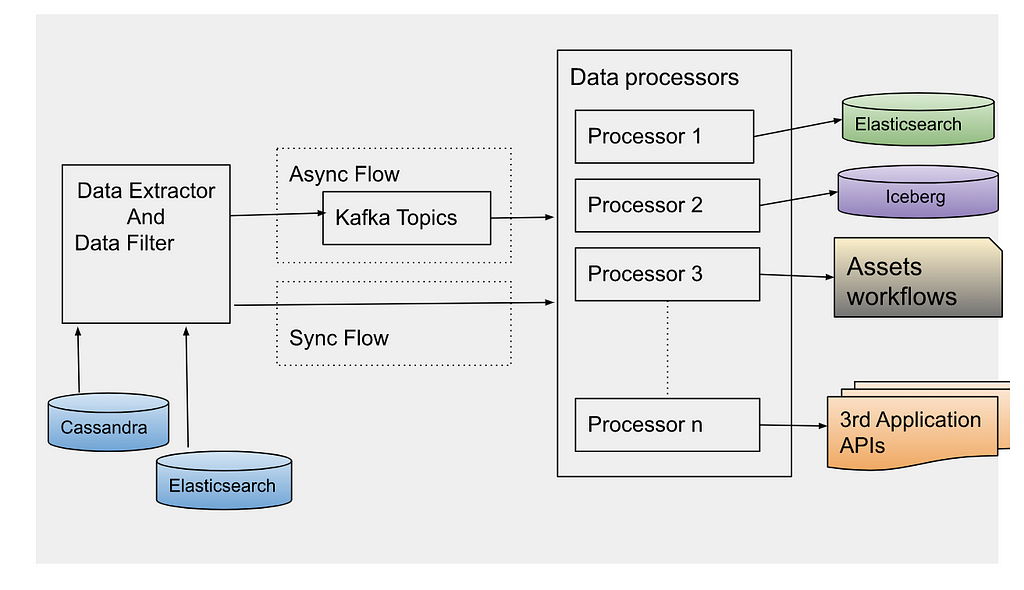
At Netflix, we built the asset management platform (AMP) as a centralized service to organize, store and discover the digital media assets created during the movie production. Studio applications use this service to store their media assets, which then goes through an asset cycle of schema validation, versioning, access control, sharing, triggering configured workflows like inspection, proxy generation etc. This platform has evolved from supporting studio applications to data science applications, machine-learning applications to discover the assets metadata, and build
NTS: Reliable Device Testing at Scale
By Benson Ma , ZZ Zimmerman
With contributions from Alok Ahuja , Shravan Heroor , Michael Krasnow , Todor Minchev , Inder Singh
Introduction
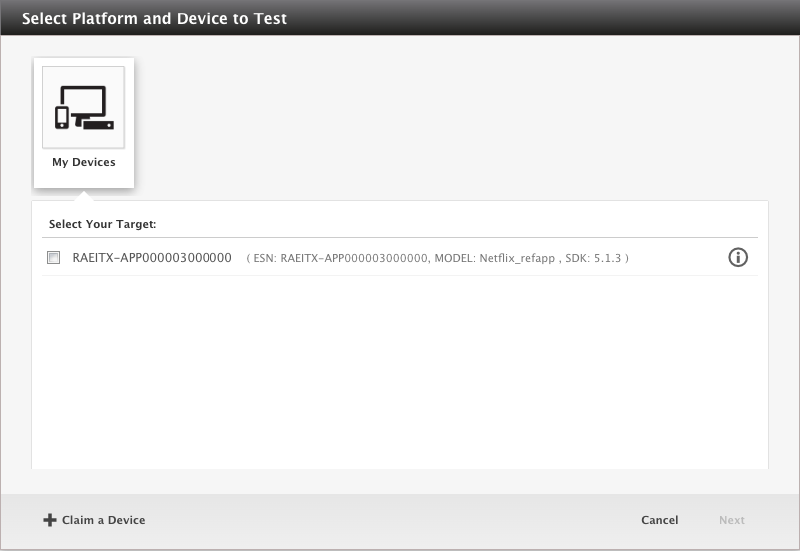
At Netflix, we test hundreds of different device types every day, ranging from streaming sticks to smart TVs, to ensure that new version releases of the Netflix SDK continue to provide the exceptional Netflix experience that our customers expect. We also collaborate with our Partners to integrate the Netflix SDK onto their upcoming new devices, such as TVs and set top boxes. This program, known as Partner Certification ,
Data ingestion pipeline with Operation Management
by Varun Sekhri , Meenakshi Jindal , Burak Bacioglu
Introduction
At Netflix, to promote and recommend the content to users in the best possible way there are many Media Algorithm teams which work hand in hand with content creators and editors. Several of these algorithms aim to improve different manual workflows so that we show the personalized promotional image, trailer or the show to the user.
These media focused machine learning algorithms as well as other teams generate a lot of data from the media files, which we described in our previous blog , are

Scaling Media Machine Learning at Netflix
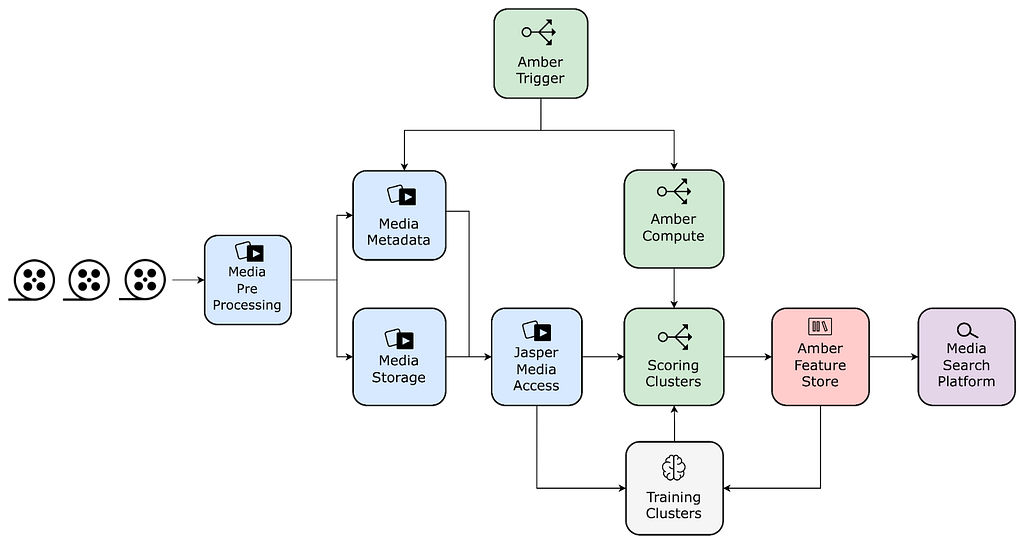
By Gustavo Carmo , Elliot Chow , Nagendra Kamath , Akshay Modi , Jason Ge , Wenbing Bai , Jackson de Campos , Lingyi Liu , Pablo Delgado , Meenakshi Jindal , Boris Chen , Vi Iyengar , Kelli Griggs , Amir Ziai , Prasanna Padmanabhan , and Hossein Taghavi
Introduction
In 2007, Netflix started offering streaming alongside its DVD shipping services. As the catalog grew and users adopted streaming, so did the opportunities for creating and improving our recommendations. With a catalog spanning thousands of
Discovering Creative Insights in Promotional Artwork
By Grace Tang , Aneesh Vartakavi , Julija Bagdonaite and Cristina Segalin
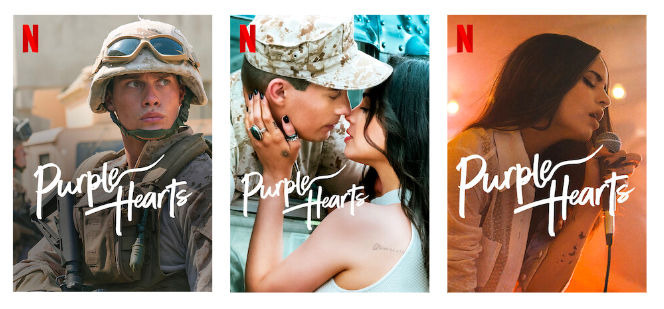
When members are shown a title on Netflix, the displayed artwork, trailers, and synopses are personalized. That means members see the assets that are most likely to help them make an informed choice. These assets are a critical source of information for the member to make a decision to watch, or not watch, a title. The stories on Netflix are multidimensional and there are many ways that a single story could appeal to different members. We want to show
Scalable Annotation Service — Marken
Scalable Annotation Service — Marken
by Varun Sekhri , Meenakshi Jindal
Introduction
At Netflix, we have hundreds of micro services each with its own data models or entities. For example, we have a service that stores a movie entity’s metadata or a service that stores metadata about images. All of these services at a later point want to annotate their objects or entities. Our team, Asset Management Platform, decided to create a generic service called Marken which allows any microservice at Netflix to annotate their entity.
Annotations
Sometimes people describe