Bending pause times to your will with Generational ZGC
The surprising and not so surprising benefits of generations in the Z Garbage Collector.
By Danny Thomas, JVM Ecosystem Team
The latest long term support release of the JDK delivers generational support for the Z Garbage Collector .
More than half of our critical streaming video services are now running on JDK 21 with Generational ZGC, so it’s a good time to talk about our experience and the benefits we’ve seen. If you’re interested in how we use Java at Netflix, Paul Bakker’s talk How Netflix
Evolving from Rule-based Classifier: Machine Learning Powered Auto Remediation in Netflix Data…
Evolving from Rule-based Classifier: Machine Learning Powered Auto Remediation in Netflix Data Platform
by Binbing Hou , Stephanie Vezich Tamayo , Xiao Chen , Liang Tian , Troy Ristow , Haoyuan Wang , Snehal Chennuru , Pawan Dixit
This is the first of the series of our work at Netflix on leveraging data insights and Machine Learning (ML) to improve the operational automation around the performance and cost efficiency of big data jobs. Operational automation–including but not limited to, auto diagnosis, auto remediation, auto configuration, auto tuning,
Announcing bpftop: Streamlining eBPF performance optimization
Today, we are thrilled to announce the release of bpftop , a command-line tool designed to streamline the performance optimization and monitoring of eBPF applications. As Netflix increasingly adopts eBPF [ 1 , 2 ], applying the same rigor to these applications as we do to other managed services is imperative. Striking a balance between eBPF’s benefits and system load is crucial, ensuring it enhances rather than hinders our operational efficiency. This tool enables Netflix to embrace eBPF’s potential.

Introducing bpftop
bpftop provides a
Sequential A/B Testing Keeps the World Streaming Netflix Part 1: Continuous Data
Michael Lindon , Chris Sanden , Vache Shirikian , Yanjun Liu , Minal Mishra , Martin Tingley
1. Spot the Difference
Can you spot any difference between the two data streams below? Each observation is the time interval between a Netflix member hitting the play button and playback commencing, i.e., play-delay . These observations are from a particular type of A/B test that Netflix runs called a software canary or regression-driven experiment. More on that below — for now, what’s important is that
Introducing SafeTest: A Novel Approach to Front End Testing
In this post, we’re excited to introduce SafeTest, a revolutionary library that offers a fresh perspective on End-To-End (E2E) tests for web-based User Interface (UI) applications.
The Challenges of Traditional UI Testing
Traditionally, UI tests have been conducted through either unit testing or integration testing (also referred to as End-To-End (E2E) testing). However, each of these methods presents a unique trade-off: you have to
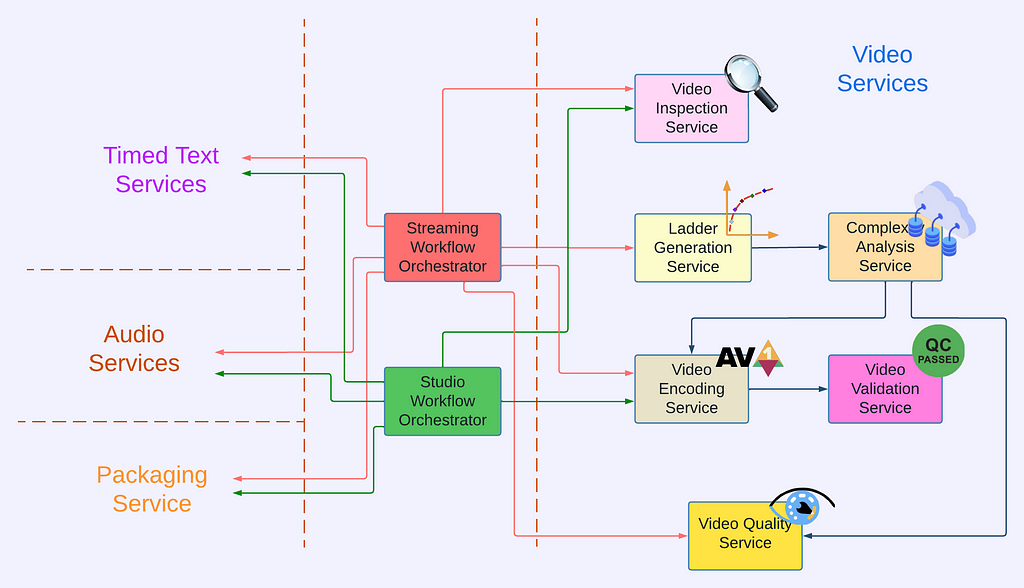
Rebuilding Netflix Video Processing Pipeline with Microservices
Liwei Guo , Anush Moorthy , Li-Heng Chen , Vinicius Carvalho , Aditya Mavlankar , Agata Opalach , Adithya Prakash , Kyle Swanson, Jessica Tweneboah , Subbu Venkatrav , Lishan Zhu
This is the first blog in a multi-part series on how Netflix rebuilt its video processing pipeline with microservices, so we can maintain our rapid pace of innovation and continuously improve the system for member streaming and studio operations. This introductory blog focuses on an overview of our journey. Future blogs will provide deeper dives into each service, sharing insights
Our First Netflix Data Engineering Summit
Holden Karau Elizabeth Stone Pedro Duarte Chris Stephens Pallavi Phadnis Lee Woodridge Mark Cho Guil Pires Sujay Jain Tristan Reid Senthilnathan Athinarayanan Bharath Mummadisetty Abhinaya Shetty Judit Lantos Amanuel Kahsay Dao Mi Mick Dreeling Chris Colburn and Agata Gryzbek
Introduction
Earlier this summer Netflix held our first-ever Data Engineering Forum. Engineers from across the company came together to share best practices on everything from Data Processing Patterns to Building Reliable Data Pipelines. The result was a series of talks which we are now sharing with the rest of the Data Engineering community!
You can find
All of Netflix’s HDR video streaming is now dynamically optimized
by Aditya Mavlankar , Zhi Li , Lukáš Krasula and Christos Bampis
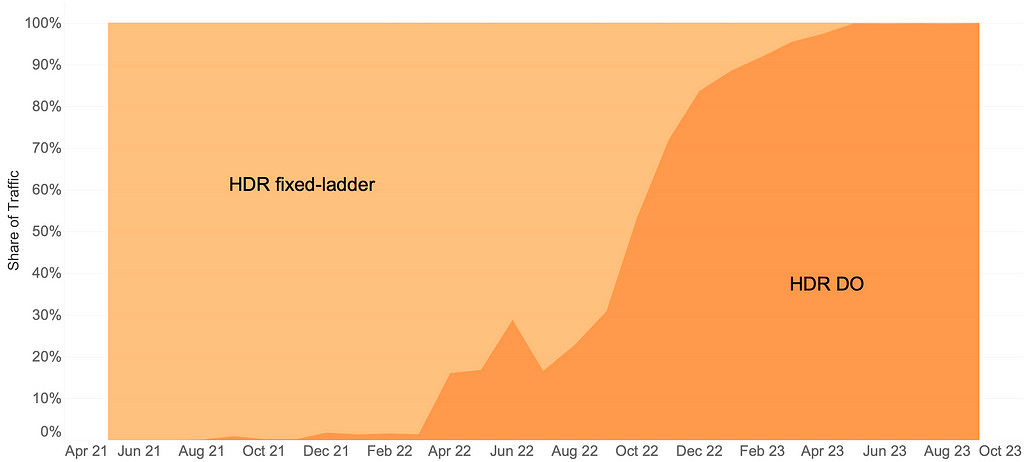
High dynamic range ( HDR ) video brings a wider range of luminance and a wider gamut of colors, paving the way for a stunning viewing experience. Separately, our invention of Dynamically Optimized ( DO ) encoding helps achieve optimized bitrate-quality tradeoffs depending on the complexity of the content.
HDR was launched at Netflix in 2016 and the number of titles available in HDR has been growing ever since. We were, however, missing the
Netflix Original Research: MIT CODE 2023
Netflix was thrilled to be the premier sponsor for the 2nd year in a row at the 2023 Conference on Digital Experimentation (CODE@MIT) in Cambridge, MA. The conference features a balanced blend of academic and industry research from some wicked smart folks, and we’re proud to have contributed a number of talks and posters along with a plenary session.
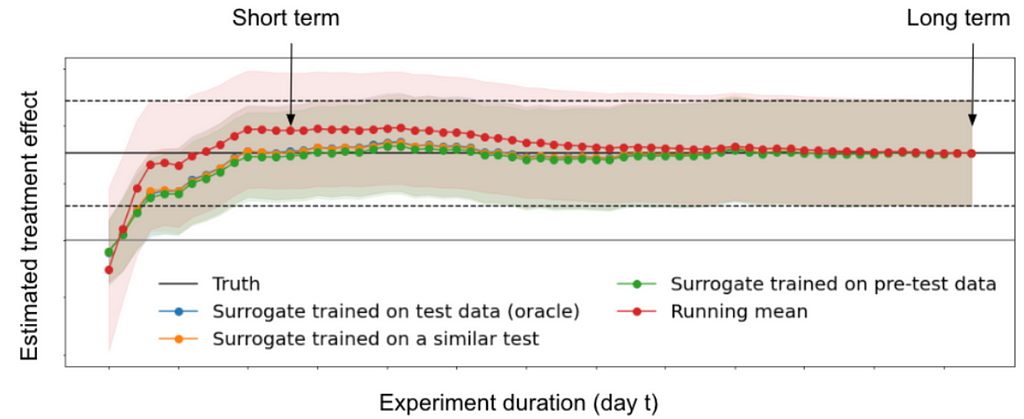
Our contributions kicked off with a concept that is crucial to our understanding of A/B tests: surrogates!
Our first talk was given by
Causal Machine Learning for Creative Insights
A framework to identify the causal impact of successful visual components.
By Billur Engin , Yinghong Lan , Grace Tang , Cristina Segalin , Kelli Griggs , Vi Iyengar
Introduction
At Netflix, we want our viewers to easily find TV shows and movies that resonate and engage. Our creative team helps make this happen by designing promotional artwork that best represents each title featured on our platform. What if we could use machine learning and computer vision to support our creative team in this process? Through identifying the components that contribute to a successful artwork